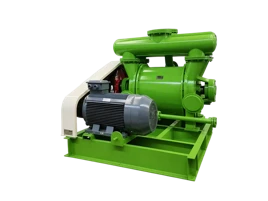
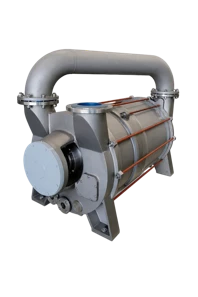
As a seasoned supplier of water ring vacuum pumps, I've often been asked whether these pumps can be effectively used in the chemical industry. The answer is a resounding yes, and in this blog, I'll delve into the reasons why water ring vacuum pumps are a reliable choice for various chemical applications, discuss their advantages, limitations, and highlight some of our top - selling models.
The Suitability of Water Ring Vacuum Pumps in the Chemical Industry
The chemical industry has unique requirements when it comes to vacuum equipment. Processes often involve handling corrosive, toxic, or flammable substances, and maintaining a stable vacuum is crucial for product quality and safety. Water ring vacuum pumps are well - suited to meet these challenges.
One of the primary reasons for their suitability is their ability to handle wet and dirty gases. In many chemical processes, the gases being evacuated may contain moisture, particulate matter, or chemical vapors. Water ring vacuum pumps use water as the sealing fluid, which can absorb and carry away these contaminants, preventing damage to the pump and ensuring continuous operation.
Another important factor is their relatively simple design. A water ring vacuum pump consists of a rotor with blades rotating eccentrically in a cylindrical casing filled with water. As the rotor turns, the water forms a liquid ring that acts as a piston, compressing and evacuating the gas. This simplicity translates into lower maintenance requirements and a longer service life, which is essential in a high - demand industry like chemicals.
Advantages of Using Water Ring Vacuum Pumps in the Chemical Industry
Corrosion Resistance
Many of our water ring vacuum pumps are made from materials that offer excellent corrosion resistance. For example, some models feature stainless steel components or coatings that can withstand exposure to corrosive chemicals. This makes them ideal for applications where the process gas contains acids, alkalis, or other corrosive substances.
Safety
Safety is a top priority in the chemical industry. Water ring vacuum pumps are inherently safer than some other types of vacuum pumps because they do not generate sparks during operation. This is a significant advantage when handling flammable gases or vapors, as it reduces the risk of explosion.
Versatility
Water ring vacuum pumps can operate over a wide range of pressures, from atmospheric pressure down to a few millibars of absolute pressure. This versatility allows them to be used in various chemical processes, such as distillation, evaporation, drying, and filtration.
Applications in the Chemical Industry
Distillation
In distillation processes, water ring vacuum pumps are used to create a vacuum in the distillation column. This lowers the boiling point of the substances being distilled, reducing energy consumption and preventing thermal degradation of heat - sensitive compounds. Our [2BE3 Large Liquid Ring Vacuum Pump](/liquid - ring - vacuum - pump/2be3 - large - liquid - ring - vacuum - pump.html) is a popular choice for large - scale distillation applications due to its high pumping speed and reliable performance.
Evaporation
Evaporation is another common process in the chemical industry, where water ring vacuum pumps are used to remove solvents or water from a solution. By creating a vacuum, the evaporation rate is increased, and the process can be carried out at lower temperatures. The [2BV Liquid Ring Vacuum Pump](/liquid - ring - vacuum - pump/2bv - liquid - ring - vacuum - pump.html) is well - suited for small to medium - scale evaporation applications, offering energy - efficient operation and compact design.
Filtration
In filtration processes, water ring vacuum pumps are used to draw the liquid through the filter medium, separating the solid particles from the liquid. This is crucial for ensuring the purity of the final product. Our [2BE1 Liquid Ring Vacuum Pump](/liquid - ring - vacuum - pump/2be1 - liquid - ring - vacuum - pump.html) provides a stable vacuum for continuous filtration operations, with high efficiency and low noise levels.
Limitations of Water Ring Vacuum Pumps
While water ring vacuum pumps offer many advantages, they also have some limitations. One of the main limitations is their relatively low ultimate vacuum level compared to some other types of vacuum pumps, such as oil - sealed rotary vane pumps or diffusion pumps. In applications where an extremely high vacuum is required, a water ring vacuum pump may not be the best choice.
Another limitation is the need for a continuous supply of water. The water used as the sealing fluid must be kept at a suitable temperature and quality to ensure proper pump operation. In areas where water is scarce or expensive, this can be a significant drawback.


Addressing the Limitations
To overcome the limitation of the ultimate vacuum level, water ring vacuum pumps can be used in combination with other types of vacuum pumps in a multi - stage vacuum system. For example, a water ring vacuum pump can be used as a roughing pump to pre - evacuate the system, followed by a high - vacuum pump to achieve the desired ultimate vacuum.
To address the water supply issue, we offer water - saving options for our pumps, such as closed - loop water systems. These systems recycle the water used in the pump, reducing water consumption and minimizing the environmental impact.
Conclusion
In conclusion, water ring vacuum pumps are a valuable asset in the chemical industry. Their ability to handle wet and dirty gases, corrosion resistance, safety features, and versatility make them suitable for a wide range of chemical processes. While they have some limitations, these can be effectively addressed through proper system design and the use of advanced technologies.
If you're in the chemical industry and looking for a reliable vacuum solution, I encourage you to explore our range of water ring vacuum pumps. Our team of experts is ready to assist you in selecting the right pump for your specific application and provide you with comprehensive after - sales support. Contact us to start a procurement discussion and find out how our water ring vacuum pumps can enhance your chemical processes.
References
- "Handbook of Vacuum Technology", edited by O. Doering, Wiley - VCH Verlag GmbH & Co. KGaA, 2008.
- "Vacuum Pumps and Vacuum Technology", by R. S. Graves, Elsevier, 2015.
- Technical literature from various water ring vacuum pump manufacturers.