Hey there! As a supplier of rough vacuum pumps, I often get asked about how to calculate the pumping capacity of these pumps. It's a crucial aspect to understand, whether you're looking to buy a new pump or optimize the performance of an existing one. So, let's dive right into it.
First off, what exactly is pumping capacity? In simple terms, it's the volume of gas that a rough vacuum pump can remove from a system per unit of time. It's usually measured in cubic meters per hour (m³/h) or cubic feet per minute (CFM). The pumping capacity of a rough vacuum pump is influenced by several factors, including the pump's design, the type of gas being pumped, the pressure difference across the pump, and the temperature.
The Basics of Pumping Capacity Calculation
To calculate the pumping capacity of a rough vacuum pump, we need to consider the ideal gas law, which states that PV = nRT, where P is the pressure, V is the volume, n is the number of moles of gas, R is the ideal gas constant, and T is the temperature. In the context of vacuum pumps, we're interested in the change in volume over time, which is the pumping capacity.
The basic formula for calculating pumping capacity (Q) is:
Q = V × (P₁ - P₂) / (P₀ × t)
Where:
- Q is the pumping capacity
- V is the volume of the system being evacuated
- P₁ is the initial pressure
- P₂ is the final pressure
- P₀ is the reference pressure (usually atmospheric pressure)
- t is the time taken to reach the final pressure
Let's say you have a system with a volume of 10 m³. The initial pressure is 100,000 Pa (atmospheric pressure), and you want to reach a final pressure of 10,000 Pa in 30 minutes (1800 seconds). Using the formula, we can calculate the pumping capacity as follows:
Q = 10 × (100,000 - 10,000) / (100,000 × 1800)
Q = 10 × 90,000 / 180,000,000
Q = 0.005 m³/s
To convert this to m³/h, we multiply by 3600:
Q = 0.005 × 3600 = 18 m³/h
Factors Affecting Pumping Capacity
Gas Type
Different gases have different molecular weights and viscosities, which can affect the pumping capacity of a rough vacuum pump. For example, a pump may have a higher pumping capacity for lighter gases like hydrogen compared to heavier gases like nitrogen.


Pressure Difference
The greater the pressure difference across the pump, the higher the pumping capacity. However, most rough vacuum pumps have a limit to the maximum pressure difference they can handle.
Temperature
Temperature can also have an impact on pumping capacity. As the temperature increases, the gas molecules move faster, which can increase the pumping capacity. However, high temperatures can also cause problems with the pump's lubrication and seals.
Pump Design
The design of the rough vacuum pump plays a significant role in determining its pumping capacity. Factors such as the size of the pump, the number of stages, and the type of pumping mechanism (e.g., rotary vane, liquid ring) all affect how much gas the pump can move.
Our Rough Vacuum Pump Range
At our company, we offer a wide range of rough vacuum pumps to suit different applications. Here are some of our popular models:
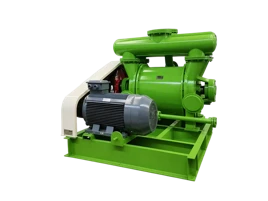
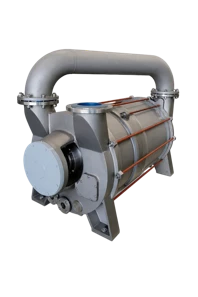
- 2BV Liquid Ring Vacuum Pump: This pump is known for its simplicity, reliability, and low maintenance requirements. It's suitable for a variety of applications, including chemical processing, food packaging, and vacuum drying.
- 2BE1 Liquid Ring Vacuum Pump: The 2BE1 series offers higher pumping capacities and better performance at lower pressures. It's often used in applications where a large volume of gas needs to be removed quickly, such as in power plants and paper mills.
- 2BE3 Large Liquid Ring Vacuum Pump: For applications that require even higher pumping capacities, the 2BE3 series is a great choice. These pumps are designed for heavy-duty industrial use and can handle large volumes of gas at low pressures.
Tips for Optimizing Pumping Capacity
- Proper Sizing: Make sure you choose a pump with the right pumping capacity for your application. An undersized pump will take longer to reach the desired pressure, while an oversized pump will consume more energy than necessary.
- Regular Maintenance: Keep your pump well-maintained to ensure optimal performance. This includes changing the oil, checking the seals, and cleaning the pump regularly.
- Correct Installation: Install the pump correctly to minimize pressure losses and ensure efficient operation. Make sure the inlet and outlet pipes are the right size and are properly connected.
Conclusion
Calculating the pumping capacity of a rough vacuum pump is an important step in choosing the right pump for your application. By understanding the factors that affect pumping capacity and using the appropriate formulas, you can make an informed decision.
If you're in the market for a rough vacuum pump or need help with calculating the pumping capacity for your specific application, don't hesitate to get in touch. Our team of experts is here to assist you and provide you with the best solutions for your needs.
References
- "Vacuum Technology: A Practical Guide" by Peter L. Hagans
- "Handbook of Vacuum Physics" by A. Roth