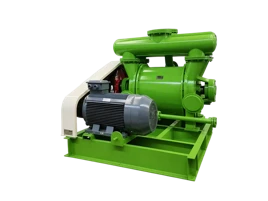
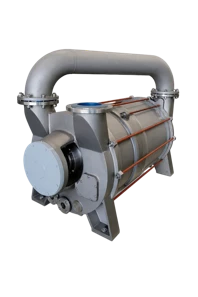
When it comes to dry pumps, there are several types available in the market, each with its own set of features, advantages, and applications. As a dry pump supplier, I've had the opportunity to work with various kinds of these pumps, and I'm here to share insights about the common types.
1. Rotary Vane Dry Pumps
Rotary vane dry pumps are one of the most well - known types of dry pumps. They work on a simple yet effective principle. Inside the pump, there's a rotor with vanes that rotate within a cylindrical cavity. As the rotor spins, the vanes slide in and out of the rotor slots. This movement creates chambers of variable volume. When the chamber volume increases, gas is drawn into the pump from the inlet. As the rotor continues to turn, the chamber volume decreases, compressing the gas and then expelling it through the outlet.
These pumps are known for their relatively quiet operation and ability to achieve moderately high vacuum levels. They're often used in applications such as laboratory experimentation, where a quiet environment is necessary, and in small - scale industrial processes like vacuum packaging. One of the key benefits of rotary vane dry pumps is their reliability. They have a straightforward design with fewer moving parts compared to some other pump types, which means less risk of mechanical failure. However, they do require regular maintenance, such as changing the vanes over time as they wear out.
2. Scroll Dry Pumps
Scroll dry pumps are another popular option. They consist of two spiral - shaped scrolls, one fixed and the other orbiting around the fixed scroll. As the orbiting scroll moves, gas is trapped in the pockets formed between the two scrolls. These pockets gradually move towards the center of the scrolls as the orbiting motion continues, compressing the gas. Eventually, the compressed gas is discharged from the center of the pump.
One of the main advantages of scroll dry pumps is their clean operation. Since there's no oil used in the pumping process, there's no risk of oil contamination in the vacuum system. This makes them ideal for applications in the semiconductor industry, where even the slightest contamination can ruin the manufacturing process. Scroll dry pumps are also energy - efficient. They typically consume less power compared to some other types of dry pumps, which can lead to significant cost savings in the long run. On the downside, they can be more sensitive to particulate matter in the gas being pumped. If the gas contains a lot of debris, it can cause damage to the scrolls and reduce the pump's performance.
3. Screw Dry Pumps
Screw dry pumps operate using two intermeshing screws that rotate in opposite directions. As the screws turn, gas is drawn into the inlet of the pump and is then transported along the length of the screws. The gas is compressed as it moves towards the outlet due to the decreasing volume between the screw threads.
These pumps are capable of handling a wide range of gas flows and can achieve relatively high vacuum levels. They're often used in industrial applications such as chemical processing, where large volumes of gas need to be pumped and a high degree of vacuum is required. Screw dry pumps are also quite robust and can handle more aggressive gases compared to some other pump types. However, they're more complex in design and can be relatively expensive to purchase and maintain. The screws need to be precisely machined, and any misalignment or wear can affect the pump's performance.
4. Roots Dry Pumps
Roots dry pumps are a unique type of dry pump that work on the principle of positive displacement. They have two lobed rotors that rotate in opposite directions within a housing. The rotors are synchronized so that they don't touch each other or the housing. As the rotors turn, gas is trapped in the spaces between the lobes and the housing and is then transferred from the inlet to the outlet.
Roots dry pumps are known for their high pumping speeds. They can move large volumes of gas very quickly, making them suitable for applications where rapid evacuation is required, such as in vacuum metallurgy. There are different variations of Roots dry pumps available. For example, the NZJQ Multistage Gas circulation - cooled Roots Pump is designed with multiple stages and a gas circulation - cooling system, which allows it to handle high - load applications more efficiently. The ZJP Roots Vacuum Pump is another popular option, suitable for a wide range of industrial uses. The NZJP Multistage Roots Vacuum Pump offers the advantage of multiple stages, which can enhance its vacuum performance and pumping capacity.


However, Roots dry pumps are typically not capable of achieving very high vacuum levels on their own. They're often used in conjunction with a backing pump, such as a rotary vane or a screw pump, to reach the desired vacuum level.
5. Diaphragm Dry Pumps
Diaphragm dry pumps use a flexible diaphragm that moves back and forth to create a pumping action. When the diaphragm moves in one direction, it expands the volume of the pumping chamber, drawing gas in through the inlet. As the diaphragm moves in the opposite direction, the volume of the chamber decreases, compressing the gas and forcing it out through the outlet.
These pumps are very versatile and can be used in a variety of applications, from medical devices to environmental monitoring. They're known for their compact size and simplicity. The lack of lubricated moving parts within the pumping chamber makes them suitable for applications where contamination must be avoided. However, their pumping capacity is relatively limited compared to some of the other pump types mentioned above.
In conclusion, choosing the right type of dry pump depends on a variety of factors, such as the required vacuum level, the volume of gas to be pumped, the nature of the gas (whether it's aggressive or contains particulates), and the budget. If you're in the market for a dry pump and need some guidance on which type would be best for your specific application, or if you're interested in learning more about our product range, feel free to reach out to us for a detailed discussion and to start the procurement process.
References
- "Vacuum Technology Handbook"
- Industry - specific technical papers on dry pump applications