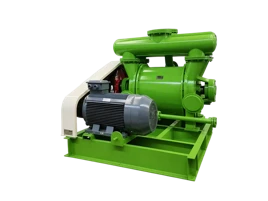
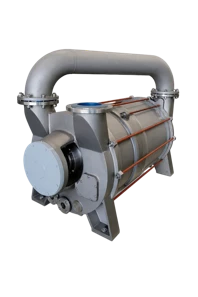
In the field of vacuum technology, high vacuum screw pumps play a crucial role in various industrial applications, such as semiconductor manufacturing, chemical processing, and scientific research. However, achieving high pumping efficiency under low - pressure conditions is often a challenge. As a high vacuum screw pump supplier, I have gained extensive experience in this area, and I am eager to share some effective strategies to improve the pumping efficiency of high vacuum screw pumps in low - pressure conditions.
Understanding the Working Principle of High Vacuum Screw Pumps
Before delving into the methods of improving pumping efficiency, it is essential to understand how high vacuum screw pumps work. High vacuum screw pumps operate based on the principle of positive displacement. The rotating screws in the pump chamber trap gas molecules and transport them from the inlet to the outlet. In low - pressure conditions, the gas density is low, and the interaction between gas molecules and the pump components becomes more complex. This can lead to reduced pumping speed and efficiency.
Optimizing the Pump Design
One of the primary ways to improve pumping efficiency is to optimize the pump design. For high vacuum screw pumps, the screw profile is a critical factor. A well - designed screw profile can enhance the gas - trapping ability and minimize back - streaming. Our company has invested heavily in research and development to design screws with advanced profiles that are specifically tailored for low - pressure applications.
Another aspect of pump design optimization is the internal clearance. In low - pressure conditions, reducing the internal clearance between the screws and the pump housing can significantly improve the pumping efficiency. However, it is important to ensure that the clearance is not too small to avoid mechanical interference and overheating. Our engineering team uses advanced manufacturing techniques to achieve precise clearances, which helps to maintain a high level of pumping efficiency.
Temperature Control
Temperature control is also vital for improving the pumping efficiency of high vacuum screw pumps in low - pressure conditions. As the gas is compressed in the pump, heat is generated. Excessive heat can cause thermal expansion of the pump components, which may increase the internal clearance and reduce the pumping efficiency. Moreover, high temperatures can also affect the lubrication and sealing performance of the pump.
To address this issue, our high vacuum screw pumps are equipped with efficient cooling systems. For example, some of our models use water - cooling jackets to dissipate heat effectively. By maintaining a stable operating temperature, we can ensure that the pump operates at its optimal efficiency even in low - pressure environments.
Gas Composition and Pressure Ratio
The composition of the gas being pumped and the pressure ratio across the pump also have a significant impact on the pumping efficiency. Different gases have different molecular weights and viscosities, which can affect the gas - flow behavior inside the pump. In low - pressure conditions, it is important to consider the gas composition when selecting a high vacuum screw pump.
Our company offers a range of high vacuum screw pumps that are suitable for different gas compositions. For example, the VDP Dry Screw Vacuum Pump is designed to handle a wide variety of gases, including corrosive and condensable gases. By matching the pump to the specific gas composition, we can improve the pumping efficiency and extend the pump's service life.


In addition, the pressure ratio across the pump should be carefully considered. A high pressure ratio can lead to increased power consumption and reduced pumping efficiency. Our engineers can help customers select the appropriate pump configuration to achieve an optimal pressure ratio for their specific applications.
Maintenance and Regular Inspection
Regular maintenance and inspection are essential for ensuring the long - term efficiency of high vacuum screw pumps. Over time, the pump components may wear out, and the internal clearances may change. By conducting regular inspections, we can detect and address these issues before they affect the pumping efficiency.
Our company provides comprehensive maintenance services for our high vacuum screw pumps. We recommend that customers follow our maintenance schedule, which includes tasks such as lubrication, filter replacement, and alignment checks. By keeping the pump in good condition, we can ensure that it operates at its peak efficiency in low - pressure conditions.
Complementary Pumping Systems
In some cases, using a complementary pumping system can significantly improve the overall pumping efficiency in low - pressure conditions. For example, combining a high vacuum screw pump with a NZJP Multistage Roots Vacuum Pump or a ZJQ Gas circulation - cooled Roots Pump can enhance the pumping speed and reduce the ultimate pressure.
These complementary pumps can be used in series or parallel configurations, depending on the specific requirements of the application. Our technical team can help customers design the most suitable pumping system by considering factors such as the required pumping speed, ultimate pressure, and gas composition.
Conclusion
Improving the pumping efficiency of high vacuum screw pumps in low - pressure conditions requires a comprehensive approach that includes optimizing the pump design, controlling the temperature, considering the gas composition and pressure ratio, performing regular maintenance, and using complementary pumping systems. As a high vacuum screw pump supplier, we are committed to providing our customers with high - quality products and professional technical support.
If you are looking for a reliable high vacuum screw pump for your low - pressure applications, or if you have any questions about improving pumping efficiency, please feel free to contact us. Our experienced sales team is ready to assist you in selecting the most suitable pump and designing the optimal pumping system for your needs. We look forward to the opportunity to work with you and help you achieve your vacuum - related goals.
References
- [1] “Vacuum Technology Handbook,” Edited by David M. O'Hanlon, Wiley - VCH, 2003.
- [2] “Screw Vacuum Pumps: Design, Operation, and Maintenance,” Industrial Press Inc., 2018.
- [3] Research papers on vacuum technology published in leading scientific journals such as “Journal of Vacuum Science and Technology” and “Vacuum.”