Hey there! As a supplier of rough vacuum pumps, I've had my fair share of experiences with these machines. While rough vacuum pumps are super useful in a ton of industries, they're not without their drawbacks. In this blog, I'm gonna break down some of the disadvantages of rough vacuum pumps.
1. Limited Vacuum Level
One of the biggest limitations of rough vacuum pumps is their inability to achieve extremely high vacuum levels. Rough vacuum pumps are typically designed to operate in the pressure range of around 1 to 1000 mbar. If you need a much higher vacuum, like in some semiconductor manufacturing processes or high - energy physics experiments, rough vacuum pumps just won't cut it. For instance, in electron microscopy, where you need an ultra - high vacuum to prevent electron scattering, rough vacuum pumps can only get you part of the way there. You'd usually need to use a combination of rough vacuum pumps and high - vacuum pumps like turbomolecular pumps or diffusion pumps to reach the required vacuum level.
2. Maintenance Requirements
Rough vacuum pumps need regular maintenance to keep them running smoothly. The moving parts in these pumps, such as pistons, vanes, or rotors, are subject to wear and tear over time. For example, in a rotary vane pump, the vanes rub against the pump chamber walls, and eventually, they'll need to be replaced. This means you have to factor in the cost of replacement parts and the time and labor required for maintenance. If you don't maintain the pump properly, it can lead to decreased performance, increased energy consumption, and even complete pump failure. And let's not forget the downtime that comes with maintenance. If your production line depends on the vacuum pump, any unplanned maintenance can cause delays and loss of productivity.
3. Noise and Vibration
Rough vacuum pumps can be pretty noisy and cause a fair amount of vibration. The mechanical operation of the pump, including the movement of pistons, rotors, and gears, generates a lot of noise. This can be a real problem in a workplace environment, as it can cause hearing damage to workers if they're exposed to it for long periods. The vibration can also be an issue. It can cause damage to the pump itself over time, as well as to the surrounding equipment. For example, if the pump is installed near delicate instruments, the vibration can affect their accuracy. You might need to invest in vibration - isolation mounts and sound - proof enclosures to mitigate these problems, which adds to the overall cost.
4. Energy Consumption
These pumps can be energy - hungry. They typically require a significant amount of electrical power to operate. For large - scale industrial applications, where multiple pumps might be running simultaneously, the energy costs can really add up. And with the increasing focus on energy efficiency and reducing carbon footprints, this is becoming a more and more important issue. Some rough vacuum pumps are designed to be more energy - efficient, but even then, they still consume a fair amount of power compared to other types of equipment.


5. Contamination Risks
Rough vacuum pumps can introduce contaminants into the vacuum system. For example, in oil - lubricated pumps, the oil can break down over time and release particles and vapors into the system. These contaminants can affect the quality of the vacuum and can also damage other components in the system. In some applications, like food processing or pharmaceutical manufacturing, even a small amount of contamination can be a big problem. You might need to use additional filtration systems to remove these contaminants, which again adds to the cost and complexity of the system.
6. Limited Gas Compatibility
Not all gases are compatible with rough vacuum pumps. Some gases can react with the pump materials or lubricants, causing corrosion or other damage. For example, corrosive gases like chlorine or sulfur dioxide can eat away at the pump components. In such cases, you need to use special pumps that are designed to handle these gases, which are usually more expensive. And even with these specialized pumps, there are still limitations on the concentration and flow rate of the gases that can be handled.
Our Product Offerings
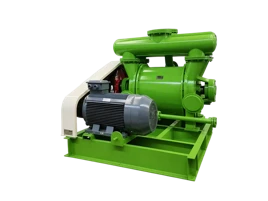
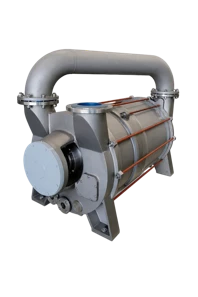
Despite these disadvantages, rough vacuum pumps are still an essential part of many industrial processes. At our company, we offer a range of high - quality rough vacuum pumps, such as the 2BV Liquid Ring Vacuum Pump, 2BE3 Large Liquid Ring Vacuum Pump, and 2BED 2 Stage Liquid Ring Vacuum Pump. These pumps are designed to minimize some of the disadvantages we've discussed. For example, our liquid ring vacuum pumps are relatively quiet, have low vibration, and are less prone to contamination compared to some other types of rough vacuum pumps.
If you're in the market for a rough vacuum pump and want to learn more about how our products can meet your needs, don't hesitate to reach out. We're here to help you find the best solution for your specific application. Whether you're dealing with a small - scale laboratory setup or a large - scale industrial operation, we've got the expertise and the products to support you.
References
- Vacuum Technology Handbook, Various authors
- Industrial Vacuum Pump Applications Guide, Industry experts