Hey there! As a supplier of large vacuum pumps, I often get asked a bunch of questions. One that pops up quite a bit is, "Can a large vacuum pump be used in a high - altitude area?" Well, let's dive right into this topic and figure it out together.
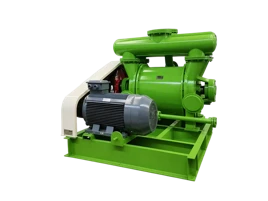
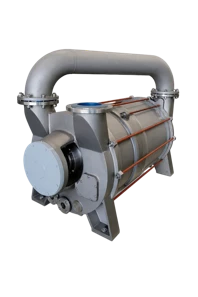
First off, let's understand what a large vacuum pump is all about. A large vacuum pump is a pretty powerful piece of equipment. It's designed to create a vacuum, which means it removes gas molecules from a sealed volume to leave behind a partial or complete vacuum. We offer a range of large vacuum pumps, like the 2BE3 Large Liquid Ring Vacuum Pump, 2BE1 Liquid Ring Vacuum Pump, and 2BV Liquid Ring Vacuum Pump. These pumps are used in various industries, such as chemical processing, food packaging, and power generation.
Now, the key difference when it comes to high - altitude areas is the atmospheric pressure. At sea level, the atmospheric pressure is about 101.3 kPa. But as you go up in altitude, the atmospheric pressure drops. For example, at an altitude of 3000 meters, the atmospheric pressure is roughly around 70 kPa. This drop in atmospheric pressure has a significant impact on how a vacuum pump works.
One of the main things affected is the pump's performance. The vacuum pump works by creating a pressure difference between the inlet and the outlet. At high altitudes, since the ambient pressure is lower, the pump has to work harder to achieve the same level of vacuum as it would at sea level. This means that the pumping speed, which is the volume of gas that the pump can remove per unit of time, might decrease. For instance, if a pump can achieve a certain pumping speed at sea level, it might not be able to reach the same speed at a high altitude.
Another aspect to consider is the sealing of the pump. In a high - altitude environment, the lower atmospheric pressure can affect the seals of the vacuum pump. The seals are there to prevent gas from leaking into the pump, which is crucial for maintaining the vacuum. With the lower pressure outside, there's a greater pressure difference across the seals, which could potentially lead to seal failure if the seals aren't designed to handle such conditions.
The cooling of the pump is also a concern. Many large vacuum pumps generate a lot of heat during operation, and they rely on the surrounding air for cooling. At high altitudes, the air is thinner, which means it has a lower heat - carrying capacity. This can cause the pump to overheat more easily, which is not good for its long - term performance and can even damage the pump components.
However, that doesn't mean a large vacuum pump can't be used in a high - altitude area. There are ways to make it work. First, we can select a pump with a higher rated capacity. This means that the pump is designed to handle a wider range of pressures and can still perform well even at lower atmospheric pressures. We can also modify the pump's design to improve the sealing. For example, using special high - altitude - resistant seals that can withstand the greater pressure difference.
In terms of cooling, we can install additional cooling systems, like liquid - cooling systems. These systems can be more effective than air - cooling in high - altitude areas because they don't rely on the heat - carrying capacity of the thin air.
Let's take a look at some real - world examples. There are mining operations in high - altitude mountain regions that use large vacuum pumps for ventilation and ore processing. By making the necessary adjustments to the pumps, they've been able to operate successfully. Also, some research facilities in high - altitude areas use vacuum pumps for scientific experiments. With proper modifications, these pumps can meet the requirements of the experiments.
When it comes to cost, using a large vacuum pump in a high - altitude area might be a bit more expensive. The initial cost of a pump with a higher rated capacity is usually higher. And the additional cooling systems and high - altitude - resistant seals also add to the cost. But in the long run, if the pump is properly selected and modified, it can save a lot of trouble and downtime, which is definitely worth the investment.


So, to sum it up, while there are challenges in using a large vacuum pump in a high - altitude area, it is definitely possible. With the right selection, design modifications, and additional equipment, a large vacuum pump can perform well in these environments.
If you're considering using a large vacuum pump in a high - altitude area for your business, don't hesitate to reach out. We're here to help you select the right pump, make the necessary modifications, and ensure that your operation runs smoothly. Whether it's for a new project or to replace an existing pump, we have the expertise and the products to meet your needs.
References
- Handbook of Vacuum Physics
- Vacuum Technology for Industrial Applications