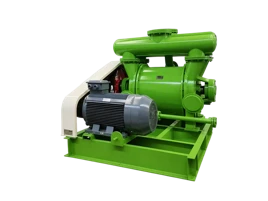
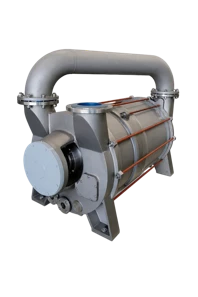
As a seasoned supplier of sewage vacuum pumps, I've encountered numerous inquiries about the potential of these pumps in sewage odor control. This blog post aims to delve into this topic, exploring the science behind sewage odors, how sewage vacuum pumps work, and whether they can effectively mitigate these unpleasant smells.
Understanding Sewage Odors
Sewage odors are primarily caused by the decomposition of organic matter in wastewater. When organic materials such as food waste, human waste, and other biological substances break down, they release a variety of gases, including hydrogen sulfide (H₂S), ammonia (NH₃), and methane (CH₄). Hydrogen sulfide, in particular, is notorious for its strong, rotten-egg smell and can be harmful to human health at high concentrations.
The presence of these gases in sewage systems can be exacerbated by factors such as poor ventilation, stagnant water, and high temperatures. In addition, certain industrial processes and chemical discharges can also contribute to the production of foul-smelling compounds in sewage.
How Sewage Vacuum Pumps Work
Sewage vacuum pumps are designed to remove wastewater and solids from sewage systems by creating a vacuum. This vacuum draws the sewage into the pump, where it is then transported to a treatment facility or disposal site. There are several types of sewage vacuum pumps available, including liquid ring vacuum pumps, which are commonly used in sewage applications.
Liquid Ring Vacuum Pumps
Liquid ring vacuum pumps operate on the principle of a rotating impeller within a liquid ring. As the impeller rotates, it creates a series of cells that expand and contract, creating a vacuum. This vacuum allows the pump to draw in sewage and other fluids.
There are different models of liquid ring vacuum pumps suitable for sewage applications, such as the 2BE3 Large Liquid Ring Vacuum Pump, 2BV Liquid Ring Vacuum Pump, and 2BE1 Liquid Ring Vacuum Pump. These pumps offer high efficiency, reliability, and low maintenance requirements, making them ideal for continuous operation in sewage systems.
Can Sewage Vacuum Pumps Control Sewage Odors?
The question of whether sewage vacuum pumps can be used for sewage odor control is a complex one. While sewage vacuum pumps are not specifically designed to eliminate odors, they can play a role in reducing them indirectly.
Removing Stagnant Sewage
One of the main ways that sewage vacuum pumps can help control odors is by removing stagnant sewage from the system. Stagnant water provides an ideal environment for the growth of bacteria and the production of foul-smelling gases. By continuously pumping sewage out of the system, vacuum pumps can prevent the accumulation of stagnant water and reduce the production of odors.


Improving Ventilation
Sewage vacuum pumps can also improve ventilation in sewage systems. As the pump creates a vacuum, it draws air into the system, which helps to circulate the air and reduce the concentration of odorous gases. This improved ventilation can help to disperse the odors and make the environment more pleasant.
Preventing Leaks
Another benefit of sewage vacuum pumps is that they can help to prevent leaks in the sewage system. Leaks can allow sewage and odorous gases to escape into the surrounding environment, causing unpleasant smells and potential health hazards. By maintaining a proper vacuum in the system, vacuum pumps can help to prevent leaks and keep the sewage contained.
Limitations
However, it's important to note that sewage vacuum pumps have their limitations when it comes to odor control. While they can help to reduce odors, they cannot completely eliminate them. Other factors, such as the source of the odors, the design of the sewage system, and the presence of other contaminants, can also affect the effectiveness of odor control.
In addition, sewage vacuum pumps need to be properly maintained and operated to ensure their optimal performance. If the pump is not working correctly or is not properly maintained, it may not be able to effectively remove sewage or improve ventilation, which can lead to increased odors.
Other Odor Control Measures
In addition to using sewage vacuum pumps, there are several other odor control measures that can be implemented in sewage systems. These include:
Chemical Treatment
Chemical treatment involves the use of chemicals to neutralize or eliminate odorous compounds in sewage. There are several types of chemicals available for odor control, including oxidizing agents, pH adjusters, and masking agents. Chemical treatment can be effective in reducing odors, but it requires careful monitoring and dosing to ensure its safety and effectiveness.
Biological Treatment
Biological treatment uses microorganisms to break down organic matter in sewage and reduce the production of odorous gases. This can be achieved through the use of aerobic or anaerobic bacteria, which can be added to the sewage system or naturally present in the environment. Biological treatment is a sustainable and cost-effective method of odor control, but it requires proper environmental conditions and monitoring to ensure its effectiveness.
Ventilation Systems
Ventilation systems can be installed in sewage systems to improve air circulation and reduce the concentration of odorous gases. These systems can include exhaust fans, air ducts, and odor control filters. Ventilation systems can be effective in reducing odors, but they need to be properly designed and maintained to ensure their optimal performance.
Sealing and Insulation
Sealing and insulation can be used to prevent sewage and odorous gases from escaping into the surrounding environment. This can include sealing joints, pipes, and manholes, as well as insulating the sewage system to reduce heat transfer and prevent the growth of bacteria. Sealing and insulation can be an effective method of odor control, but it requires careful installation and maintenance to ensure its effectiveness.
Conclusion
In conclusion, while sewage vacuum pumps can play a role in sewage odor control, they are not a standalone solution. By removing stagnant sewage, improving ventilation, and preventing leaks, sewage vacuum pumps can help to reduce the production of odorous gases and make the environment more pleasant. However, other odor control measures, such as chemical treatment, biological treatment, ventilation systems, and sealing and insulation, may also be necessary to effectively control sewage odors.
If you're interested in learning more about sewage vacuum pumps or other odor control solutions for your sewage system, I encourage you to contact me. As a supplier of high-quality sewage vacuum pumps, I can provide you with the information and support you need to make an informed decision. Let's work together to find the best solution for your sewage odor control needs.
References
- Metcalf & Eddy, Inc. (2003). Wastewater Engineering: Treatment and Reuse (4th ed.). McGraw-Hill.
- Tchobanoglous, G., Burton, F. L., & Stensel, H. D. (2003). Wastewater Engineering: Treatment, Disposal, and Reuse (4th ed.). McGraw-Hill.
- USEPA. (2000). Odor Control at Wastewater Treatment Facilities. EPA/625/R-99/011.