Can a water ring vacuum pump be used at high altitudes?
As a supplier of water ring vacuum pumps, I often receive inquiries from customers in high - altitude regions regarding the suitability of our products for their specific environments. High - altitude areas present unique challenges that can significantly impact the performance of water ring vacuum pumps. In this blog, we'll explore whether water ring vacuum pumps can be used at high altitudes and the factors that need to be considered.
How water ring vacuum pumps work
Before delving into the high - altitude performance, it's essential to understand how water ring vacuum pumps operate. A water ring vacuum pump uses a liquid, typically water, to create a seal and generate a vacuum. The impeller rotates eccentrically within the pump casing, causing the liquid to form a rotating ring. As the impeller turns, the volume between the impeller blades and the liquid ring changes, creating suction and discharge chambers. This mechanism allows the pump to draw in gas and expel it, thus creating a vacuum.
Impact of high altitude on water ring vacuum pumps
-
Atmospheric pressure
One of the most significant factors affected by high altitude is atmospheric pressure. As altitude increases, atmospheric pressure decreases. The performance of a water ring vacuum pump is closely related to the difference between the inlet pressure and the atmospheric pressure. A lower atmospheric pressure means that the pump has less "pressure head" to work with. For example, at sea level, the standard atmospheric pressure is about 101.3 kPa. At an altitude of 3000 meters, the atmospheric pressure drops to approximately 70 kPa. This reduction in atmospheric pressure can limit the pump's ability to achieve a deep vacuum. -
Water vapor pressure
The vapor pressure of the sealing liquid (water) also plays a crucial role. At high altitudes, the lower atmospheric pressure allows water to boil at a lower temperature. Since water ring vacuum pumps rely on the water ring to create a seal, the lower boiling point of water can cause the water to vaporize more easily within the pump. This vaporization can lead to cavitation, which is the formation and collapse of vapor bubbles in the liquid. Cavitation not only reduces the pump's efficiency but can also cause damage to the impeller and other internal components over time.

-
Power consumption
To compensate for the reduced atmospheric pressure and the challenges posed by water vaporization, the pump may need to work harder. This often results in increased power consumption. The motor of the water ring vacuum pump may have to operate at a higher load to maintain the desired vacuum level. As a result, the energy efficiency of the pump decreases, and the operating costs increase.
Solutions for using water ring vacuum pumps at high altitudes
-
Pump selection
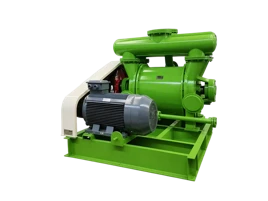
When considering using a water ring vacuum pump at high altitudes, it's crucial to choose the right pump model. Our company offers a range of water ring vacuum pumps designed to handle different operating conditions. For high - altitude applications, pumps with a higher displacement capacity may be more suitable. For instance, the 2BE3 Large Liquid Ring Vacuum Pump has a larger pumping capacity, which can help to overcome the limitations caused by the lower atmospheric pressure. -
Cooling system
To prevent excessive water vaporization, a proper cooling system can be installed. Cooling the sealing water can help to keep its temperature below the boiling point at the local atmospheric pressure. This can be achieved through the use of a heat exchanger or a refrigeration unit. By maintaining the water in a liquid state, the pump can operate more efficiently and avoid cavitation. -
System design
The overall system design should be optimized for high - altitude operation. This may include adjusting the piping layout to minimize pressure losses and ensuring proper ventilation to remove any excess heat and vapor. Additionally, the pump should be installed in a location where the temperature and humidity can be controlled as much as possible.
Examples of our products suitable for high - altitude applications
-
2BV Liquid Ring Vacuum Pump
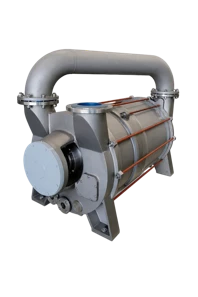
The 2BV Liquid Ring Vacuum Pump is a compact and efficient pump that can be adapted for high - altitude use. It has a robust design that can withstand the challenges of lower atmospheric pressure. With proper cooling and system design, it can provide reliable vacuum performance in high - altitude environments. -
2BE1 Liquid Ring Vacuum Pump
The 2BE1 Liquid Ring Vacuum Pump is another excellent option. It is designed to handle a wide range of operating conditions, including those at high altitudes. Its advanced impeller design and efficient sealing mechanism help to maintain good performance even when the atmospheric pressure is low.
Conclusion
In conclusion, while high altitudes present challenges for water ring vacuum pumps, it is still possible to use them effectively with proper considerations. By understanding the impact of high - altitude conditions on the pump's performance and implementing appropriate solutions such as proper pump selection, cooling systems, and optimized system design, water ring vacuum pumps can be a reliable choice for high - altitude applications.
If you are located in a high - altitude area and are in need of a water ring vacuum pump, our team of experts is ready to assist you. We can help you select the most suitable pump model and provide guidance on installation and maintenance. Whether you are in the mining, chemical, or food processing industry, we have the right solution for your vacuum requirements. Contact us today to start a discussion about your project and find out how our water ring vacuum pumps can meet your needs.
References
- "Handbook of Vacuum Technology", edited by O'Hanlon, John F.
- "Centrifugal Pumps: Design and Application" by Heinz P. Bloch and Fred K. Geitner.