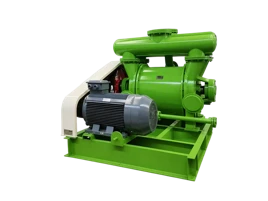
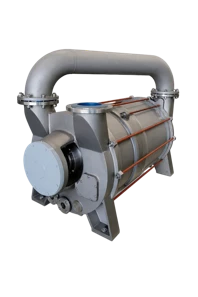
The pharmaceutical industry is a highly regulated and precision - driven sector, where the quality and safety of products are of utmost importance. One of the key pieces of equipment that plays a significant role in various pharmaceutical processes is the vacuum pump. Among the different types of vacuum pumps available, the water ring vacuum pump has emerged as a potential candidate for use in this industry. In this blog, as a water ring vacuum pump supplier, I will explore whether a water ring vacuum pump can be used in the pharmaceutical industry, discussing its advantages, limitations, and applications.
Advantages of Water Ring Vacuum Pumps in the Pharmaceutical Industry
1. Gentle Operation
Water ring vacuum pumps operate in a relatively gentle manner. They do not have internal metal - to - metal contact, which reduces the risk of generating particulate matter. In the pharmaceutical industry, where the presence of even the smallest particles can contaminate the products, this feature is highly desirable. For example, during the drying process of pharmaceutical powders, a gentle vacuum source is needed to prevent the breakage of the powder particles, and water ring vacuum pumps can meet this requirement.


2. Corrosion Resistance
Many pharmaceutical processes involve the use of corrosive chemicals. Water ring vacuum pumps can be made from materials that are resistant to corrosion, such as stainless steel. This allows them to handle corrosive gases and vapors without significant damage, ensuring a long service life and reliable operation. For instance, in the production of certain antibiotics that involve the use of acidic or alkaline solutions, a corrosion - resistant water ring vacuum pump can be used to create the necessary vacuum environment.
3. Wide Range of Vacuum Levels
Water ring vacuum pumps can achieve a wide range of vacuum levels, from rough vacuum to medium vacuum. This flexibility makes them suitable for different pharmaceutical processes. For example, in the distillation process of pharmaceutical solvents, a medium - vacuum level is often required, and water ring vacuum pumps can easily provide the appropriate vacuum conditions.
4. Simple Design and Easy Maintenance
The design of water ring vacuum pumps is relatively simple, with fewer moving parts compared to some other types of vacuum pumps. This simplicity translates into easier maintenance and lower maintenance costs. In the pharmaceutical industry, where downtime can be extremely costly, the ease of maintenance of water ring vacuum pumps is a significant advantage. Regular maintenance tasks such as checking the water level and replacing the seals can be carried out quickly and easily, minimizing the impact on production.
Limitations of Water Ring Vacuum Pumps in the Pharmaceutical Industry
1. Limited Ultimate Vacuum
Although water ring vacuum pumps can achieve a wide range of vacuum levels, their ultimate vacuum level is relatively limited compared to some high - performance vacuum pumps, such as oil - sealed rotary vane pumps or diffusion pumps. In some pharmaceutical processes that require extremely high vacuum levels, such as freeze - drying of certain high - value drugs, water ring vacuum pumps may not be able to provide the required vacuum.
2. Water Consumption
Water ring vacuum pumps require a continuous supply of water for their operation. This can lead to relatively high water consumption, which may not be environmentally friendly or cost - effective in some regions. Additionally, the wastewater generated by the pumps needs to be properly treated to meet environmental regulations, adding to the overall operating costs.
3. Contamination Risk from Water
Since water is used as the sealing and cooling medium in water ring vacuum pumps, there is a risk of water contamination of the process gases or products. In the pharmaceutical industry, where product purity is crucial, this risk needs to be carefully managed. For example, if the water contains impurities, these impurities may be carried into the pharmaceutical products during the vacuum process.
Applications of Water Ring Vacuum Pumps in the Pharmaceutical Industry
1. Filtration
In the pharmaceutical industry, filtration is a common process used to separate solids from liquids or gases. Water ring vacuum pumps can be used to create the vacuum necessary for filtration. For example, in the production of injectable drugs, the filtration process is used to remove impurities from the drug solution, and a water ring vacuum pump can provide the vacuum to facilitate the flow of the solution through the filter.
2. Drying
Drying is another important process in the pharmaceutical industry, used to remove moisture from pharmaceutical products. Water ring vacuum pumps can be used in vacuum drying processes, such as tray drying or freeze - drying. In tray drying, the water ring vacuum pump creates a vacuum environment to lower the boiling point of the water in the product, allowing for faster and more efficient drying.
3. Distillation
Distillation is used to separate different components of a mixture based on their boiling points. Water ring vacuum pumps can be used to create the vacuum required for distillation processes in the pharmaceutical industry. For example, in the production of essential oils from plants, distillation is used to extract the oils, and a water ring vacuum pump can be used to lower the distillation temperature and prevent the decomposition of the oils.
Our Product Offerings
As a water ring vacuum pump supplier, we offer a range of high - quality products suitable for the pharmaceutical industry. Our 2BE1 Liquid Ring Vacuum Pump is a compact and efficient model, ideal for small - to - medium - scale pharmaceutical processes. It offers a good balance between performance and cost, with a corrosion - resistant design that can handle a variety of process conditions.
For larger - scale pharmaceutical operations, our 2BE3 Large Liquid Ring Vacuum Pump is a great choice. It has a high pumping speed and can achieve a wide range of vacuum levels, making it suitable for demanding pharmaceutical processes such as large - scale distillation and drying.
If you need a higher vacuum level and more precise control, our 2BED 2 Stage Liquid Ring Vacuum Pump is the solution. It can achieve a deeper vacuum compared to single - stage water ring vacuum pumps, and its two - stage design provides better performance and stability.
Conclusion
In conclusion, water ring vacuum pumps can indeed be used in the pharmaceutical industry, thanks to their many advantages such as gentle operation, corrosion resistance, wide range of vacuum levels, and simple maintenance. However, their limitations, such as limited ultimate vacuum and water consumption, need to be carefully considered. By choosing the right water ring vacuum pump and properly managing the associated risks, pharmaceutical manufacturers can benefit from the reliable and cost - effective vacuum solutions provided by these pumps.
If you are in the pharmaceutical industry and are interested in learning more about our water ring vacuum pumps or would like to discuss your specific requirements, please do not hesitate to contact us. We are ready to provide you with professional advice and solutions to meet your needs.
References
- Farkas, J., & Nagy, Z. K. (2018). Vacuum Technology in the Pharmaceutical Industry. Vacuum, 156, 1 - 10.
- Perry, R. H., & Green, D. W. (2008). Perry's Chemical Engineers' Handbook. McGraw - Hill.