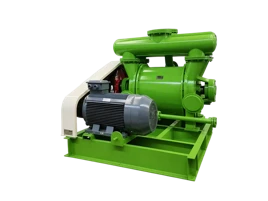
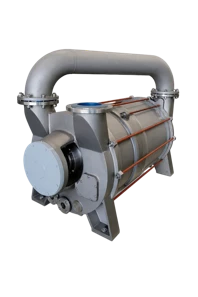
As a trusted water ring pump supplier, I've witnessed firsthand the diverse applications and critical roles these pumps play across various industries. Water ring pumps are known for their reliability, simplicity, and ability to handle a wide range of gases and vapors. In this blog, I'll delve into the control methods for water ring pumps, exploring how these techniques can optimize performance, enhance efficiency, and ensure long - term operation.
1. Manual Control
Manual control is the most basic and straightforward method for operating a water ring pump. In this approach, an operator physically adjusts the settings of the pump, such as the inlet valve, outlet valve, and speed control. This method is commonly used in small - scale operations or in situations where the process requirements are relatively stable.
For example, in a laboratory setting where a water ring pump is used for a specific experiment, an operator can manually open or close the valves to control the flow of gas into and out of the pump. By adjusting the speed of the pump motor, the operator can also regulate the vacuum level achieved by the pump.
However, manual control has its limitations. It requires constant attention from the operator, and human error can lead to inconsistent performance. Additionally, in large - scale industrial applications, manual control may not be practical due to the complexity and scale of the operations.
2. Pressure - Based Control
Pressure - based control is a widely used method for regulating the operation of water ring pumps. This method involves using pressure sensors to monitor the pressure inside the pump or the system it is connected to. Based on the measured pressure, the control system adjusts the pump's operation to maintain a desired pressure level.
2.1 On - Off Control
On - off control is a simple form of pressure - based control. In this method, the pump is turned on when the pressure in the system drops below a certain setpoint and turned off when the pressure reaches an upper setpoint. For instance, in a vacuum packaging system, the water ring pump will start when the vacuum pressure in the packaging chamber falls below the required level and stop when the desired vacuum is achieved.
This control method is easy to implement and cost - effective. However, it can lead to frequent starts and stops of the pump, which may cause wear and tear on the pump components and increase energy consumption.
2.2 Proportional Control
Proportional control is a more sophisticated pressure - based control method. Instead of simply turning the pump on or off, the control system adjusts the pump's speed or flow rate in proportion to the difference between the measured pressure and the setpoint. This allows for more precise control of the pressure and reduces the frequency of starts and stops.
For example, if the measured pressure is slightly below the setpoint, the control system will increase the pump's speed slightly to gradually bring the pressure back to the desired level. This results in smoother operation and better energy efficiency compared to on - off control.
3. Flow - Based Control
Flow - based control focuses on regulating the flow rate of the gas or vapor being pumped by the water ring pump. This method is particularly useful in applications where a specific flow rate is required to maintain the process efficiency.
Flow sensors are used to measure the flow rate of the gas or vapor entering or leaving the pump. Based on the measured flow rate, the control system adjusts the pump's operation to maintain the desired flow rate.
Similar to pressure - based control, flow - based control can use on - off or proportional control strategies. In on - off flow control, the pump is turned on or off based on whether the flow rate is above or below a certain setpoint. Proportional flow control, on the other hand, adjusts the pump's speed or flow rate in proportion to the difference between the measured flow rate and the setpoint.
For example, in a chemical processing plant, a water ring pump may be used to remove a specific amount of gas from a reaction vessel per unit of time. Flow - based control ensures that the pump operates at the appropriate rate to maintain the required gas removal rate.
4. Temperature - Based Control
Temperature can have a significant impact on the performance and reliability of water ring pumps. High temperatures can cause the working fluid (usually water) to evaporate, leading to reduced pumping efficiency and potential damage to the pump components. Temperature - based control is used to monitor and regulate the temperature of the pump and its working fluid.
Temperature sensors are installed at critical points in the pump, such as the inlet and outlet of the working fluid and the pump casing. When the temperature exceeds a certain setpoint, the control system takes appropriate actions to cool the pump or adjust its operation.
This may involve increasing the flow rate of the cooling water, reducing the pump's speed, or even shutting down the pump in extreme cases. For example, in a high - temperature industrial environment, a water ring pump may be equipped with a cooling system that is activated when the temperature of the working fluid reaches a pre - determined level.
5. Speed Control
Speed control is an effective way to optimize the performance and energy efficiency of water ring pumps. By adjusting the speed of the pump motor, the pump's flow rate, pressure, and power consumption can be regulated.
5.1 Variable Frequency Drives (VFDs)
Variable Frequency Drives are commonly used for speed control of water ring pumps. A VFD allows the operator to adjust the frequency of the electrical power supplied to the pump motor, which in turn changes the motor's speed.


By reducing the pump's speed when the demand for pumping is low, energy consumption can be significantly reduced. For example, in a wastewater treatment plant, the water ring pump may not need to operate at full speed all the time. Using a VFD, the pump's speed can be adjusted according to the actual flow rate of the wastewater being treated.
5.2 Multi - Speed Motors
Multi - speed motors are another option for speed control. These motors have multiple speed settings that can be selected manually or automatically based on the process requirements. While not as flexible as VFDs, multi - speed motors are a cost - effective solution for applications where a few discrete speed settings are sufficient.
6. Advanced Control Systems
In modern industrial applications, advanced control systems are increasingly being used to manage the operation of water ring pumps. These systems often incorporate multiple control methods and use advanced algorithms to optimize the pump's performance.
6.1 Programmable Logic Controllers (PLCs)
PLCs are widely used in industrial automation to control the operation of various equipment, including water ring pumps. A PLC can be programmed to monitor multiple parameters such as pressure, flow rate, temperature, and motor speed. Based on the programmed logic, the PLC can adjust the pump's operation in real - time to achieve optimal performance.
For example, a PLC can be programmed to adjust the pump's speed based on both the pressure and flow rate in the system, taking into account the specific requirements of the process.
6.2 Supervisory Control and Data Acquisition (SCADA) Systems
SCADA systems provide a higher level of control and monitoring for water ring pumps. These systems allow operators to remotely monitor and control the pump's operation from a central control room. SCADA systems can collect data from multiple sensors installed on the pump and display it in a user - friendly interface.
Operators can use the SCADA system to set control parameters, view historical data, and receive alarms in case of abnormal operation. This enables more efficient management of the pump and the overall process.
Conclusion
In conclusion, there are various control methods available for water ring pumps, each with its own advantages and applications. From simple manual control to advanced automation systems, the choice of control method depends on the specific requirements of the application, such as the desired level of precision, energy efficiency, and the complexity of the process.
As a water ring pump supplier, we offer a range of high - quality pumps, including the 2BED 2 Stage Liquid Ring Vacuum Pump, 2BV Liquid Ring Vacuum Pump, and 2BE1 Liquid Ring Vacuum Pump. Our pumps can be customized with different control systems to meet your specific needs.
If you are interested in learning more about our water ring pumps or discussing your control requirements, please feel free to contact us for a consultation. We are committed to providing you with the best solutions for your pumping needs.
References
- Perry, R. H., & Green, D. W. (Eds.). (1997). Perry's Chemical Engineers' Handbook (7th ed.). McGraw - Hill.
- Walas, S. M. (1988). Chemical Process Equipment: Selection and Design. Butterworth - Heinemann.