What are the power requirements of a heavy duty vacuum pump?
As a supplier of heavy duty vacuum pumps, I've encountered numerous inquiries regarding the power requirements of these robust machines. Understanding the power needs of a heavy duty vacuum pump is crucial for efficient operation, cost - effectiveness, and ensuring that the pump can perform its intended tasks.
Factors Influencing Power Requirements
The power requirements of a heavy duty vacuum pump are influenced by several key factors. First and foremost is the type of vacuum pump. There are various types of heavy duty vacuum pumps available in the market, such as rotary vane pumps, liquid ring pumps, and diaphragm pumps, each with its own power consumption characteristics.
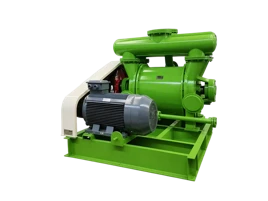
For instance, liquid ring vacuum pumps are widely used in heavy - duty applications due to their ability to handle large volumes of gas and vapor. Our 2BV Liquid Ring Vacuum Pump is a popular choice in many industrial settings. The power consumption of a liquid ring pump depends on factors like the pump's size, the required vacuum level, and the flow rate. Larger pumps generally require more power to operate, as they are designed to handle greater volumes of gas.
The required vacuum level is another critical factor. Higher vacuum levels demand more energy to achieve and maintain. A heavy duty vacuum pump that needs to reach a deep vacuum (e.g., in semiconductor manufacturing or high - precision vacuum coating processes) will consume more power compared to a pump used for less demanding applications, such as simple material handling or basic ventilation.
Flow rate also plays a significant role. A pump with a high flow rate needs more power to move a large volume of gas through the system in a given time. For example, in a chemical processing plant where large amounts of gas need to be removed continuously, a heavy duty vacuum pump with a high flow rate is required, and this will naturally lead to higher power consumption.
The nature of the gas or vapor being pumped is yet another consideration. Some gases are more difficult to pump than others. For instance, condensable vapors can cause issues in the pump, leading to increased power requirements. If the gas contains particulate matter, the pump may need to work harder to prevent clogging, which can also result in higher power consumption.
Power Calculation and Estimation
Calculating the power requirements of a heavy duty vacuum pump is a complex process. It typically involves a combination of theoretical calculations and practical experience. Manufacturers usually provide power consumption data for their pumps based on standard operating conditions. However, in real - world applications, the actual power consumption may deviate from these values.
To estimate the power requirements more accurately, one can use the following general approach. First, determine the required vacuum level and the flow rate. Then, refer to the pump manufacturer's performance curves, which show the relationship between power consumption, vacuum level, and flow rate. These curves are based on tests conducted under controlled conditions and can give a good indication of the pump's power needs.


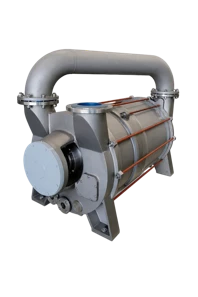
For example, if you are considering our 2BED 2 Stage Liquid Ring Vacuum Pump, the manufacturer's documentation will provide power consumption data for different operating points. By comparing your specific requirements (vacuum level and flow rate) with the data on the performance curves, you can get a rough estimate of the power needed.
In addition to the pump itself, the power requirements of the associated equipment, such as motors, control systems, and cooling systems, also need to be considered. The motor is the primary power - consuming component of the pump system. The efficiency of the motor can have a significant impact on the overall power consumption. A high - efficiency motor will consume less power for the same amount of work compared to a low - efficiency one.
Energy Efficiency and Power Saving Measures
In today's energy - conscious world, energy efficiency is a top priority for many industries. As a heavy duty vacuum pump supplier, we are committed to providing pumps that are not only powerful but also energy - efficient.
One way to improve energy efficiency is to choose the right pump for the application. Selecting a pump with a capacity that closely matches the actual requirements can prevent over - sizing, which often leads to unnecessary power consumption. For example, if a process only requires a moderate vacuum level and a relatively low flow rate, there is no need to use a large, high - power pump.
Regular maintenance of the pump is also essential for energy efficiency. A well - maintained pump operates more smoothly and consumes less power. This includes tasks such as checking and replacing worn - out parts, cleaning the pump internals, and ensuring proper lubrication.
Advanced control systems can also help save energy. Variable frequency drives (VFDs) can be used to adjust the speed of the pump motor according to the actual demand. This allows the pump to operate at an optimal speed, reducing power consumption when the full capacity of the pump is not required.
Case Studies
Let's take a look at some real - world examples to illustrate the power requirements of heavy duty vacuum pumps.
In a food packaging plant, a heavy duty vacuum pump is used to create a vacuum in the packaging process to extend the shelf life of the products. The plant initially used a pump that was over - sized for the application. The pump was consuming a significant amount of power even though the required vacuum level and flow rate were relatively low. After consulting with us, the plant switched to a more appropriately sized 2BE3 Large Liquid Ring Vacuum Pump. As a result, the power consumption was reduced by approximately 30%, leading to substantial cost savings over time.
In a pharmaceutical manufacturing facility, a heavy duty vacuum pump was used in the distillation process. The pump was struggling to maintain the required vacuum level due to the presence of condensable vapors. By installing a pre - condenser upstream of the pump and optimizing the pump's operating parameters, the power consumption was reduced by 20%. This not only saved energy but also improved the overall efficiency of the distillation process.
Conclusion
In conclusion, the power requirements of a heavy duty vacuum pump are influenced by multiple factors, including the type of pump, the required vacuum level, the flow rate, the nature of the gas being pumped, and the associated equipment. Accurately estimating and managing these power requirements is essential for efficient and cost - effective operation.
As a heavy duty vacuum pump supplier, we understand the importance of providing pumps that meet our customers' specific needs while minimizing power consumption. Our range of high - quality vacuum pumps, such as the 2BV Liquid Ring Vacuum Pump, 2BED 2 Stage Liquid Ring Vacuum Pump, and 2BE3 Large Liquid Ring Vacuum Pump, is designed to offer optimal performance and energy efficiency.
If you are in need of a heavy duty vacuum pump for your application, we invite you to contact us for a detailed consultation. Our team of experts can help you select the most suitable pump, estimate the power requirements accurately, and provide solutions to optimize energy consumption. Let's work together to find the best vacuum pumping solution for your business.
References
- "Vacuum Technology: Basics and Applications" by Peter K. Baumann
- "Handbook of Vacuum Physics" edited by David O'Hanlon
- Manufacturer's documentation for 2BV, 2BED, and 2BE3 vacuum pumps.