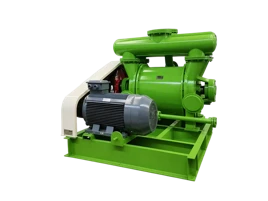
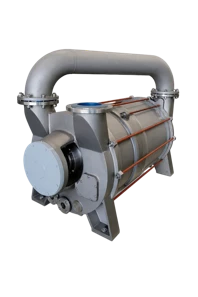
Hey there! As a supplier of ATEX screw vacuum pumps, I often get asked about the difference between oil-lubricated and dry ATEX screw vacuum pumps. So, I thought I'd write this blog to break it down for you in a way that's easy to understand.
How They Work
Let's start with how these two types of pumps operate. An oil-lubricated ATEX screw vacuum pump uses oil to lubricate the moving parts and to create a seal between the rotors and the pump housing. The oil helps reduce friction, which means less wear and tear on the components. This also helps with heat dissipation, keeping the pump cool during operation.
On the other hand, a dry ATEX screw vacuum pump doesn't use any oil for lubrication or sealing. Instead, it relies on a precise design of the screw rotors and the pump housing. The rotors are typically coated with a special material that reduces friction and wear. The absence of oil means there's no risk of oil contamination in the pumped gas, which is a huge advantage in many applications.
Performance
When it comes to performance, both types of pumps have their strengths. Oil-lubricated pumps are generally known for their high pumping speed and excellent ultimate vacuum levels. They can handle a wide range of gases and are suitable for applications where a high vacuum is required, such as in the semiconductor industry or in some chemical processes.
Dry pumps, however, are better at handling corrosive or reactive gases. Since there's no oil, there's no risk of the oil reacting with the pumped gas, which could lead to the formation of harmful by-products. Dry pumps also have a lower operating temperature compared to oil-lubricated pumps, which can extend the lifespan of the pump and reduce maintenance requirements.
Maintenance
Maintenance is another important factor to consider. Oil-lubricated pumps require regular oil changes and filter replacements. The oil needs to be monitored for contamination and its viscosity needs to be checked regularly. This can be time-consuming and costly, especially if the pump is used in a high-duty cycle application.


Dry pumps, on the other hand, have a much lower maintenance requirement. They don't need oil changes or filter replacements, which means less downtime and lower operating costs. However, the rotors in dry pumps may need to be inspected and replaced periodically, depending on the operating conditions.
Applications
The choice between oil-lubricated and dry ATEX screw vacuum pumps often depends on the specific application. Oil-lubricated pumps are commonly used in applications where a high vacuum and high pumping speed are required, such as in vacuum distillation, freeze drying, and vacuum coating.
Dry pumps are more suitable for applications where oil contamination is a concern, such as in the food and beverage industry, pharmaceutical manufacturing, and environmental monitoring. They're also a good choice for applications where corrosive or reactive gases are involved, such as in chemical processing and wastewater treatment.
Our Product Range
At our company, we offer a wide range of ATEX screw vacuum pumps, including both oil-lubricated and dry models. For example, our NZJQ Multistage Gas circulation-cooled Roots Pump is a dry pump that's designed for high-performance applications. It offers a high pumping speed and excellent ultimate vacuum levels, making it suitable for a variety of industrial processes.
We also have the VDP Dry Screw Vacuum Pump, which is a compact and energy-efficient dry pump. It's ideal for applications where space is limited and energy consumption needs to be minimized.
If you're looking for an oil-lubricated pump, our ZJQ Gas circulation-cooled Roots Pump is a great option. It offers a high pumping speed and reliable performance, making it suitable for a wide range of applications.
Conclusion
In conclusion, the choice between oil-lubricated and dry ATEX screw vacuum pumps depends on a variety of factors, including the specific application, performance requirements, and maintenance considerations. Oil-lubricated pumps are great for high-vacuum applications, while dry pumps are better for applications where oil contamination is a concern or where corrosive gases are involved.
If you're in the market for an ATEX screw vacuum pump and need help deciding which type is right for you, don't hesitate to get in touch. We have a team of experts who can provide you with the information and support you need to make an informed decision. Whether you're looking for a high-performance dry pump or a reliable oil-lubricated pump, we've got you covered.
References
- "Vacuum Technology Handbook" by Peter L. Henshaw
- "Industrial Vacuum Technology" by Hans J. Reichl