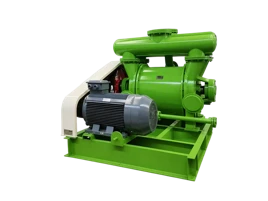
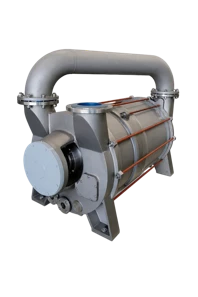
Hey there! As a supplier of dry vacuum pumps, I often get asked about the maximum discharge pressure of these pumps. It's a pretty important question, especially if you're looking to use these pumps for specific industrial applications. So, let's dive right in and explore what the maximum discharge pressure of a dry vacuum pump is all about.
Understanding Dry Vacuum Pumps
First off, let's quickly go over what dry vacuum pumps are. Unlike traditional vacuum pumps that use oil for lubrication and sealing, dry vacuum pumps operate without any oil in the pumping chamber. This makes them cleaner, more environmentally friendly, and suitable for a wide range of applications where oil contamination is a concern.
Dry vacuum pumps come in different types, such as VDP Dry Screw Vacuum Pump, NZJQ Multistage Gas circulation-cooled Roots Pump, and NZJP Multistage Roots Vacuum Pump. Each type has its own unique features and performance characteristics, which can affect the maximum discharge pressure.
What is Maximum Discharge Pressure?
The maximum discharge pressure of a dry vacuum pump refers to the highest pressure that the pump can achieve at its outlet. It's an important parameter because it determines the pump's ability to push gas or vapor out of the system against a certain resistance. In other words, it tells you how much pressure the pump can generate to overcome the backpressure in the piping, valves, and other components downstream of the pump.
The maximum discharge pressure is usually specified by the pump manufacturer and is measured in units such as Pascal (Pa), kilopascal (kPa), or bar. It's important to note that the maximum discharge pressure is not the same as the ultimate vacuum level, which is the lowest pressure that the pump can achieve at its inlet.
Factors Affecting Maximum Discharge Pressure
Several factors can affect the maximum discharge pressure of a dry vacuum pump. Let's take a look at some of the most important ones:


Pump Design and Type
Different types of dry vacuum pumps have different maximum discharge pressures. For example, screw pumps generally have a higher maximum discharge pressure compared to roots pumps. This is because screw pumps have a more positive displacement action, which allows them to compress the gas more effectively.
The design of the pump, such as the number of stages, the shape of the rotors, and the clearance between the rotors and the housing, can also affect the maximum discharge pressure. Pumps with more stages or a more efficient rotor design can typically achieve a higher maximum discharge pressure.
Gas Composition
The composition of the gas being pumped can also have an impact on the maximum discharge pressure. Some gases are more compressible than others, which means that they can be compressed to a higher pressure with less energy. For example, gases with a low molecular weight, such as hydrogen and helium, are more compressible than gases with a high molecular weight, such as nitrogen and oxygen.
In addition, the presence of condensable vapors in the gas can also affect the maximum discharge pressure. Condensable vapors can condense inside the pump, which can reduce the pump's performance and limit the maximum discharge pressure.
Operating Conditions
The operating conditions, such as the inlet pressure, the temperature, and the flow rate, can also affect the maximum discharge pressure. Generally, a lower inlet pressure and a higher temperature can increase the maximum discharge pressure. However, operating the pump at too high a temperature can also cause damage to the pump components, so it's important to stay within the recommended operating temperature range.
The flow rate of the gas being pumped can also affect the maximum discharge pressure. A higher flow rate can increase the backpressure in the system, which can reduce the maximum discharge pressure. Therefore, it's important to select a pump with a suitable capacity for the application.
Typical Maximum Discharge Pressures
The maximum discharge pressure of a dry vacuum pump can vary widely depending on the type of pump and the application. Here are some typical maximum discharge pressures for different types of dry vacuum pumps:
Screw Pumps
Screw pumps can typically achieve a maximum discharge pressure of up to 1 bar or more. Some high-performance screw pumps can even achieve a maximum discharge pressure of up to 2 bar or higher.
Roots Pumps
Roots pumps generally have a lower maximum discharge pressure compared to screw pumps. They can typically achieve a maximum discharge pressure of up to 0.1 bar to 0.5 bar, depending on the design and the number of stages.
Multistage Roots Pumps
Multistage roots pumps, such as the NZJQ Multistage Gas circulation-cooled Roots Pump and the NZJP Multistage Roots Vacuum Pump, can achieve a higher maximum discharge pressure compared to single-stage roots pumps. They can typically achieve a maximum discharge pressure of up to 0.5 bar to 1 bar.
Importance of Maximum Discharge Pressure in Applications
The maximum discharge pressure of a dry vacuum pump is an important consideration in many industrial applications. Here are some examples:
Chemical and Pharmaceutical Industries
In the chemical and pharmaceutical industries, dry vacuum pumps are often used for processes such as distillation, drying, and filtration. These processes require the pump to be able to handle a certain amount of backpressure, which is determined by the maximum discharge pressure. A pump with a higher maximum discharge pressure can ensure that the process runs smoothly and efficiently.
Food and Beverage Industries
In the food and beverage industries, dry vacuum pumps are used for applications such as packaging, degassing, and fermentation. These applications require the pump to be able to create a vacuum and maintain a certain pressure differential. A pump with a suitable maximum discharge pressure can ensure that the packaging is airtight and the products are protected from spoilage.
Semiconductor and Electronics Industries
In the semiconductor and electronics industries, dry vacuum pumps are used for processes such as chemical vapor deposition (CVD), physical vapor deposition (PVD), and etching. These processes require a high level of vacuum and a precise control of the pressure. A pump with a high maximum discharge pressure can ensure that the process is carried out under the required conditions.
Choosing the Right Dry Vacuum Pump
When choosing a dry vacuum pump, it's important to consider the maximum discharge pressure requirements of your application. Here are some tips to help you choose the right pump:
Determine the Required Maximum Discharge Pressure
First, you need to determine the maximum discharge pressure that your application requires. This can be done by calculating the backpressure in the system, which includes the pressure drop across the piping, valves, and other components. You can also consult with the pump manufacturer or a technical expert to get a better understanding of the maximum discharge pressure requirements.
Consider the Gas Composition and Flow Rate
In addition to the maximum discharge pressure, you also need to consider the gas composition and the flow rate of the gas being pumped. Different gases have different compressibility and viscosity, which can affect the pump's performance. You also need to ensure that the pump has a suitable capacity for the application.
Evaluate the Pump's Performance and Reliability
When choosing a dry vacuum pump, it's important to evaluate the pump's performance and reliability. Look for a pump that has a proven track record of performance and reliability in similar applications. You can also read customer reviews and testimonials to get an idea of the pump's performance and reliability.
Conclusion
The maximum discharge pressure of a dry vacuum pump is an important parameter that determines the pump's ability to push gas or vapor out of the system against a certain resistance. Several factors, such as the pump design and type, the gas composition, and the operating conditions, can affect the maximum discharge pressure.
When choosing a dry vacuum pump, it's important to consider the maximum discharge pressure requirements of your application, as well as the gas composition, the flow rate, and the pump's performance and reliability. By choosing the right pump, you can ensure that your application runs smoothly and efficiently.
If you're in the market for a dry vacuum pump and need help choosing the right one for your application, feel free to reach out to us. We're a leading supplier of dry vacuum pumps and have a team of experts who can provide you with the technical support and advice you need. Let's start a conversation and find the perfect solution for your needs!
References
- Vacuum Technology Handbook, John F. O'Hanlon
- Industrial Vacuum Technology, Helmut F. Baumann