What is the maximum vacuum level a water ring vacuum pump can achieve?
As a supplier of water ring vacuum pumps, I often encounter inquiries from customers about the maximum vacuum level these pumps can reach. Understanding this aspect is crucial for various industrial applications where vacuum conditions are required. In this blog post, I will delve into the factors influencing the maximum vacuum level of water ring vacuum pumps and provide insights into the achievable limits.
How a Water Ring Vacuum Pump Works
Before discussing the maximum vacuum level, it's essential to understand how a water ring vacuum pump operates. A water ring vacuum pump consists of an impeller mounted eccentrically in a cylindrical casing. The casing is partially filled with water. When the impeller rotates, the water is thrown to the outer periphery of the casing by centrifugal force, forming a rotating water ring. This water ring creates a series of sealed chambers between the impeller blades.
As the impeller rotates, the volume of these chambers changes. During the intake stroke, the volume of the chambers increases, creating a low - pressure area that sucks in gas from the system. During the compression stroke, the volume of the chambers decreases, compressing the gas and discharging it from the pump.
Factors Affecting the Maximum Vacuum Level
Water Temperature
One of the most significant factors affecting the maximum vacuum level of a water ring vacuum pump is the temperature of the sealing water. Water has a vapor pressure that varies with temperature. As the temperature of the water increases, its vapor pressure also increases. At the maximum vacuum level, the pressure inside the pump approaches the vapor pressure of the sealing water.
For example, at 20°C, the vapor pressure of water is approximately 2.34 kPa (abs). As the water temperature rises, say to 30°C, the vapor pressure increases to about 4.24 kPa (abs). This means that if the water temperature is higher, the lowest pressure (highest vacuum) that the pump can achieve is limited by the higher vapor pressure of the water.
Pump Design and Construction
The design and construction of the water ring vacuum pump also play a crucial role in determining the maximum vacuum level. The efficiency of the impeller design, the quality of the seals, and the overall internal geometry of the pump can all affect its performance.
Well - designed impellers can ensure efficient gas transfer and compression. High - quality seals prevent leakage of gas and water, which can otherwise reduce the vacuum level. Additionally, the internal clearances between the impeller and the casing need to be precisely maintained to optimize the pump's performance.


Gas Composition
The composition of the gas being pumped also impacts the maximum vacuum level. Different gases have different physical properties, such as molecular weight and compressibility. Some gases may dissolve in the sealing water, which can affect the pump's operation and the achievable vacuum level.
For instance, if the gas contains a significant amount of water vapor, it can increase the overall vapor pressure inside the pump, reducing the maximum vacuum that can be achieved. Similarly, gases with high solubility in water can cause issues such as corrosion and reduced pump efficiency.
Achievable Maximum Vacuum Levels
Under ideal conditions, single - stage water ring vacuum pumps can typically achieve a vacuum level of around 33 mbar (abs) when using water at a temperature of 15 - 20°C. This level is sufficient for many industrial applications, such as vacuum filtration, vacuum drying, and pneumatic conveying.
For applications that require a higher vacuum level, two - stage water ring vacuum pumps are available. Two - stage pumps can achieve a vacuum level of up to 2 mbar (abs) under optimal conditions. These pumps work by compressing the gas in two stages, which allows for a more efficient reduction of pressure.
Our Product Offerings
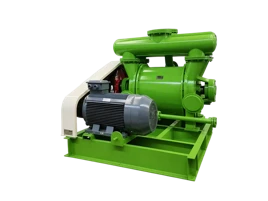
At our company, we offer a range of water ring vacuum pumps that are designed to meet different vacuum level requirements. Our 2BV Liquid Ring Vacuum Pump is a single - stage pump that provides reliable performance for general industrial applications. It is easy to operate and maintain, making it a popular choice among our customers.
The 2BE1 Liquid Ring Vacuum Pump is a more powerful single - stage pump that can handle larger gas volumes and achieve a relatively high vacuum level. It is suitable for applications in the chemical, pharmaceutical, and food industries.
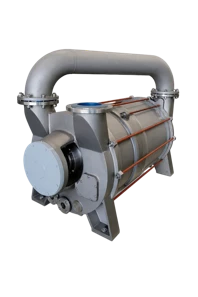
For customers who require an even higher vacuum level, our 2BED 2 Stage Liquid Ring Vacuum Pump is an excellent option. This two - stage pump can achieve a very high vacuum level, making it suitable for applications such as vacuum distillation and freeze - drying.
Importance of Choosing the Right Vacuum Level
Selecting the appropriate vacuum level for your application is crucial. If the vacuum level is too low, it may not be sufficient to perform the required process effectively. For example, in vacuum drying, a low vacuum level may result in longer drying times and lower product quality.
On the other hand, if the vacuum level is higher than necessary, it can lead to increased energy consumption and higher operating costs. Therefore, it is essential to accurately assess the vacuum requirements of your application and choose a water ring vacuum pump that can meet those requirements efficiently.
Contact Us for Procurement
If you are in the market for a water ring vacuum pump and need to determine the right pump for your specific application, our team of experts is here to help. We can provide detailed technical advice, performance data, and cost - effective solutions. Whether you need a single - stage pump for a basic application or a two - stage pump for a high - vacuum process, we have the products and expertise to meet your needs.
Feel free to reach out to us to discuss your requirements and start a procurement negotiation. We are committed to providing high - quality products and excellent customer service.
References
- Perry's Chemical Engineers' Handbook, 8th Edition
- Vacuum Technology Handbook, edited by John F. O'Hanlon