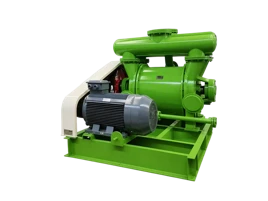
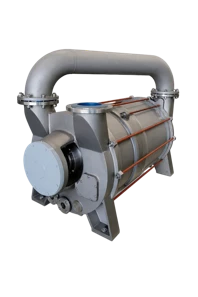
Hey there! As an industrial water vacuum pump supplier, I'm often asked about the starting methods of these pumps. It's a crucial topic, especially for those new to the industry or looking to optimize their operations. In this blog, I'll break down the different starting methods of industrial water vacuum pumps, so you can make an informed decision for your business.
Why Starting Methods Matter
Before we dive into the actual starting methods, let's quickly talk about why they're so important. A proper starting method ensures that your pump starts smoothly, reducing wear and tear on the components. It also helps in achieving the desired vacuum level efficiently, which is essential for the overall performance of your industrial process. A wrong starting method can lead to issues like cavitation, motor overloading, and even pump failure, which can be costly in terms of repairs and downtime.
Direct On - Line (DOL) Starting
One of the simplest and most commonly used starting methods is the Direct On - Line (DOL) starting. As the name suggests, in DOL starting, the pump motor is directly connected to the power supply. This method is straightforward and inexpensive, as it doesn't require any additional starting equipment.
When you start the pump using DOL, the full voltage is applied to the motor terminals right from the beginning. This causes the motor to draw a high inrush current, typically 5 - 7 times the rated current. The high inrush current can cause a voltage dip in the power supply system, which might affect other equipment connected to the same supply. However, for small to medium - sized industrial water vacuum pumps, DOL starting is often a viable option.
The main advantage of DOL starting is its simplicity. There are fewer components involved, which means less maintenance and lower chances of component failure. It also provides a quick start - up time, allowing the pump to reach its operating speed rapidly.
But there are some drawbacks too. The high inrush current can stress the motor windings and other electrical components, reducing their lifespan. Also, if the power supply system is weak, the voltage dip caused by the high inrush current can lead to problems for other equipment.
Star - Delta Starting
Another popular starting method is Star - Delta starting. This method is suitable for larger industrial water vacuum pumps. In a Star - Delta starter, the motor is initially connected in a star configuration when starting. In the star configuration, the voltage across each phase of the motor is reduced to 1/√3 (approximately 0.58) of the line voltage. This results in a lower starting current, typically around one - third of the DOL starting current.
After the motor reaches about 80% of its rated speed, a switch is used to change the motor connection from star to delta. In the delta configuration, the motor operates at the full line voltage, providing the full power required for the pump to function properly.
The main advantage of Star - Delta starting is the reduced inrush current. This reduces the stress on the motor and the power supply system. It also helps in minimizing the voltage dip in the power supply, making it a better option for larger pumps in a shared power supply system.
However, Star - Delta starting has some limitations. It requires additional starting equipment, such as contactors and a timer, which increases the initial cost. The starting torque of the motor in star configuration is also lower, which might not be suitable for applications where a high starting torque is required.
Soft Starter Starting
Soft starters are becoming increasingly popular for starting industrial water vacuum pumps. A soft starter is an electronic device that controls the voltage applied to the motor during the starting process. It gradually increases the voltage to the motor, allowing the motor to start smoothly and reducing the inrush current.
With a soft starter, you can adjust the starting time and the acceleration rate of the motor. This provides more flexibility in the starting process, allowing you to customize it according to the specific requirements of your pump and application.
Soft starters also have built - in protection features, such as over - current protection and thermal protection. These features help in protecting the motor from damage due to abnormal operating conditions.


The main advantage of using a soft starter is the smooth start - up. It reduces the mechanical stress on the pump and the motor, which can extend their lifespan. It also minimizes the electrical stress on the power supply system, reducing the chances of voltage dips.
On the downside, soft starters are more expensive than DOL and Star - Delta starters. They also require some technical knowledge for installation and programming.
Variable Frequency Drive (VFD) Starting
Variable Frequency Drives (VFDs) are advanced starting and control devices for industrial water vacuum pumps. A VFD controls the speed of the motor by varying the frequency and voltage of the power supply to the motor.
When starting the pump using a VFD, the frequency and voltage are gradually increased from zero to the desired operating values. This allows the motor to start smoothly, with a very low inrush current. VFDs also provide precise speed control, allowing you to adjust the pump speed according to the process requirements.
The ability to control the pump speed can result in significant energy savings. For example, if the process requires the pump to operate at a lower flow rate, the VFD can reduce the motor speed, consuming less energy.
VFDs also offer advanced protection features, such as over - speed protection, under - voltage protection, and motor overload protection. These features help in ensuring the safe and reliable operation of the pump.
However, VFDs are the most expensive starting option. They also generate harmonic distortion in the power supply, which might require additional filtering equipment. And like soft starters, they require technical expertise for installation and programming.
Choosing the Right Starting Method
So, how do you choose the right starting method for your industrial water vacuum pump? Well, it depends on several factors.
The size of the pump is an important factor. Smaller pumps can often use DOL starting due to its simplicity and low cost. Larger pumps might require more sophisticated starting methods like Star - Delta, Soft Starter, or VFD starting to reduce the inrush current and protect the power supply system.
The nature of the application also matters. If the pump needs to start with a high torque, DOL or a method with a high starting torque might be required. If energy efficiency is a priority, a VFD or a soft starter could be a better choice.
Budget is another consideration. DOL starting is the cheapest option, while VFDs are the most expensive. You need to balance the initial cost with the long - term benefits, such as reduced maintenance and energy savings.
Our Product Range
At our company, we offer a wide range of industrial water vacuum pumps, including the 2BV Liquid Ring Vacuum Pump, 2BED 2 Stage Liquid Ring Vacuum Pump, and 2BE3 Large Liquid Ring Vacuum Pump. We can help you choose the right starting method for your specific pump and application.
Whether you need a simple DOL starting for a small - scale application or a more advanced VFD starting for a large - scale industrial process, our team of experts can guide you through the selection process. We understand that every business has unique requirements, and we're committed to providing the best solutions for your industrial water vacuum pump needs.
Let's Connect
If you're in the market for an industrial water vacuum pump or need advice on the right starting method, don't hesitate to get in touch. We're here to answer your questions, provide detailed product information, and assist you in making the best decision for your business. Contact us today to start the conversation and take your industrial process to the next level.
References
- "Electrical Engineering Handbook" by Richard C. Dorf
- "Pump Handbook" by Igor J. Karassik et al.