Hey there! As a supplier of heavy-duty vacuum pumps, I often get asked if our pumps can be used for vacuum heat treatment. Well, let's dive right into this topic and find out.
First off, let's understand what vacuum heat treatment is. It's a process where materials are heated in a vacuum environment. This method has a bunch of advantages. For example, it can prevent oxidation and decarburization of the material, which means the treated parts can maintain their original surface quality and chemical composition. It also allows for precise control of the heating and cooling rates, resulting in better mechanical properties of the materials.
Now, the big question: Can a heavy-duty vacuum pump do the job for vacuum heat treatment? The short answer is yes, and here's why.
Why Heavy - Duty Vacuum Pumps Are Suitable
Heavy - duty vacuum pumps are designed to handle tough and demanding applications. They are built to create and maintain a high - level vacuum, which is exactly what vacuum heat treatment requires.
One of the key requirements in vacuum heat treatment is to achieve a low - pressure environment quickly. Heavy - duty vacuum pumps have a high pumping speed, which means they can rapidly remove air and other gases from the treatment chamber. This is crucial because the faster the chamber reaches the desired vacuum level, the more efficient the heat treatment process will be.
Another important aspect is the ability to maintain a stable vacuum. During the heat treatment process, there can be outgassing from the materials being treated. A heavy - duty vacuum pump can continuously remove these gases, ensuring that the vacuum level remains consistent throughout the treatment. This stability is essential for achieving uniform heat treatment results.
Types of Heavy - Duty Vacuum Pumps for Vacuum Heat Treatment
We offer several types of heavy - duty vacuum pumps that are well - suited for vacuum heat treatment.
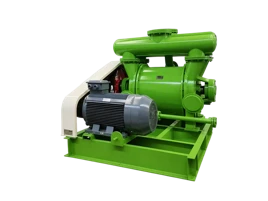
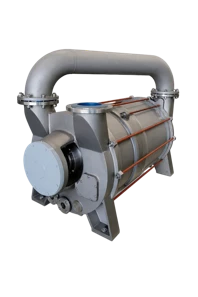
The 2BE1 Liquid Ring Vacuum Pump is a great option. It's known for its reliability and efficiency. The liquid ring design helps to seal the pump and provides a smooth operation. It can handle a wide range of gas loads and is capable of achieving a relatively high vacuum level. This pump is suitable for small to medium - sized vacuum heat treatment chambers.
If you need a more powerful pump, the 2BED 2 Stage Liquid Ring Vacuum Pump might be the right choice. The two - stage design allows it to achieve a deeper vacuum compared to single - stage pumps. It can quickly remove large volumes of gas, making it ideal for larger heat treatment chambers or processes that require a very low - pressure environment.
For really large - scale vacuum heat treatment applications, our 2BE3 Large Liquid Ring Vacuum Pump is the go - to option. It has a high pumping capacity and can handle the high gas loads associated with large chambers. It's built to be durable and can operate continuously for long periods, which is essential for industrial - scale heat treatment operations.


Considerations When Using Heavy - Duty Vacuum Pumps for Vacuum Heat Treatment
While heavy - duty vacuum pumps are suitable for vacuum heat treatment, there are a few things to keep in mind.
First, the compatibility of the pump with the gases that are likely to be present during the heat treatment. Some materials may release corrosive or reactive gases when heated. You need to make sure that the pump can handle these gases without being damaged. For example, if the process involves the use of materials that release halogen - containing gases, you may need to choose a pump with special coatings or materials to resist corrosion.
Second, the cooling system of the pump is important. During the operation, the pump generates heat, especially when it's working hard to maintain a high vacuum. A proper cooling system ensures that the pump operates at an optimal temperature, which can extend its lifespan and improve its performance.
Third, regular maintenance is crucial. Vacuum pumps are complex machines, and they need to be maintained properly to ensure their long - term reliability. This includes checking and replacing the lubricants, seals, and other components at regular intervals.
Real - World Applications
In the real world, heavy - duty vacuum pumps have been widely used in vacuum heat treatment processes across various industries.
In the aerospace industry, vacuum heat treatment is used to improve the strength and durability of components such as turbine blades and landing gear parts. Our heavy - duty vacuum pumps play a vital role in creating the precise vacuum environment needed for these critical applications.
The automotive industry also benefits from vacuum heat treatment. It's used to treat engine parts, transmission components, and other high - stress parts. By using our pumps, manufacturers can ensure that these parts have the desired mechanical properties, which improves the overall performance and safety of the vehicles.
Conclusion
So, to sum it up, heavy - duty vacuum pumps can definitely be used for vacuum heat treatment. They offer the high pumping speed, stable vacuum maintenance, and durability required for this process. Whether you're a small - scale workshop or a large industrial manufacturer, we have the right pump for your vacuum heat treatment needs.
If you're interested in learning more about our heavy - duty vacuum pumps for vacuum heat treatment or want to discuss your specific requirements, don't hesitate to reach out. We're here to help you find the best solution for your business.
References
- "Vacuum Technology Handbook" by O'Hanlon, J. F.
- "Heat Treatment: Principles and Techniques" by Totten, G. E., & MacKenzie, D. E.