Hey there! As a supplier of large vacuum pumps, I often get asked a pretty crucial question: "Can a large vacuum pump be used in a corrosive environment?" Well, let's dig into this topic and find out.
First off, we need to understand what a corrosive environment is. A corrosive environment is basically one where chemicals, moisture, or other substances can eat away at materials over time. This could be in industries like chemical manufacturing, wastewater treatment, or even in some food processing plants where certain acids or salts are present.
Now, when it comes to large vacuum pumps, they're used in a wide range of applications. From industrial processes that require high - volume air removal to creating a vacuum for specific manufacturing operations. But using them in a corrosive environment is a whole different ballgame.
Let's talk about the challenges. Corrosion can cause all sorts of problems for a vacuum pump. It can damage the pump's internal components, such as the impeller, casing, and valves. When these parts start to corrode, the pump's performance can take a nosedive. The efficiency drops, and you might start to see leaks. In some cases, corrosion can even lead to complete pump failure, which means costly downtime for your operations.
However, the good news is that not all hope is lost. There are ways to use large vacuum pumps in corrosive environments. One of the key factors is the material of the pump. For example, pumps made from corrosion - resistant materials like stainless steel or certain types of plastics can withstand the harsh conditions better. Stainless steel is a popular choice because it's strong and has good resistance to many chemicals. But it's not a one - size - fits - all solution. Different types of corrosion require different materials.
Another option is to use coatings on the pump's components. Specialized coatings can act as a barrier between the metal parts and the corrosive substances. These coatings can be applied during the manufacturing process or as a retrofit. But again, the effectiveness of the coating depends on the type of corrosive environment and how well it's maintained.
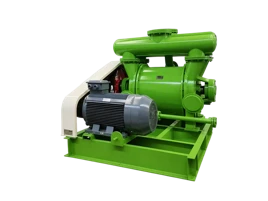
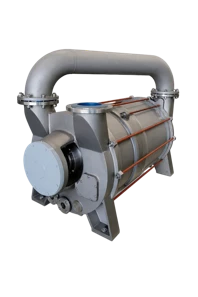
At our company, we offer a variety of large vacuum pumps that are suitable for different environments. For instance, the 2BED 2 Stage Liquid Ring Vacuum Pump is a great option. This pump is designed with features that can handle certain levels of corrosion. The liquid ring design helps to protect the internal components to some extent, and it can be customized with corrosion - resistant materials if needed.
The 2BE3 Large Liquid Ring Vacuum Pump is another powerful choice. It's built to handle high - volume applications, and we can offer different material options for the parts that are most likely to be exposed to corrosive substances. This way, you can get a pump that's tailored to your specific corrosive environment.
If you're looking for a more compact option, the 2BV Liquid Ring Vacuum Pump might be the way to go. Despite its smaller size, it still packs a punch and can be used in corrosive settings with the right material selection.
But it's not just about the pump itself. Proper maintenance is also crucial when using a large vacuum pump in a corrosive environment. Regular inspections can help you catch any signs of corrosion early on. You'll need to check for things like pitting, rust, or any signs of degradation on the pump's surface. If you notice any issues, you can take action quickly, whether it's replacing a part or reapplying a coating.
You also need to pay attention to the operating conditions. For example, the temperature and pressure in the environment can affect the rate of corrosion. If the temperature is too high, it can speed up the chemical reactions that cause corrosion. So, you might need to adjust the operating parameters to keep the pump in good condition.


Another aspect to consider is the liquid used in the pump. In a liquid ring vacuum pump, the liquid plays an important role. It can act as a sealing and cooling medium. But if the liquid is contaminated with corrosive substances, it can cause problems. You'll need to make sure that the liquid is clean and that it's compatible with the pump's materials.
So, to answer the question "Can a large vacuum pump be used in a corrosive environment?" The answer is yes, but it takes some careful planning. You need to choose the right pump, use the appropriate materials, and implement a good maintenance strategy.
If you're in an industry that requires a large vacuum pump for a corrosive environment, don't hesitate to reach out. We're here to help you find the perfect solution for your needs. Whether you have questions about the pumps we offer or need advice on how to handle corrosion, our team of experts is ready to assist you. We can work with you to understand your specific requirements and come up with a customized plan.
In conclusion, using a large vacuum pump in a corrosive environment is possible, but it's not without its challenges. With the right approach and the right products, you can keep your operations running smoothly and avoid costly breakdowns. So, if you're in the market for a large vacuum pump for a corrosive setting, give us a shout. We're confident that we can provide you with a pump that meets your needs and stands up to the test of time.
References
- Perry, R. H., & Green, D. W. (Eds.). (2008). Perry's Chemical Engineers' Handbook. McGraw - Hill.
- Vacca, R. (2012). Vacuum Technology and Vacuum Pumps. CRC Press.