Can a large vacuum pump be used in a high - temperature environment?
As a supplier of large vacuum pumps, this is a question I often encounter from customers. The answer is not a simple yes or no, as it depends on several factors related to the type of vacuum pump, the specific high - temperature environment, and the nature of the application.
Types of Large Vacuum Pumps and Their Temperature Tolerance
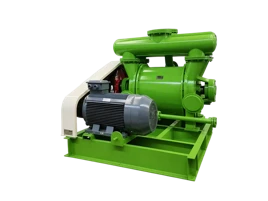
There are various types of large vacuum pumps, each with its own temperature limitations. For example, liquid ring vacuum pumps are commonly used in industrial applications. The 2BED 2 Stage Liquid Ring Vacuum Pump is designed to operate under a certain range of conditions. These pumps use a liquid, usually water, as a sealing and cooling medium.
In normal circumstances, the liquid ring helps to dissipate heat generated during the pumping process. However, in a high - temperature environment, the liquid in the pump can reach its boiling point more easily. When the liquid boils, it forms vapor bubbles, which can disrupt the normal operation of the pump and reduce its efficiency. For a 2BED 2 Stage Liquid Ring Vacuum Pump, the maximum allowable temperature of the working liquid is typically around 40 - 50 degrees Celsius. If the ambient temperature is too high, it becomes challenging to maintain the liquid within this safe temperature range.
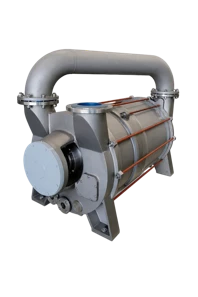
Another popular type is the 2BV Liquid Ring Vacuum Pump. Similar to the 2BED series, it also relies on a liquid ring for operation. The performance of this pump can be significantly affected by high temperatures. The liquid in the pump needs to be maintained at an appropriate temperature to ensure proper sealing and efficient gas compression. If the temperature exceeds the pump's design limit, the pump may experience cavitation, which can cause damage to the impeller and other internal components over time.
The 2BE1 Liquid Ring Vacuum Pump is also a workhorse in many industrial settings. It has a relatively robust design, but still has its temperature constraints. High temperatures can lead to increased wear and tear on the pump's mechanical parts. The lubricating properties of the liquid may change at elevated temperatures, reducing the smooth operation of the pump and potentially shortening its service life.
Challenges in High - Temperature Environments
Apart from the impact on the working liquid, high - temperature environments pose other challenges to large vacuum pumps. One of the main issues is the expansion of materials. Most vacuum pumps are made of metals and other materials that expand when heated. This expansion can cause misalignment of components, leading to increased friction and energy consumption. For example, the impeller and the casing of the pump may expand at different rates, which can result in a decrease in the clearance between them. This reduced clearance can cause the impeller to rub against the casing, leading to mechanical damage.
In addition, high temperatures can accelerate the oxidation and corrosion of the pump's internal components. The metal surfaces in the pump are exposed to the gas being pumped and the working liquid. In a high - temperature environment, the chemical reactions that cause oxidation and corrosion occur more rapidly. This can lead to the formation of rust and other deposits on the surfaces of the components, which can further degrade the performance of the pump.
The electrical components of the vacuum pump are also vulnerable to high temperatures. Motors, control panels, and sensors are all sensitive to heat. Excessive heat can cause the insulation of the electrical wires to break down, leading to short circuits and other electrical failures. This not only affects the operation of the pump but also poses a safety hazard.
Solutions for Using Large Vacuum Pumps in High - Temperature Environments
Despite the challenges, there are several solutions that can allow large vacuum pumps to be used in high - temperature environments. One approach is to install cooling systems. External cooling towers or heat exchangers can be used to cool the working liquid of the vacuum pump. By continuously removing heat from the liquid, the temperature of the liquid can be maintained within the safe operating range of the pump. This requires additional equipment and energy consumption, but it can significantly extend the pump's service life and improve its performance in high - temperature conditions.


Another solution is to use high - temperature - resistant materials in the construction of the pump. For example, some pumps can be made with special alloys that have better heat resistance and corrosion resistance. These materials can withstand higher temperatures without significant expansion or degradation, reducing the risk of mechanical damage and improving the overall reliability of the pump.
Proper maintenance is also crucial when using large vacuum pumps in high - temperature environments. Regular inspections of the pump's components, including the impeller, casing, and electrical parts, can help detect any signs of wear or damage early. Lubricants and seals should be replaced at appropriate intervals to ensure the smooth operation of the pump. Additionally, the working liquid should be regularly monitored and replaced to prevent the accumulation of contaminants and the deterioration of its properties.
Case Studies
Let's take a look at some real - world examples. In a chemical plant, a large 2BE1 Liquid Ring Vacuum Pump was used to create a vacuum in a process that generated a significant amount of heat. Initially, the pump experienced frequent breakdowns due to the high - temperature environment. The working liquid often boiled, and the impeller showed signs of severe wear. After installing a cooling system and upgrading some of the components to high - temperature - resistant materials, the pump's performance improved significantly. The downtime was reduced, and the overall efficiency of the process increased.
In another case, a food processing factory used a 2BV Liquid Ring Vacuum Pump in a drying process. The ambient temperature in the factory was relatively high, which affected the pump's performance. By implementing a strict maintenance schedule and using a heat exchanger to cool the working liquid, the factory was able to keep the pump running smoothly and meet the production requirements.
Conclusion
In conclusion, while large vacuum pumps face significant challenges in high - temperature environments, it is possible to use them with the right solutions in place. As a supplier of large vacuum pumps, we understand the importance of providing customers with pumps that can perform reliably in various conditions. Whether it is through the use of cooling systems, high - temperature - resistant materials, or proper maintenance, we are committed to helping our customers overcome the difficulties associated with high - temperature applications.
If you are considering using a large vacuum pump in a high - temperature environment, or if you have any questions about our products such as the 2BED 2 Stage Liquid Ring Vacuum Pump, 2BV Liquid Ring Vacuum Pump, or 2BE1 Liquid Ring Vacuum Pump, please feel free to contact us for a detailed consultation. Our team of experts can provide you with customized solutions based on your specific requirements.
References
- "Handbook of Vacuum Technology", edited by O'Hanlon J. F.
- "Industrial Vacuum Pumps: Theory, Design, and Application" by Perry R. H. and Green D. W.