Hey there! As a supplier of liquid ring compressors, I often get asked if these nifty machines can be used for compressing refrigerants. Well, let's dive right into this topic and find out.
First off, let's talk a bit about what a liquid ring compressor is. It's a type of compressor that uses a rotating impeller to create a liquid ring inside a casing. This liquid ring acts as a piston, compressing the gas that enters the compressor. It's known for its simplicity, reliability, and ability to handle a wide range of gases.
Now, when it comes to refrigerants, things get a bit more interesting. Refrigerants are substances used in refrigeration and air - conditioning systems to transfer heat. They come in different types, such as chlorofluorocarbons (CFCs), hydrochlorofluorocarbons (HCFCs), hydrofluorocarbons (HFCs), and natural refrigerants like ammonia and carbon dioxide.
One of the key factors in determining whether a liquid ring compressor can compress refrigerants is the compatibility between the refrigerant and the sealing liquid used in the compressor. The sealing liquid in a liquid ring compressor is crucial as it forms the ring and also helps in cooling the gas during compression.
For many common refrigerants, such as HFCs, liquid ring compressors can be a viable option. These compressors can handle the relatively low - pressure ratios typically required in refrigeration applications. The liquid ring provides a smooth and gentle compression process, which is beneficial for refrigerants that are sensitive to high - temperature and high - pressure changes.
Let's take a look at some of the advantages of using a liquid ring compressor for refrigerant compression.


Advantages
- Low - temperature operation: Since the liquid ring helps in cooling the gas during compression, the temperature rise of the refrigerant is relatively low. This is important because many refrigerants have temperature limits beyond which they can decompose or lose their effectiveness.
- Smooth operation: The liquid ring compressor has a smooth and continuous compression process. This reduces the risk of mechanical vibrations and noise, which is especially important in applications where quiet operation is required, like in commercial and residential air - conditioning systems.
- Versatility: Liquid ring compressors can handle a variety of refrigerants. Whether you're using a traditional refrigerant or an emerging natural refrigerant, there's a good chance that a liquid ring compressor can be adapted to suit your needs.
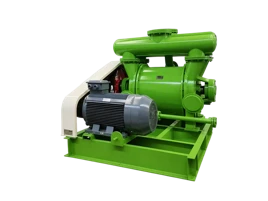
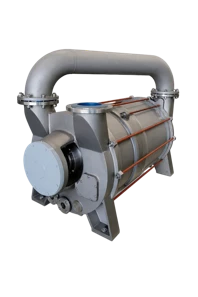
We offer two great options for liquid ring compressors that can be used for refrigerant compression: the Y Liquid Ring Compressor and the YE Liquid Ring Compressor.
The Y Liquid Ring Compressor is known for its high efficiency and durability. It's designed to handle a wide range of gas flows and pressures, making it suitable for different refrigeration applications. The YE Liquid Ring Compressor, on the other hand, is a more energy - efficient option. It's been optimized to reduce power consumption while still providing reliable compression performance.
However, there are also some challenges when using liquid ring compressors for refrigerant compression.
Challenges
- Sealing liquid compatibility: As mentioned earlier, the sealing liquid must be compatible with the refrigerant. Some refrigerants may react with certain sealing liquids, leading to corrosion or other issues. This requires careful selection of the sealing liquid and regular monitoring of its condition.
- Limited pressure ratios: Liquid ring compressors are generally not suitable for high - pressure refrigerant applications. If you need to compress a refrigerant to very high pressures, you may need to look for other types of compressors, such as reciprocating or centrifugal compressors.
- Liquid management: The liquid ring compressor requires a continuous supply of sealing liquid. This means that there needs to be a proper system in place for liquid circulation, filtration, and cooling. If the liquid management system is not well - designed, it can lead to problems such as reduced compressor efficiency or even damage to the compressor.
Case Studies
Let's look at a couple of real - world examples of where liquid ring compressors have been used for refrigerant compression.
In a large commercial refrigeration system for a supermarket, a liquid ring compressor was installed to compress an HFC refrigerant. The compressor provided smooth and efficient operation, and the low - temperature compression process helped to maintain the quality of the refrigerant. The supermarket noticed a significant reduction in energy consumption compared to their previous compressor system, and the noise level in the refrigeration area was also greatly reduced.
Another example is in a small - scale industrial refrigeration application. A company was using a natural refrigerant (ammonia) in their process. They chose a liquid ring compressor because of its ability to handle the refrigerant safely and efficiently. The liquid ring compressor's smooth operation and low - temperature compression were ideal for the ammonia refrigerant, which is sensitive to high - temperature changes.
So, in conclusion, liquid ring compressors can definitely be used for compressing refrigerants in many applications. They offer several advantages in terms of low - temperature operation, smooth performance, and versatility. However, it's important to consider the specific requirements of your refrigerant and application, as well as the challenges associated with liquid ring compressor operation.
If you're in the market for a liquid ring compressor for refrigerant compression, I'd love to talk to you. We have a team of experts who can help you choose the right compressor for your needs. Whether you're looking for the Y Liquid Ring Compressor or the YE Liquid Ring Compressor, we can provide you with all the information and support you need. Don't hesitate to reach out and start a conversation about your refrigerant compression requirements.
References
- "Compressor Handbook" by Klaus Brun and Eckhard Strauß
- "Refrigeration and Air - Conditioning Technology" by William C. Whitman, William M. Johnson, and John Tomczyk