Can an industrial water vacuum pump be used for vacuum drying? This is a question that often arises in various industrial applications. As a supplier of industrial water vacuum pumps, I am frequently asked about the suitability of our pumps for vacuum drying processes. In this blog post, I will delve into the technical aspects and practical considerations to help you understand whether an industrial water vacuum pump can indeed be used for vacuum drying.
Understanding Vacuum Drying
Vacuum drying is a process that involves removing moisture from a material by creating a low-pressure environment. This method is widely used in industries such as food processing, pharmaceuticals, and chemical manufacturing. By reducing the pressure, the boiling point of water is lowered, allowing it to evaporate at a lower temperature. This is particularly beneficial for heat-sensitive materials that may be damaged by traditional high-temperature drying methods.
The key requirements for a vacuum drying system include the ability to achieve and maintain a specific vacuum level, sufficient pumping speed to remove the evaporated moisture, and compatibility with the materials being dried. Additionally, the system should be reliable, energy-efficient, and easy to operate and maintain.
How Industrial Water Vacuum Pumps Work
Industrial water vacuum pumps, also known as liquid ring vacuum pumps, are a type of positive displacement pump that uses a liquid (usually water) to create a seal and transfer gas. The basic principle of operation involves a rotating impeller that is eccentrically mounted within a cylindrical casing. As the impeller rotates, the liquid forms a ring around the casing, creating a series of chambers that expand and contract as the impeller turns.
When the chambers expand, they draw in gas from the system being evacuated. As the chambers contract, the gas is compressed and discharged through an outlet. The liquid ring serves as a seal to prevent the gas from leaking back into the system and also helps to cool the pump and remove any heat generated during the compression process.


Suitability of Industrial Water Vacuum Pumps for Vacuum Drying
One of the main advantages of using an industrial water vacuum pump for vacuum drying is its ability to handle large volumes of gas and vapor. These pumps are capable of achieving relatively high vacuum levels, typically in the range of 20 to 100 mbar absolute, which is suitable for many vacuum drying applications.
Another advantage is their simplicity and reliability. Industrial water vacuum pumps have few moving parts, which reduces the risk of mechanical failure and makes them easy to maintain. They are also relatively inexpensive to purchase and operate, making them a cost-effective solution for many industrial applications.
However, there are some limitations to using industrial water vacuum pumps for vacuum drying. One of the main limitations is their sensitivity to the presence of contaminants in the gas being evacuated. If the gas contains solid particles or other contaminants, they can accumulate in the liquid ring and cause damage to the pump. Additionally, the liquid used in the pump (usually water) can become contaminated over time, which can affect the performance of the pump and require frequent replacement.
Another limitation is the temperature of the liquid ring. As the pump operates, the liquid ring absorbs heat from the gas being compressed, which can cause the temperature of the liquid to rise. If the temperature of the liquid exceeds a certain limit, it can cause the liquid to vaporize, which can reduce the performance of the pump and increase the risk of cavitation.
Types of Industrial Water Vacuum Pumps for Vacuum Drying
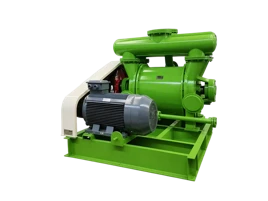
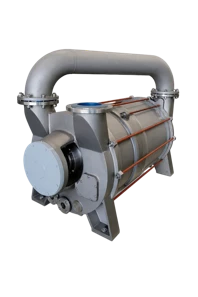
At our company, we offer a range of industrial water vacuum pumps that are suitable for vacuum drying applications. Our 2BV Liquid Ring Vacuum Pump is a compact and efficient pump that is ideal for small to medium-sized vacuum drying systems. It is capable of achieving a vacuum level of up to 33 mbar absolute and has a pumping speed of up to 27 m³/h.
Our 2BE3 Large Liquid Ring Vacuum Pump is a high-performance pump that is suitable for large-scale vacuum drying applications. It is capable of achieving a vacuum level of up to 10 mbar absolute and has a pumping speed of up to 1100 m³/h.
Our 2BE1 Liquid Ring Vacuum Pump is a versatile pump that is suitable for a wide range of vacuum drying applications. It is capable of achieving a vacuum level of up to 20 mbar absolute and has a pumping speed of up to 500 m³/h.
Considerations for Using Industrial Water Vacuum Pumps in Vacuum Drying
When using an industrial water vacuum pump for vacuum drying, there are several factors that need to be considered to ensure optimal performance and reliability. These factors include:
- Gas Composition: The composition of the gas being evacuated can have a significant impact on the performance of the pump. If the gas contains solid particles or other contaminants, it is important to use a pre-filter to remove them before they enter the pump. Additionally, if the gas contains corrosive or reactive components, it is important to choose a pump that is made from materials that are resistant to corrosion and chemical attack.
- Liquid Quality: The quality of the liquid used in the pump (usually water) is also important. It is important to use clean, pure water that is free from contaminants and has a low hardness. Additionally, it is important to monitor the quality of the liquid regularly and replace it as needed to ensure optimal performance of the pump.
- Temperature Control: As mentioned earlier, the temperature of the liquid ring can have a significant impact on the performance of the pump. It is important to maintain the temperature of the liquid ring within a certain range to prevent vaporization and cavitation. This can be achieved by using a cooling system to remove heat from the liquid ring or by using a heat exchanger to transfer heat from the liquid ring to a cooling medium.
- Pump Sizing: It is important to choose the right size of pump for the specific vacuum drying application. The size of the pump will depend on several factors, including the volume of gas being evacuated, the desired vacuum level, and the temperature of the gas being evacuated. It is important to consult with a qualified engineer or pump supplier to determine the appropriate size of pump for your application.
Conclusion
In conclusion, industrial water vacuum pumps can be a suitable solution for vacuum drying applications in many industries. They offer several advantages, including high pumping speed, reliability, and cost-effectiveness. However, there are some limitations to using industrial water vacuum pumps for vacuum drying, including their sensitivity to contaminants and the temperature of the liquid ring.
At our company, we offer a range of industrial water vacuum pumps that are suitable for vacuum drying applications. Our pumps are designed to provide reliable and efficient performance, and we offer a comprehensive range of support services to ensure that our customers get the most out of their pumps.
If you are interested in learning more about our industrial water vacuum pumps or would like to discuss your specific vacuum drying requirements, please do not hesitate to contact us. We would be happy to provide you with more information and help you choose the right pump for your application.
References
- Perry, R. H., & Green, D. W. (2008). Perry's Chemical Engineers' Handbook. McGraw-Hill Professional.
- Karassik, I. J., Messina, R. S., Cooper, P. T., & Heald, C. C. (2008). Pump Handbook. McGraw-Hill Professional.
- Walas, S. M. (1988). Chemical Process Equipment: Selection and Design. Butterworth-Heinemann.