Can oil free screw pumps work in high - temperature environments?
As a supplier of oil free screw pumps, I often encounter inquiries from customers regarding the performance of these pumps in high - temperature environments. This question is crucial as many industrial applications, such as chemical processing, power generation, and metallurgy, operate under elevated temperatures. In this blog, I will delve into the factors that determine whether oil free screw pumps can function effectively in high - temperature settings.
Understanding Oil Free Screw Pumps
Before discussing their performance in high - temperature environments, let's briefly understand the working principle of oil free screw pumps. These pumps operate on the principle of positive displacement. Two intermeshing screws rotate in opposite directions within a housing. As the screws turn, they trap gas at the inlet and transport it towards the outlet, creating a vacuum. The absence of oil in the pumping chamber makes them ideal for applications where oil contamination is a concern, such as in the semiconductor and food industries.
Factors Affecting the Performance of Oil Free Screw Pumps in High - Temperature Environments
Material Selection
The materials used in the construction of oil free screw pumps play a vital role in their ability to withstand high temperatures. The screws and the housing are typically made of materials with high heat resistance. For example, some pumps use special alloys that can maintain their mechanical properties at elevated temperatures. These alloys have a high melting point and good thermal stability, which prevents deformation and ensures smooth operation. However, if the temperature exceeds the material's maximum operating limit, it can lead to expansion, increased wear, and ultimately, pump failure.
Cooling Mechanisms
Effective cooling is essential for oil free screw pumps operating in high - temperature environments. Most modern oil free screw pumps are equipped with cooling systems to dissipate the heat generated during operation. There are two main types of cooling mechanisms: air - cooling and water - cooling.
Air - cooled pumps use fans to blow air over the pump housing, transferring heat away from the pump. This method is simple and cost - effective, but it may not be sufficient for extremely high - temperature applications. Water - cooled pumps, on the other hand, circulate water through channels in the pump housing to remove heat more efficiently. Water has a higher heat capacity than air, allowing it to absorb more heat per unit volume. However, water - cooled systems require a reliable water supply and proper maintenance to prevent corrosion and scaling.
Lubrication and Sealing
Although oil free screw pumps do not use oil for lubrication in the pumping chamber, they still require lubrication for other components, such as bearings and gears. High temperatures can affect the performance of lubricants, reducing their viscosity and lubricating properties. Special high - temperature lubricants are used to ensure smooth operation of these components.


Sealing is another critical aspect. High temperatures can cause seals to expand or contract, leading to leaks. Therefore, seals made of heat - resistant materials, such as fluorocarbon rubber, are used to maintain a tight seal and prevent gas leakage.
Case Studies and Applications
In many industrial applications, oil free screw pumps have proven their ability to work in high - temperature environments. For instance, in the chemical industry, these pumps are used to handle corrosive gases at high temperatures. The chemical resistance of the pump materials, combined with effective cooling and sealing, allows them to operate reliably.
In the power generation industry, oil free screw pumps are used for vacuum systems in steam turbines. These pumps can withstand the high temperatures generated during the power generation process. By maintaining a stable vacuum, they improve the efficiency of the turbine and reduce energy consumption.
Complementary Products
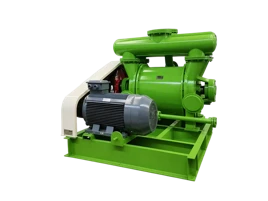
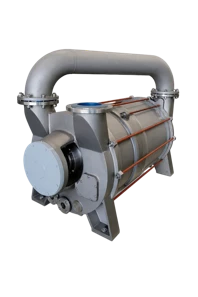
In addition to oil free screw pumps, we also offer a range of complementary products that can enhance the performance of the pumping system in high - temperature environments. For example, the NZJQ Multistage Gas circulation - cooled Roots Pump is designed to work in conjunction with oil free screw pumps. It can provide additional pumping capacity and improve the overall vacuum performance.
The ZJQ Gas circulation - cooled Roots Pump is another option. It features a gas circulation - cooling system that can effectively dissipate heat, making it suitable for high - temperature applications.
The ZJP Roots Vacuum Pump is also a popular choice. It has a simple and robust design, and it can work in harsh environments, including high - temperature settings.
Conclusion
In conclusion, oil free screw pumps can work in high - temperature environments, provided that they are properly designed and maintained. Material selection, cooling mechanisms, lubrication, and sealing are all crucial factors that determine their performance. With the right combination of these factors, oil free screw pumps can operate reliably and efficiently in a wide range of high - temperature applications.
If you are considering using oil free screw pumps in your high - temperature industrial processes, or if you have any questions about our products and how they can meet your specific needs, we encourage you to contact us for a detailed discussion. Our team of experts is ready to provide you with professional advice and solutions tailored to your requirements.
References
- "Industrial Vacuum Technology Handbook"
- "Materials Science for Engineers"
- Technical documents from pump manufacturers.