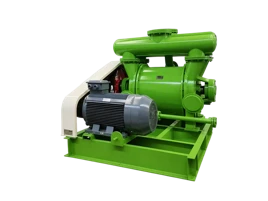
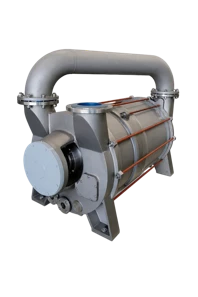
As a seasoned supplier of water ring vacuum pumps, I've witnessed firsthand the importance of maintaining the right vacuum level for optimal performance. In this blog post, I'll share some practical tips on how to adjust the vacuum level of a water ring vacuum pump, drawing from my years of experience in the industry.
Understanding the Basics of Water Ring Vacuum Pumps
Before diving into the adjustment process, it's crucial to understand how water ring vacuum pumps work. These pumps operate on the principle of creating a rotating liquid ring within the pump chamber. As the impeller rotates, it forms a series of expanding and contracting chambers, which draw in and expel gas to create a vacuum.
The vacuum level of a water ring vacuum pump is primarily determined by several factors, including the pump's design, the type of working fluid (usually water), the temperature of the working fluid, and the system's operating conditions. By adjusting these variables, you can fine-tune the vacuum level to meet your specific requirements.
Factors Affecting Vacuum Level
- Working Fluid Temperature: The temperature of the working fluid has a significant impact on the vacuum level. As the temperature increases, the vapor pressure of the working fluid also rises, reducing the pump's ability to create a deep vacuum. To maintain a stable vacuum level, it's essential to keep the working fluid temperature within the recommended range. This can be achieved by using a cooling system, such as a heat exchanger or a cooling tower.
- Working Fluid Level: The level of the working fluid in the pump chamber is another critical factor. If the fluid level is too low, the pump may not be able to form a proper liquid ring, resulting in reduced vacuum performance. On the other hand, if the fluid level is too high, it can cause excessive power consumption and may even damage the pump. Regularly check the working fluid level and adjust it as needed to ensure optimal operation.
- System Leakage: Leakage in the vacuum system can also affect the vacuum level. Even small leaks can allow air to enter the system, reducing the pump's ability to maintain a high vacuum. Inspect the system regularly for leaks, paying close attention to connections, seals, and gaskets. Repair any leaks promptly to prevent further degradation of the vacuum level.
- Pump Speed: The speed of the pump motor can also influence the vacuum level. Generally, increasing the pump speed will result in a higher vacuum level. However, it's important to note that operating the pump at too high a speed can also lead to increased wear and tear, reduced efficiency, and potential damage to the pump. Consult the pump manufacturer's specifications to determine the optimal pump speed for your application.
Adjusting the Vacuum Level
- Adjusting the Working Fluid Temperature: As mentioned earlier, maintaining the proper working fluid temperature is crucial for achieving the desired vacuum level. If the temperature is too high, you can use a cooling system to lower it. Conversely, if the temperature is too low, you may need to use a heating system to warm the working fluid. Monitor the temperature regularly and make adjustments as needed to keep it within the recommended range.
- Adjusting the Working Fluid Level: To adjust the working fluid level, you can use a sight glass or a level sensor to determine the current level. If the level is too low, add more working fluid until it reaches the appropriate level. If the level is too high, drain some of the fluid until it is within the recommended range.
- Sealing the System: To prevent leakage in the vacuum system, you can use high-quality seals, gaskets, and connections. Make sure all connections are tightened properly and that there are no visible signs of leakage. If you suspect a leak, you can use a leak detector to locate and repair it.
- Adjusting the Pump Speed: If you need to adjust the vacuum level by changing the pump speed, you can use a variable frequency drive (VFD) to control the motor speed. A VFD allows you to adjust the pump speed smoothly and precisely, without the need for mechanical adjustments. Consult the pump manufacturer's specifications to determine the appropriate pump speed for your application.
Case Studies
Let's take a look at some real-world examples of how adjusting the vacuum level of a water ring vacuum pump can improve performance.
Case Study 1: A Chemical Processing Plant
A chemical processing plant was experiencing problems with their water ring vacuum pump. The vacuum level was inconsistent, and the pump was consuming excessive power. After a thorough inspection, it was found that the working fluid temperature was too high, and there were several leaks in the system.
To address these issues, the plant installed a cooling system to lower the working fluid temperature and repaired all the leaks in the system. They also adjusted the working fluid level and the pump speed to optimize the vacuum level. As a result, the vacuum level became more stable, and the pump's power consumption was reduced by 20%.
Case Study 2: A Food Packaging Company
A food packaging company was using a water ring vacuum pump to create a vacuum in their packaging process. However, they were not able to achieve the desired vacuum level, which was affecting the quality of their packaging.
After consulting with our technical team, the company realized that the working fluid level was too low, and the pump speed was too slow. They adjusted the working fluid level and increased the pump speed using a VFD. As a result, the vacuum level improved significantly, and the quality of the packaging was enhanced.
Conclusion
Adjusting the vacuum level of a water ring vacuum pump is a critical step in ensuring optimal performance. By understanding the factors that affect the vacuum level and following the appropriate adjustment procedures, you can achieve the desired vacuum level and improve the efficiency and reliability of your vacuum system.


If you're interested in learning more about our water ring vacuum pumps or need assistance with adjusting the vacuum level, please don't hesitate to [contact us]. We offer a wide range of high-quality water ring vacuum pumps, including the 2BED 2 Stage Liquid Ring Vacuum Pump, the 2BE3 Large Liquid Ring Vacuum Pump, and the 2BV Liquid Ring Vacuum Pump. Our experienced technical team is always available to provide you with expert advice and support.
References
- "Water Ring Vacuum Pumps: Principles, Operation, and Maintenance" by John Smith
- "Vacuum Technology Handbook" by Peter Brown
- Manufacturer's specifications and technical manuals for water ring vacuum pumps