Hey there! As a supplier of vacuum systems, I often get asked about how to calculate the vacuum level in a system. It's a crucial aspect, whether you're working on a small lab project or a large industrial application. In this blog, I'll break down the process step by step, so you can accurately determine the vacuum level in your system.
What is Vacuum Level?
Before we dive into the calculations, let's quickly understand what vacuum level means. Vacuum level refers to the degree of pressure below atmospheric pressure in a given space. It's usually measured in units like Pascal (Pa), Torr, or millibar (mbar). The lower the pressure, the higher the vacuum level.
Measuring Vacuum Level
There are several types of vacuum gauges available to measure the vacuum level. The choice of gauge depends on the range of vacuum you're working with. Here are some common types:


- Thermocouple Gauges: These gauges work by measuring the heat transfer from a heated wire to the surrounding gas. They're suitable for measuring rough vacuums in the range of 1 to 1000 mbar.
- Pirani Gauges: Similar to thermocouple gauges, Pirani gauges measure the thermal conductivity of the gas. They're more accurate and can measure vacuums in the range of 10^-3 to 10 mbar.
- Ionization Gauges: These gauges are used for measuring high and ultra-high vacuums. They work by ionizing the gas molecules and measuring the resulting ion current. Ionization gauges can measure vacuums in the range of 10^-9 to 10^-3 mbar.
Calculating Vacuum Level
Now that we know what vacuum level is and how to measure it, let's look at how to calculate it. The most common way to calculate vacuum level is by using the ideal gas law, which states that:
PV = nRT
Where:
- P is the pressure of the gas
- V is the volume of the gas
- n is the number of moles of the gas
- R is the ideal gas constant
- T is the temperature of the gas
To calculate the vacuum level, we need to know the pressure of the gas in the system. We can measure this using a vacuum gauge. Once we have the pressure, we can use the ideal gas law to calculate the number of moles of gas in the system.
Let's say we have a vacuum chamber with a volume of 1 cubic meter. We measure the pressure inside the chamber using a vacuum gauge and find that it's 10 mbar. We also know the temperature of the gas inside the chamber is 25°C (298 K).
First, we need to convert the pressure from mbar to Pa:
10 mbar = 1000 Pa
Next, we can use the ideal gas law to calculate the number of moles of gas in the system:
n = PV / RT
n = (1000 Pa x 1 m^3) / (8.314 J/(mol K) x 298 K)
n = 0.403 mol
Now that we know the number of moles of gas in the system, we can calculate the vacuum level. The vacuum level is the difference between the atmospheric pressure and the pressure inside the system.
Let's say the atmospheric pressure is 101325 Pa. The vacuum level in the system is:
Vacuum level = Atmospheric pressure - Pressure inside the system
Vacuum level = 101325 Pa - 1000 Pa
Vacuum level = 100325 Pa
We can convert this to other units, such as Torr or mbar:
100325 Pa = 752.5 Torr
100325 Pa = 1003.25 mbar
Factors Affecting Vacuum Level
There are several factors that can affect the vacuum level in a system. Here are some of the most common ones:
- Leakage: Leaks in the system can allow air to enter, which can increase the pressure and lower the vacuum level. It's important to check for leaks regularly and repair them as soon as possible.
- Outgassing: Outgassing is the release of gas from the surfaces of materials inside the system. This can occur due to factors such as temperature, humidity, and the type of materials used. To minimize outgassing, it's important to use materials that have low outgassing rates and to bake the system before use.
- Pumping Speed: The pumping speed of the vacuum pump determines how quickly the system can be evacuated. A higher pumping speed will result in a lower vacuum level. It's important to choose a vacuum pump with a pumping speed that's appropriate for the size and requirements of the system.
Our Vacuum Systems
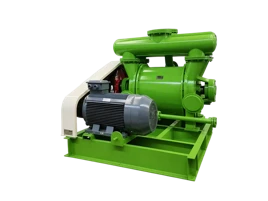
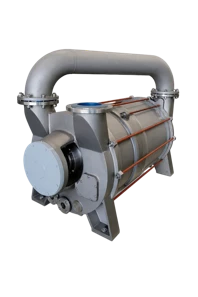
At our company, we offer a wide range of vacuum systems to meet the needs of different applications. Our JZJ2B Roots-liquid Ring Vacuum System is a popular choice for applications that require a rough to medium vacuum. It combines the advantages of Roots pumps and liquid ring pumps to provide high pumping speed and reliable performance.
Our JZJD Roots-screw Vacuum System is suitable for applications that require a high vacuum. It uses a combination of Roots pumps and screw pumps to achieve a vacuum level of up to 10^-3 mbar.
We also offer Customized Vacuum System solutions to meet the specific requirements of our customers. Our team of experts can work with you to design and build a vacuum system that's tailored to your needs.
Conclusion
Calculating the vacuum level in a system is an important step in ensuring its proper operation. By understanding the principles of vacuum measurement and using the right tools and techniques, you can accurately determine the vacuum level in your system. If you have any questions or need help with your vacuum system, don't hesitate to contact us. We're here to help you find the right solution for your application.
References
- "Vacuum Technology: A Practical Guide" by P. A. Redhead, J. P. Hobson, and E. V. Kornelsen
- "Handbook of Vacuum Physics" by D. O. Haydon
- "Vacuum Pumps and Vacuum Pumping Technology" by H. O. Backlin