Well, folks! Today, I'm super excited to chat with you about the amazing applications of vacuum systems in the aerospace industry. As a supplier of top - notch vacuum systems, I've seen firsthand how these systems play a crucial role in making aerospace technology what it is today.
1. Spacecraft Testing
One of the most important applications of vacuum systems in the aerospace field is spacecraft testing. You see, space is a near - perfect vacuum, and we need to simulate these harsh conditions here on Earth to ensure that our spacecraft can withstand the rigors of space travel.
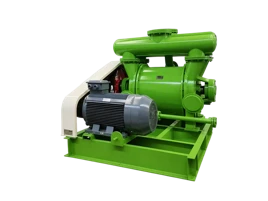
When we're testing the thermal control systems of a spacecraft, for example, a vacuum chamber is essential. In space, there's no air to transfer heat, so heat transfer occurs mainly through radiation. By using a vacuum system to create a low - pressure environment, we can accurately test how well the spacecraft's insulation and cooling systems work. Our Customized Vacuum System is ideal for this type of testing. It can be tailored to meet the specific requirements of different spacecraft models, ensuring that the testing environment is as close to the real - space conditions as possible.


Another aspect is testing the integrity of the spacecraft's structure. In a vacuum, any small leaks or weaknesses in the hull can become a big problem. Vacuum systems are used to create a pressure differential, which helps us detect these potential issues. If there's a leak, the pressure inside the chamber will change, and we can quickly identify and fix the problem before the spacecraft is launched.
2. Satellite Manufacturing
Satellites are another area where vacuum systems are indispensable. During the manufacturing process of satellite components, such as solar panels, vacuum systems are used to ensure a clean and controlled environment.
Solar panels are a critical part of a satellite's power supply. They need to be free from contaminants to function efficiently. Vacuum deposition is a common technique used in solar panel manufacturing. In this process, a thin film of material is deposited onto a substrate in a vacuum chamber. The vacuum environment prevents impurities from getting into the film, ensuring that the solar panels have high - quality and consistent performance.
Our JZJD Roots - screw Vacuum System is well - suited for satellite manufacturing. It can achieve and maintain the high - level vacuum required for precise thin - film deposition, helping to produce reliable and long - lasting satellite solar panels.
Satellite electronic components also need to be tested in a vacuum environment. The performance of electronic devices can be affected by factors such as temperature, humidity, and air pressure. By using vacuum systems to simulate the space environment, we can test the functionality and reliability of these components under realistic conditions. This helps to ensure that the satellites can operate smoothly for years in space.
3. Rocket Propulsion Testing
Rocket propulsion is the heart of a space mission, and vacuum systems play a vital role in testing rocket engines. Rocket engines work by expelling high - velocity gases to generate thrust. In space, the lack of atmospheric pressure affects the way the engine operates.
To accurately test rocket engines, we need to create a vacuum environment that mimics the conditions in space. Vacuum chambers are used to test the engine's performance, including thrust generation, fuel consumption, and combustion efficiency. By conducting these tests on the ground, we can optimize the engine design and make sure it will work properly during the actual launch and spaceflight.
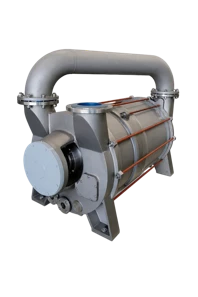
Our JZJ2B Roots - liquid Ring Vacuum System is a great choice for rocket propulsion testing. It has the ability to quickly evacuate large chambers and maintain a stable vacuum level, which is crucial for accurate and repeatable engine testing.
4. Astronaut Training
Astronaut training is another area where vacuum systems are used. Astronauts need to be prepared for the unique environment of space, and part of their training involves experiencing a simulated vacuum environment.
Vacuum chambers are used to train astronauts on how to perform tasks in a low - pressure environment. They learn how to operate equipment, handle emergencies, and move around in a weightless - like environment created by the vacuum. This type of training helps astronauts to build confidence and develop the skills they need to carry out successful space missions.
5. Space Debris Research
With the increasing amount of space debris orbiting the Earth, it has become a significant concern for the aerospace industry. Vacuum systems are used in research related to space debris.
Scientists can use vacuum chambers to simulate the impact of space debris on spacecraft materials. By firing small particles at high speeds in a vacuum environment, they can study how different materials respond to these impacts. This research helps to develop more resilient materials for spacecraft, which can better withstand the threat of space debris.
6. Why Choose Our Vacuum Systems?
As a vacuum system supplier, we take pride in offering high - quality products that meet the demanding requirements of the aerospace industry. Our systems are designed with the latest technology and engineering expertise to ensure reliable performance.
We understand that every aerospace project is unique, and that's why we offer Customized Vacuum System. Whether you need a system for a small - scale satellite component testing or a large - scale rocket engine test facility, we can customize a solution to fit your specific needs.
Our JZJD Roots - screw Vacuum System and JZJ2B Roots - liquid Ring Vacuum System are known for their efficiency, durability, and low maintenance requirements. They are built to last and can provide consistent performance over long - term use.
7. Let's Connect!
If you're in the aerospace industry and looking for a reliable vacuum system supplier, we'd love to hear from you. Whether you have a specific project in mind or just want to learn more about our products, we're here to help. Contact us to start a conversation about how our vacuum systems can meet your needs and contribute to the success of your aerospace endeavors.
References
- "Fundamentals of Spacecraft Systems" by David Vallado
- "Rocket Propulsion Elements" by George P. Sutton and Oscar Biblarz
- "Satellite Communications Systems: Engineering Principles" by Joseph A. Ananda