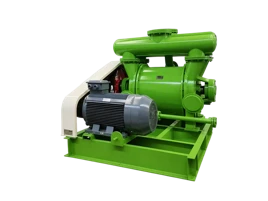
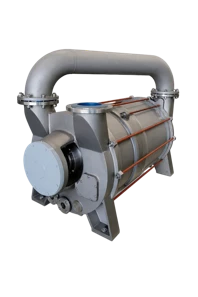
As a supplier of rotary liquid ring compressors, I've witnessed firsthand the diverse needs and preferences of our customers. One of the most common inquiries we receive is about the differences between oil-free and oil-lubricated rotary liquid ring compressors. In this blog post, I'll delve into the key distinctions between these two types of compressors, their respective advantages and disadvantages, and how to choose the right one for your specific application.
Working Principle
Before we explore the differences, let's briefly understand the working principle of a rotary liquid ring compressor. These compressors operate on the principle of a rotating impeller within a cylindrical casing filled with a liquid, typically water. As the impeller rotates, the liquid forms a ring due to centrifugal force. The impeller blades create chambers that vary in volume as they rotate, causing the gas to be drawn in, compressed, and discharged.
Oil-Free Rotary Liquid Ring Compressors
Oil-free rotary liquid ring compressors, as the name suggests, do not use oil for lubrication. Instead, they rely on the liquid ring (usually water) to provide lubrication, sealing, and cooling. Here are some of the key characteristics and advantages of oil-free compressors:


Advantages
- Contamination-Free Operation: Since there is no oil in the compression chamber, there is no risk of oil contamination in the compressed gas. This makes oil-free compressors ideal for applications where purity is crucial, such as in the food and beverage industry, pharmaceuticals, and electronics manufacturing.
- Low Maintenance: Oil-free compressors generally require less maintenance compared to oil-lubricated ones. There is no need to change oil filters or perform regular oil changes, reducing downtime and maintenance costs.
- Environmentally Friendly: Without the use of oil, oil-free compressors produce fewer emissions and are more environmentally friendly. They also eliminate the need for oil disposal, which can be a significant environmental concern.
- Simplified Design: Oil-free compressors have a simpler design, with fewer components and less complexity. This makes them easier to install, operate, and troubleshoot.
Disadvantages
- Limited Pressure Range: Oil-free compressors typically have a lower pressure range compared to oil-lubricated compressors. They are suitable for applications that require relatively low to medium pressures.
- Higher Operating Temperatures: Since the liquid ring provides both lubrication and cooling, oil-free compressors can operate at higher temperatures. This may require additional cooling measures, such as external coolers, to maintain optimal performance.
- Susceptibility to Liquid Contamination: The liquid ring in oil-free compressors is more susceptible to contamination from particles, chemicals, or other impurities in the gas. This can affect the performance and reliability of the compressor and may require regular water treatment or filtration.
Oil-Lubricated Rotary Liquid Ring Compressors
Oil-lubricated rotary liquid ring compressors use oil for lubrication, sealing, and cooling. The oil is typically injected into the compression chamber to reduce friction, prevent wear, and improve the compressor's efficiency. Here are some of the key characteristics and advantages of oil-lubricated compressors:
Advantages
- Higher Pressure Range: Oil-lubricated compressors can achieve higher pressures compared to oil-free compressors. They are suitable for applications that require high-pressure gas, such as in the chemical industry, power generation, and natural gas processing.
- Better Sealing and Lubrication: The oil provides superior sealing and lubrication, reducing leakage and wear in the compressor. This results in improved efficiency, longer service life, and lower maintenance requirements.
- Lower Operating Temperatures: Oil-lubricated compressors generally operate at lower temperatures compared to oil-free compressors. This is because the oil helps to dissipate heat more effectively, reducing the risk of overheating and extending the life of the compressor.
- Resistance to Liquid Contamination: The oil in oil-lubricated compressors provides a protective barrier against liquid contamination. It can trap particles and impurities in the gas, preventing them from reaching the compressor components and causing damage.
Disadvantages
- Oil Contamination Risk: The use of oil in the compression chamber poses a risk of oil contamination in the compressed gas. This can be a significant concern in applications where purity is crucial, such as in the food and beverage industry, pharmaceuticals, and electronics manufacturing.
- Higher Maintenance Requirements: Oil-lubricated compressors require regular oil changes, oil filter replacements, and other maintenance tasks. This increases the downtime and maintenance costs associated with the compressor.
- Environmental Impact: The disposal of used oil can be a significant environmental concern. Oil-lubricated compressors produce more emissions and require more energy to operate compared to oil-free compressors.
- Complex Design: Oil-lubricated compressors have a more complex design, with additional components such as oil separators, oil coolers, and oil pumps. This makes them more difficult to install, operate, and troubleshoot.
Choosing the Right Compressor
When choosing between an oil-free and oil-lubricated rotary liquid ring compressor, it's essential to consider your specific application requirements, including the type of gas being compressed, the required pressure and flow rate, the level of purity needed, and the environmental conditions. Here are some factors to consider:
- Application Purity Requirements: If your application requires contamination-free compressed gas, such as in the food and beverage industry or pharmaceuticals, an oil-free compressor is the obvious choice.
- Pressure and Flow Rate Requirements: If you need high-pressure gas or a large flow rate, an oil-lubricated compressor may be more suitable. However, if your application requires relatively low to medium pressures, an oil-free compressor may be sufficient.
- Maintenance and Operating Costs: Consider the long-term maintenance and operating costs associated with each type of compressor. Oil-free compressors generally require less maintenance and have lower operating costs, but they may have a higher upfront cost.
- Environmental Impact: If environmental sustainability is a priority for your business, an oil-free compressor is a more environmentally friendly option. It produces fewer emissions and eliminates the need for oil disposal.
- Budget Constraints: Your budget will also play a significant role in your decision. Oil-free compressors are typically more expensive upfront, but they may offer long-term cost savings in terms of maintenance and operating costs.
Conclusion
In conclusion, both oil-free and oil-lubricated rotary liquid ring compressors have their own unique advantages and disadvantages. The choice between the two depends on your specific application requirements, budget, and environmental considerations. As a supplier of rotary liquid ring compressors, we offer a wide range of YE Liquid Ring Compressor and Y Liquid Ring Compressor to meet the diverse needs of our customers. Our team of experts can help you select the right compressor for your application and provide you with the support and service you need to ensure its optimal performance.
If you're interested in learning more about our rotary liquid ring compressors or have any questions about choosing the right compressor for your application, please don't hesitate to contact us. We look forward to working with you to find the perfect solution for your compressed gas needs.
References
- Compressed Air and Gas Handbook, 4th Edition, by George F. Sheppard
- Rotary Compressor Technology, by Klaus Brun and Eckhard Specht
- Handbook of Compressed Air Systems, 3rd Edition, by David W. Macpherson