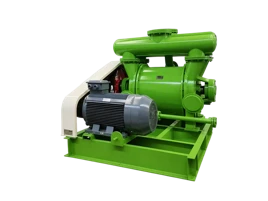
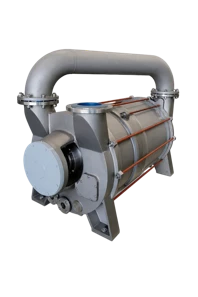
Hey there! As a supplier of high volume vacuum pumps, I often get asked about the difference between single - stage and two - stage high volume vacuum pumps. So, I thought I'd write this blog to break it down for you.
How Single - Stage High Volume Vacuum Pumps Work
Let's start with single - stage vacuum pumps. These pumps are pretty straightforward in terms of their design and operation. A single - stage high volume vacuum pump has one set of pumping chambers and rotors. The basic idea is that the pump creates a vacuum by removing gas molecules from a sealed space.
When the pump starts running, the rotor spins inside the chamber. As it does, it traps gas molecules and then pushes them out of the pump through an exhaust port. This continuous process of trapping and expelling gas molecules is what creates the vacuum.


One of the main advantages of single - stage vacuum pumps is their simplicity. They have fewer moving parts compared to two - stage pumps, which means there's less that can go wrong. This simplicity also makes them relatively easy to maintain. If something does break, it's usually easier to diagnose and fix the problem.
Another plus is their cost. Single - stage pumps are generally cheaper to buy than their two - stage counterparts. This makes them a great option for applications where you don't need an extremely high level of vacuum. For example, if you're using the pump in a small - scale industrial process where a moderate vacuum is sufficient, a single - stage pump can get the job done without breaking the bank.
However, single - stage pumps do have their limitations. They typically can't achieve as high a vacuum level as two - stage pumps. The maximum vacuum level they can reach is usually around 10 to 100 millibars. So, if your application requires a very deep vacuum, like in some high - tech manufacturing processes or scientific research, a single - stage pump might not be the best choice.
How Two - Stage High Volume Vacuum Pumps Work
Now, let's talk about two - stage vacuum pumps. As the name suggests, these pumps have two sets of pumping chambers and rotors. The first stage of the pump starts the process of removing gas molecules from the sealed space, just like a single - stage pump. But then, the gas that's been partially evacuated in the first stage is sent to the second stage.
The second stage further compresses and removes the gas, allowing the pump to achieve a much higher vacuum level. This two - step process is what gives two - stage pumps their edge when it comes to creating a deep vacuum.
The main advantage of two - stage pumps is, of course, their ability to reach much lower pressures. They can typically achieve vacuum levels in the range of 0.1 to 1 millibar, which is significantly better than single - stage pumps. This makes them ideal for applications where a high - quality vacuum is essential, such as in semiconductor manufacturing, vacuum coating, or some types of laboratory work.
Two - stage pumps also tend to be more efficient at removing gas at lower pressures. Since they have two stages to work with, they can handle the gas more effectively, which means they can maintain a stable vacuum for longer periods.
But, as you might expect, there are some downsides to two - stage pumps. They are more complex than single - stage pumps, with more moving parts. This means they are more expensive to buy and can be more difficult to maintain. If something goes wrong, it can be a bit of a headache to figure out which part of the two - stage system is malfunctioning.
Applications and Considerations
When it comes to choosing between a single - stage and a two - stage high volume vacuum pump, it really depends on your specific application.
If you're in a business where you're doing things like simple material handling, where you just need to create a basic vacuum to lift or move objects, a single - stage pump is probably sufficient. For example, in a small woodworking shop, a single - stage pump can be used to hold workpieces in place during machining operations.
On the other hand, if you're involved in high - tech industries like electronics manufacturing, a two - stage pump is likely a better fit. In semiconductor production, for instance, a high - quality vacuum is needed to prevent contamination during the manufacturing process. A two - stage pump can provide the level of vacuum required to ensure the quality of the final product.
Another consideration is the cost of operation. While single - stage pumps are cheaper to buy, they might use more energy in some cases. Two - stage pumps, although more expensive upfront, can be more energy - efficient in applications where they are running continuously at low pressures.
Our Product Offerings
At our company, we offer a range of high volume vacuum pumps to suit different needs. For those looking for a reliable single - stage option, our 2BV Liquid Ring Vacuum Pump is a great choice. It's simple, easy to maintain, and cost - effective for many common applications.
If you need a two - stage pump, we have the 2BE1 Liquid Ring Vacuum Pump and the 2BE3 Large Liquid Ring Vacuum Pump. These pumps are designed to provide a high - quality vacuum for demanding applications.
Contact Us for Your Vacuum Pump Needs
If you're still not sure which type of high volume vacuum pump is right for you, don't worry. Our team of experts is here to help. We can assess your specific requirements and recommend the best pump for your application. Whether you're a small business looking for an affordable solution or a large - scale industrial operation in need of a high - performance pump, we've got you covered.
So, if you're interested in learning more about our products or want to discuss your vacuum pump needs, feel free to reach out. We're always happy to have a chat and help you find the perfect pump for your business.
References
- Vacuum Technology Handbook
- Industrial Vacuum Pump Applications Guide