Hey there! As a supplier of large vacuum pumps, I often get asked about the gas - handling capacity of these beasts. It's a crucial factor for anyone looking to invest in a large vacuum pump, whether it's for industrial manufacturing, scientific research, or other applications. So, let's dive right in and break down what gas - handling capacity means and how it applies to large vacuum pumps.
First off, what exactly is gas - handling capacity? Simply put, it's the amount of gas a vacuum pump can remove from a system within a given period. It's usually measured in cubic meters per hour (m³/h), liters per second (l/s), or cubic feet per minute (CFM). This capacity depends on several factors, and understanding them can help you pick the right pump for your needs.
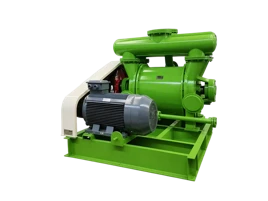
One of the most significant factors affecting gas - handling capacity is the pump's design. Different types of large vacuum pumps have different mechanisms for removing gas, and these mechanisms determine how much gas they can handle. For example, our 2BE1 Liquid Ring Vacuum Pump uses a liquid ring to create a seal and compress the gas. This design allows it to handle a relatively large volume of gas, especially in applications where there might be some moisture or particulate matter in the gas stream.
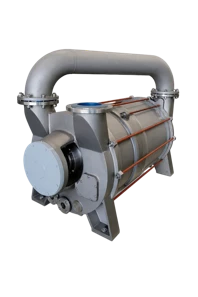
Another important factor is the vacuum level you need to achieve. The gas - handling capacity of a pump typically varies with the pressure in the system. As the pressure drops and you approach a higher vacuum level, the pump has to work harder to remove the remaining gas molecules. So, a pump might have a high gas - handling capacity at a relatively low vacuum level, but that capacity will decrease as you try to reach a deeper vacuum. Our 2BED 2 Stage Liquid Ring Vacuum Pump is designed to handle this challenge. With its two - stage design, it can maintain a decent gas - handling capacity even as it approaches lower pressures, making it suitable for applications that require a deeper vacuum.
The type of gas also matters. Different gases have different molecular weights and behaviors. For instance, lighter gases like hydrogen can be more challenging to pump compared to heavier gases like nitrogen. A pump's gas - handling capacity might be different depending on whether it's dealing with a pure gas or a mixture of gases. Some large vacuum pumps are specifically designed to handle certain types of gases more efficiently. Our 2BV Liquid Ring Vacuum Pump is quite versatile in this regard and can handle a variety of gases, making it a popular choice for many different industries.
Now, let's talk about how you can determine the gas - handling capacity your application needs. Start by looking at the volume of the system you need to evacuate. If you have a large chamber or a complex pipeline network, you'll need a pump with a higher gas - handling capacity. Consider the rate at which gas is being introduced into the system. In some industrial processes, new gas is constantly being generated, and the pump needs to be able to keep up. You also need to think about the time frame in which you need to reach a certain vacuum level. If you're on a tight schedule, you'll need a pump that can remove gas quickly.
When choosing a large vacuum pump based on gas - handling capacity, it's also important to consider the long - term operation. A pump that can handle a high volume of gas initially might not be the best choice if it requires frequent maintenance or has a high energy consumption. Look for a pump that offers a good balance between gas - handling capacity, reliability, and energy efficiency.
In addition to the factors I've mentioned, the temperature of the gas and the pump itself can affect the gas - handling capacity. High temperatures can cause the gas to expand, which means the pump has to deal with a larger volume. And if the pump overheats, its performance can degrade. That's why many of our large vacuum pumps are designed with cooling systems to maintain optimal operating temperatures and ensure consistent gas - handling capacity.
So, to sum it up, the gas - handling capacity of a large vacuum pump is a complex but crucial aspect to consider when making a purchase. It's influenced by the pump's design, the vacuum level you need, the type of gas, the volume of the system, and other factors. By understanding these factors and carefully evaluating your application requirements, you can choose the right pump for your needs.


If you're in the market for a large vacuum pump and want to learn more about gas - handling capacity or any of our products, don't hesitate to reach out. We're here to help you make an informed decision and ensure that you get the best pump for your specific situation. Whether you're a small - scale researcher or a large - scale industrial manufacturer, we have the expertise and the products to meet your needs. Let's start a conversation and see how we can work together to find the perfect vacuum pump solution for you.
References
- Vacuum Technology Handbook
- Industrial Vacuum Pump Applications Guide