When it comes to rough vacuum pumps, understanding their heat dissipation methods is crucial for ensuring optimal performance and longevity. As a reliable supplier of rough vacuum pumps, we are committed to providing high-quality products and in-depth knowledge to our customers. In this blog post, we will explore the various heat dissipation methods employed in rough vacuum pumps and their significance in the overall operation of these essential industrial devices.
The Importance of Heat Dissipation in Rough Vacuum Pumps
Rough vacuum pumps are used in a wide range of industrial applications, from chemical processing and food packaging to semiconductor manufacturing and pharmaceutical production. During operation, these pumps generate heat due to the compression of gas and the friction between moving parts. If this heat is not effectively dissipated, it can lead to a variety of problems, including reduced pump efficiency, increased wear and tear on components, and even premature pump failure.
Efficient heat dissipation is essential for maintaining the proper operating temperature of the pump, which in turn ensures consistent performance and reliability. By removing excess heat, the pump can operate at its optimal level, reducing energy consumption and extending the lifespan of the equipment.
Common Heat Dissipation Methods in Rough Vacuum Pumps
1. Air Cooling
Air cooling is one of the most common heat dissipation methods used in rough vacuum pumps. This method involves using a fan or blower to circulate air over the pump's surface, carrying away the heat generated during operation. Air-cooled pumps are typically more compact and easier to install than their liquid-cooled counterparts, making them a popular choice for applications where space is limited.
The main advantage of air cooling is its simplicity and low cost. However, it is less effective in high-temperature environments or applications where the pump generates a large amount of heat. In such cases, air cooling may not be sufficient to maintain the pump's operating temperature within the recommended range, leading to reduced performance and potential damage to the pump.
2. Liquid Cooling
Liquid cooling is a more efficient heat dissipation method that involves using a coolant, such as water or a specialized cooling fluid, to remove heat from the pump. In a liquid-cooled system, the coolant is circulated through a heat exchanger, where it absorbs the heat from the pump and transfers it to the surrounding environment.
There are two main types of liquid cooling systems: direct cooling and indirect cooling. In direct cooling, the coolant comes into direct contact with the pump's components, such as the pump casing or the rotor. This method provides more efficient heat transfer but requires a more complex cooling system and may require the use of a corrosion-resistant coolant.
Indirect cooling, on the other hand, uses a separate cooling circuit to transfer heat from the pump to the coolant. This method is less invasive and can be used with a wider range of coolants, but it may be less efficient than direct cooling.
Liquid cooling is generally more effective than air cooling, especially in high-temperature environments or applications where the pump generates a large amount of heat. However, it requires a more complex and expensive cooling system, including a coolant reservoir, a pump, and a heat exchanger.


3. Oil Cooling
Oil cooling is a specialized heat dissipation method used in some rough vacuum pumps, particularly those that use oil as a lubricant and sealing medium. In an oil-cooled pump, the oil is circulated through a heat exchanger, where it absorbs the heat generated during operation and transfers it to the surrounding environment.
Oil cooling provides several advantages over other heat dissipation methods. First, the oil acts as a lubricant and a sealing medium, reducing friction and wear on the pump's components. Second, the oil has a high heat capacity, which means it can absorb a large amount of heat without a significant increase in temperature. Finally, oil cooling can help to maintain a stable operating temperature, even in high-temperature environments or applications where the pump is subjected to frequent start-stop cycles.
However, oil cooling also has some disadvantages. The oil needs to be regularly changed and filtered to maintain its effectiveness, and the cooling system may require additional maintenance and monitoring. In addition, oil-cooled pumps may be more expensive than air-cooled or liquid-cooled pumps.
Heat Dissipation in Our Rough Vacuum Pumps
At our company, we offer a wide range of rough vacuum pumps with different heat dissipation methods to meet the specific needs of our customers. Our pumps are designed and manufactured to the highest standards of quality and performance, and we use the latest technologies and materials to ensure efficient heat dissipation and reliable operation.
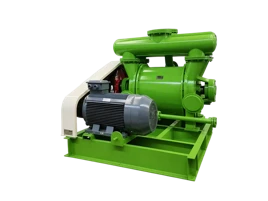
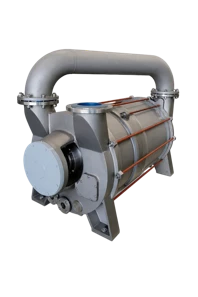
For example, our 2BE1 Liquid Ring Vacuum Pump is available with both air cooling and liquid cooling options. The air-cooled version is ideal for applications where space is limited and the heat load is relatively low, while the liquid-cooled version is suitable for high-temperature environments or applications where the pump generates a large amount of heat.
Our 2BED 2 Stage Liquid Ring Vacuum Pump uses a liquid cooling system to provide efficient heat dissipation and reliable operation. The pump is designed to handle a wide range of applications, from low to high vacuum levels, and it offers excellent performance and energy efficiency.
In addition, our 2BE3 Large Liquid Ring Vacuum Pump is specifically designed for large-scale industrial applications where high vacuum levels and high pumping speeds are required. The pump uses a liquid cooling system to ensure efficient heat dissipation and reliable operation, even under demanding conditions.
Conclusion
Heat dissipation is a critical factor in the performance and reliability of rough vacuum pumps. By understanding the different heat dissipation methods available and choosing the right method for your application, you can ensure that your pump operates at its optimal level, reducing energy consumption and extending the lifespan of the equipment.
As a leading supplier of rough vacuum pumps, we are committed to providing our customers with high-quality products and comprehensive technical support. If you have any questions about heat dissipation in rough vacuum pumps or need help selecting the right pump for your application, please do not hesitate to contact us. We look forward to working with you to meet your vacuum pumping needs.
References
- "Vacuum Technology: A Practical Guide" by John F. O'Hanlon
- "Handbook of Vacuum Physics" edited by D. O. Haydon
- Manufacturer's manuals and technical specifications for rough vacuum pumps