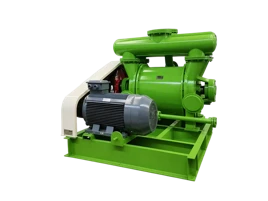
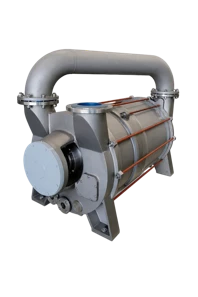
Hey there! As a supplier of ATEX screw vacuum pumps, I often get asked about the heat dissipation methods of these pumps. So, I thought I'd write a blog post to share some insights on this topic.
First off, let's understand why heat dissipation is so important for ATEX screw vacuum pumps. These pumps work by creating a vacuum through the rotation of screws. During this process, a significant amount of heat is generated due to friction between the moving parts and the compression of gas. If this heat isn't properly dissipated, it can lead to a bunch of problems. For example, it can cause the pump components to expand, which may result in increased wear and tear, reduced efficiency, and even potential damage to the pump. In extreme cases, overheating can also pose a safety risk, especially in hazardous environments where ATEX pumps are commonly used.
Now, let's dive into the different heat dissipation methods used in ATEX screw vacuum pumps.
Air Cooling
One of the most common heat dissipation methods is air cooling. It's a relatively simple and cost - effective way to keep the pump at a reasonable temperature. In an air - cooled ATEX screw vacuum pump, there are usually fins on the outer surface of the pump casing. These fins increase the surface area of the casing, allowing for better heat transfer to the surrounding air.
A fan is often installed near the pump. The fan blows air over the fins, carrying away the heat. The air flow helps to maintain a temperature gradient between the pump and the surrounding environment, enabling continuous heat dissipation. Air cooling is great for smaller ATEX screw vacuum pumps or applications where the heat generation is not extremely high. However, it has its limitations. In high - temperature environments or when the pump is operating at high loads for extended periods, air cooling may not be sufficient to keep the pump cool.
Water Cooling
Water cooling is another popular method for heat dissipation in ATEX screw vacuum pumps. It's more efficient than air cooling, especially for larger pumps or those that generate a large amount of heat. In a water - cooled system, there are water channels inside the pump casing. Water is circulated through these channels, absorbing the heat from the pump.
The hot water is then sent to a heat exchanger. A heat exchanger is a device that transfers the heat from the water to another medium, usually the surrounding air or a cooling tower. After the heat is removed, the cooled water is recirculated back to the pump. Water cooling provides a more stable and consistent cooling effect, as water has a higher specific heat capacity than air. This means it can absorb more heat without a significant increase in temperature.
Oil Cooling
Some ATEX screw vacuum pumps use oil cooling. In this method, oil is used as a coolant. The oil is circulated through the pump, absorbing the heat generated during operation. The oil has lubricating properties as well, which helps to reduce friction between the moving parts of the pump.
The heated oil is then passed through an oil cooler. Similar to a water heat exchanger, the oil cooler transfers the heat from the oil to the surrounding environment. Oil cooling is beneficial because it not only cools the pump but also helps to protect the internal components by reducing wear and corrosion. However, it requires more maintenance compared to air or water cooling, as the oil needs to be changed regularly to maintain its cooling and lubricating properties.
Gas Circulation Cooling
Gas circulation cooling is a unique method that is used in some advanced ATEX screw vacuum pumps. In this system, a gas (usually nitrogen or another inert gas) is circulated within the pump. The gas absorbs the heat from the pump components and then passes through a cooler.
The cooler removes the heat from the gas, and the cooled gas is recirculated back into the pump. Gas circulation cooling is particularly useful in applications where the use of air or water cooling is not suitable, such as in explosive or corrosive environments. It provides a clean and non - contaminating cooling solution.
For example, our NZJQ Multistage Gas circulation - cooled Roots Pump uses this advanced gas circulation cooling technology. It's designed to work efficiently in hazardous environments while effectively dissipating heat.
Comparison of Heat Dissipation Methods
Each heat dissipation method has its own advantages and disadvantages. Air cooling is simple and cheap but may not be enough for high - heat applications. Water cooling is more efficient but requires a more complex setup and a reliable water supply. Oil cooling offers lubrication along with cooling but needs regular maintenance. Gas circulation cooling is suitable for special environments but can be more expensive to set up.
When choosing an ATEX screw vacuum pump, it's important to consider the heat dissipation method based on the specific application. For instance, if you're working in a small workshop with a relatively low - heat application, an air - cooled pump might be sufficient. But if you're operating in an industrial setting with high - load requirements, a water - cooled or gas - cooled pump could be a better choice.
Our Product Range
As a supplier, we offer a wide range of ATEX screw vacuum pumps with different heat dissipation methods. Our ZJP Roots Vacuum Pump is available in both air - cooled and water - cooled versions. It's a reliable option for various industrial applications.
Our VDP Dry Screw Vacuum Pump also comes with different cooling options, including gas circulation cooling for those who need a more advanced solution.
Conclusion
In conclusion, understanding the heat dissipation methods of ATEX screw vacuum pumps is crucial for ensuring their proper operation and longevity. Whether it's air cooling, water cooling, oil cooling, or gas circulation cooling, each method has its place in different applications.
If you're in the market for an ATEX screw vacuum pump, we're here to help. We can assist you in choosing the right pump with the most suitable heat dissipation method for your specific needs. Don't hesitate to reach out to us for more information or to start a procurement discussion. We're always ready to provide you with the best solutions for your vacuum pumping requirements.


References
- "Vacuum Technology Handbook"
- Manufacturer's manuals of ATEX screw vacuum pumps
So, if you're interested in our ATEX screw vacuum pumps or have any questions about heat dissipation methods, feel free to contact us for procurement and further discussions.