Hey there! As a supplier of rough vacuum pumps, I often get asked about the maximum vacuum level these pumps can reach. It's a super important question, especially for folks in industries that rely on vacuum technology. So, let's dive right in and explore this topic.


First off, what exactly is a rough vacuum pump? Well, rough vacuum pumps are used to create a relatively low vacuum level compared to high - vacuum pumps. They're commonly used in many industrial applications like packaging, woodworking, and chemical processing. The main goal of a rough vacuum pump is to remove gas molecules from a closed space to create a partial vacuum.
The maximum vacuum level a rough vacuum pump can reach is measured in units like Torr, Pascal (Pa), or millibar (mbar). One Torr is approximately equal to 133.322 Pa. A perfect vacuum is 0 Torr or 0 Pa, but in the real world, it's almost impossible to achieve that.
Now, different types of rough vacuum pumps have different maximum vacuum levels. Let's take a look at some common types.
Liquid Ring Vacuum Pumps
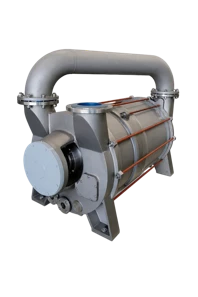
Liquid ring vacuum pumps are a popular choice in many industries. They work by using a liquid (usually water) to create a seal and compress the gas. The maximum vacuum level a single - stage liquid ring vacuum pump can reach is typically around 30 - 50 Torr. However, if you need a deeper vacuum, you can go for a two - stage liquid ring vacuum pump.
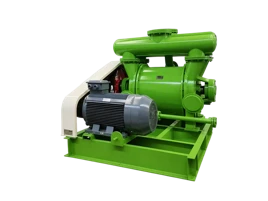
We offer some great liquid ring vacuum pumps, like the 2BV Liquid Ring Vacuum Pump. This pump is known for its reliability and efficiency. It can handle a wide range of applications and can reach a relatively good vacuum level for many industrial needs.
Another option is the 2BE3 Large Liquid Ring Vacuum Pump. This is a heavy - duty pump designed for large - scale industrial applications. It can achieve a lower vacuum level compared to some smaller pumps, making it suitable for processes that require a more substantial vacuum.
The 2BED 2 Stage Liquid Ring Vacuum Pump is even better when it comes to reaching a deeper vacuum. With its two - stage design, it can reach a vacuum level of around 10 - 20 Torr. This makes it ideal for applications where a higher vacuum is necessary, such as in some chemical and pharmaceutical processes.
Rotary Vane Vacuum Pumps
Rotary vane vacuum pumps are another type of rough vacuum pump. They work by using rotating vanes to trap and compress the gas. These pumps can generally reach a lower vacuum level compared to single - stage liquid ring vacuum pumps. A good quality rotary vane vacuum pump can reach a vacuum level of around 0.1 - 1 Torr.
However, rotary vane vacuum pumps have some limitations. They require regular maintenance, especially the replacement of the vanes, and they can be a bit noisy. But for applications that need a relatively high - quality vacuum at a reasonable cost, they're a great option.
Diaphragm Vacuum Pumps
Diaphragm vacuum pumps are a more compact and oil - free option. They use a diaphragm to create the vacuum. The maximum vacuum level a diaphragm vacuum pump can reach is usually in the range of 100 - 500 Torr. These pumps are great for applications where cleanliness is important, like in laboratories or some food processing industries.
So, what factors affect the maximum vacuum level a rough vacuum pump can reach?
Gas Load
The amount of gas that needs to be removed from the system is a major factor. If there's a high gas load, the pump will have a harder time reaching a deep vacuum. For example, in a packaging process where a lot of air is being removed from a large container, the pump may not be able to reach its maximum vacuum level as quickly or as effectively.
Pump Design and Quality
The design of the pump plays a crucial role. A well - designed pump with high - quality components will be able to reach a lower vacuum level more efficiently. For instance, a pump with a better sealing mechanism will prevent gas from leaking back into the system, allowing it to achieve a deeper vacuum.
Operating Conditions
The temperature and pressure of the environment where the pump is operating can also affect its performance. Higher temperatures can cause the gas to expand, making it more difficult for the pump to remove the gas molecules. Similarly, if the ambient pressure is high, the pump will have to work harder to create a vacuum.
When choosing a rough vacuum pump, it's important to consider your specific needs. If you only need a relatively low - level vacuum for a simple application, a single - stage liquid ring vacuum pump or a diaphragm vacuum pump may be sufficient. But if you need a deeper vacuum for more demanding processes, a two - stage liquid ring vacuum pump or a rotary vane vacuum pump might be a better choice.
We understand that every customer has unique requirements, and that's why we offer a wide range of rough vacuum pumps. Whether you're in the food industry, chemical industry, or any other field that requires vacuum technology, we've got you covered.
If you're interested in learning more about our rough vacuum pumps or want to discuss your specific needs, don't hesitate to get in touch. We're here to help you find the perfect pump for your application and ensure that you get the best performance and value for your money.
References
- "Vacuum Technology Handbook"
- "Industrial Vacuum Pumps: Principles, Operation, and Maintenance"
So, if you're in the market for a rough vacuum pump, give us a shout. We're ready to assist you in making the right choice and getting your operations running smoothly with the perfect vacuum solution.