Hey there! As a supplier of liquid ring compressors, I often get asked about the various components that make these machines tick. One part that plays a crucial role in the safe and efficient operation of a liquid ring compressor is the pressure relief valve. In this blog post, I'm gonna break down what the pressure relief valve does and why it's so important.
Let's start with the basics. A liquid ring compressor is a type of positive displacement compressor that uses a rotating impeller to create a liquid ring inside a casing. This liquid ring acts as a piston, compressing the gas or vapor that enters the compressor. Liquid ring compressors are used in a wide range of industries, from chemical processing to wastewater treatment, because they're reliable, efficient, and can handle a variety of gases and vapors.
Now, let's talk about the pressure relief valve. Simply put, a pressure relief valve is a safety device that's designed to protect the compressor and the surrounding equipment from overpressure. When the pressure inside the compressor exceeds a certain set point, the pressure relief valve opens up and releases some of the compressed gas or vapor. This helps to prevent damage to the compressor, as well as any pipes, valves, or other components that are connected to it.
One of the main reasons why pressure relief valves are so important in liquid ring compressors is because these machines operate at relatively high pressures. If the pressure inside the compressor were to build up too much, it could cause the casing to rupture or the impeller to break, which could lead to a dangerous and costly explosion. By installing a pressure relief valve, you can ensure that the pressure inside the compressor never exceeds a safe level.
Another reason why pressure relief valves are important is because they help to maintain the efficiency of the compressor. When the pressure inside the compressor is too high, it can cause the impeller to work harder than it needs to, which can lead to increased energy consumption and wear and tear on the machine. By releasing some of the compressed gas or vapor when the pressure gets too high, the pressure relief valve helps to keep the pressure inside the compressor at a safe and efficient level.
There are several different types of pressure relief valves that can be used in liquid ring compressors, including spring-loaded valves, pilot-operated valves, and rupture discs. Each type of valve has its own advantages and disadvantages, and the type that you choose will depend on a variety of factors, such as the operating pressure of the compressor, the type of gas or vapor that's being compressed, and the specific requirements of your application.
Spring-loaded valves are the most common type of pressure relief valve used in liquid ring compressors. These valves work by using a spring to hold the valve closed until the pressure inside the compressor exceeds a certain set point. When the pressure reaches this set point, the spring compresses, allowing the valve to open and release some of the compressed gas or vapor. Spring-loaded valves are relatively simple and inexpensive, but they can be less accurate than other types of valves, especially at high pressures.
Pilot-operated valves are another type of pressure relief valve that's commonly used in liquid ring compressors. These valves work by using a pilot valve to control the opening and closing of the main valve. When the pressure inside the compressor exceeds a certain set point, the pilot valve opens, allowing the pressure to act on a piston or diaphragm inside the main valve. This causes the main valve to open and release some of the compressed gas or vapor. Pilot-operated valves are more accurate and reliable than spring-loaded valves, but they're also more complex and expensive.
Rupture discs are a type of pressure relief valve that's designed to burst open when the pressure inside the compressor exceeds a certain set point. These discs are typically made of a thin metal or plastic membrane that's designed to rupture at a specific pressure. When the disc ruptures, it allows the compressed gas or vapor to escape, which helps to prevent overpressure. Rupture discs are often used in applications where the pressure inside the compressor can change rapidly or where there's a risk of the valve sticking closed.


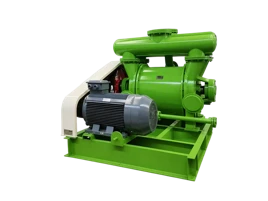
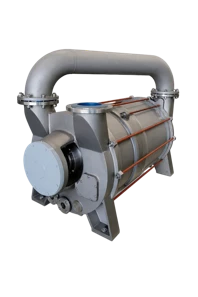
As a supplier of liquid ring compressors, I always recommend that my customers install a pressure relief valve on their machines. Not only does this help to ensure the safety and efficiency of the compressor, but it's also a requirement in many industries and applications. If you're in the market for a liquid ring compressor, I encourage you to check out our Y Liquid Ring Compressor and YE Liquid Ring Compressor models. These compressors are designed to meet the highest standards of quality and reliability, and they come with a range of features and options to suit your specific needs.
If you have any questions about pressure relief valves or liquid ring compressors in general, please don't hesitate to reach out. I'm always happy to help and provide you with the information and support you need to make an informed decision. Whether you're a small business owner or a large industrial manufacturer, I'm confident that I can find the right compressor and pressure relief valve solution for your application. So, why wait? Contact me today to learn more and start the purchasing process!
References:
- Compressor Handbook: Principles, Technology, and Applications by E. U. Schlösser
- Chemical Engineering Design: Principles, Practice and Economics of Plant and Process Design by Gavin Towler and Ray Sinnott