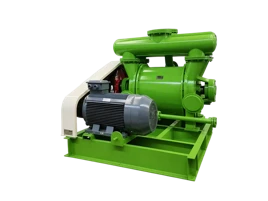
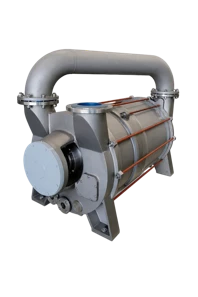
Industrial water vacuum pumps are essential components in a wide range of industrial applications, from chemical processing to food and beverage production. As a leading industrial water vacuum pump supplier, I'm often asked about the working principle of these pumps. In this blog post, I'll delve into the details of how industrial water vacuum pumps operate, exploring the key concepts and mechanisms that make them so effective.
Basic Concept of Vacuum Pumps
Before we dive into the working principle of industrial water vacuum pumps, it's important to understand the basic concept of vacuum pumps in general. A vacuum pump is a device that removes gas molecules from a sealed volume to create a partial vacuum. This is achieved by various mechanical, physical, or chemical processes, depending on the type of pump.
Industrial water vacuum pumps, specifically, use water as the working fluid to create a vacuum. They are widely used due to their simplicity, reliability, and ability to handle a variety of gases and vapors. There are several types of industrial water vacuum pumps, including liquid ring vacuum pumps, which are some of the most commonly used in industrial settings.
Working Principle of Liquid Ring Vacuum Pumps
Liquid ring vacuum pumps are a type of positive displacement pump that operates on a relatively simple principle. The main components of a liquid ring vacuum pump include a casing, an impeller, and a liquid ring. The impeller is mounted eccentrically within the casing, and the liquid ring is formed by the working fluid (usually water) that is introduced into the pump.
When the impeller rotates, it throws the liquid against the inner wall of the casing, forming a liquid ring. The eccentricity of the impeller causes the volume between the impeller blades and the liquid ring to change as the impeller rotates. This change in volume creates a series of compression and expansion cycles, which are used to draw in and expel gas.


Intake Process
During the intake process, as the impeller rotates, the volume between the impeller blades and the liquid ring increases. This creates a low-pressure area within the pump, causing gas to be drawn into the pump through the intake port. The gas is then trapped in the spaces between the impeller blades and the liquid ring.
Compression Process
As the impeller continues to rotate, the volume between the impeller blades and the liquid ring decreases. This compresses the gas that was trapped during the intake process. The compression causes the pressure of the gas to increase, preparing it for expulsion from the pump.
Discharge Process
Once the gas has been compressed, it is forced out of the pump through the discharge port. The liquid ring acts as a seal, preventing the gas from leaking back into the intake side of the pump. This continuous cycle of intake, compression, and discharge allows the pump to create and maintain a vacuum.
Advantages of Industrial Water Vacuum Pumps
Industrial water vacuum pumps offer several advantages over other types of vacuum pumps. One of the main advantages is their ability to handle wet or dirty gases. Since water is used as the working fluid, it can absorb and carry away any contaminants or moisture in the gas, preventing damage to the pump and other equipment.
Another advantage is their simplicity and reliability. Liquid ring vacuum pumps have relatively few moving parts, which reduces the risk of mechanical failure and makes them easy to maintain. They also operate smoothly and quietly, making them suitable for use in a variety of industrial environments.
In addition, industrial water vacuum pumps are highly efficient. They can achieve high vacuum levels with relatively low power consumption, which helps to reduce operating costs. This makes them a cost-effective solution for many industrial applications.
Applications of Industrial Water Vacuum Pumps
Industrial water vacuum pumps are used in a wide range of applications across various industries. Some of the most common applications include:
- Chemical Processing: In chemical processing plants, industrial water vacuum pumps are used for distillation, evaporation, and filtration processes. They help to create the necessary vacuum conditions for these processes to operate efficiently.
- Food and Beverage Production: In the food and beverage industry, vacuum pumps are used for packaging, degassing, and bottling processes. They help to remove air from packaging containers, extend the shelf life of products, and improve the quality of the final product.
- Pharmaceutical Industry: In the pharmaceutical industry, vacuum pumps are used for drying, sterilization, and filtration processes. They help to create a clean and controlled environment, ensuring the quality and safety of pharmaceutical products.
- Power Generation: In power generation plants, industrial water vacuum pumps are used for condenser evacuation, turbine sealing, and other applications. They help to improve the efficiency of power generation processes and reduce energy consumption.
Our Product Range
As an industrial water vacuum pump supplier, we offer a wide range of high-quality pumps to meet the diverse needs of our customers. Our product range includes the 2BED 2 Stage Liquid Ring Vacuum Pump, which is designed for applications that require high vacuum levels and reliable performance. This pump features a two-stage design, which allows it to achieve higher vacuum levels than single-stage pumps.
We also offer the 2BV Liquid Ring Vacuum Pump, which is a compact and efficient pump that is suitable for a variety of industrial applications. This pump is easy to install and maintain, making it a popular choice among our customers.
In addition, we have the 2BE3 Large Liquid Ring Vacuum Pump, which is designed for high-capacity applications. This pump is capable of handling large volumes of gas and is ideal for use in industries such as chemical processing, power generation, and mining.
Conclusion
Industrial water vacuum pumps, particularly liquid ring vacuum pumps, play a crucial role in many industrial processes. Their simple yet effective working principle allows them to create and maintain a vacuum, making them essential for a wide range of applications. As a leading industrial water vacuum pump supplier, we are committed to providing our customers with high-quality pumps that offer reliable performance and efficiency.
If you are in need of an industrial water vacuum pump for your application, we invite you to contact us to discuss your requirements. Our team of experts will be happy to assist you in selecting the right pump for your needs and providing you with all the information and support you need to ensure a successful installation and operation.
References
- Perry, R. H., & Green, D. W. (Eds.). (2008). Perry's Chemical Engineers' Handbook. McGraw-Hill Professional.
- vacuum pump handbook.