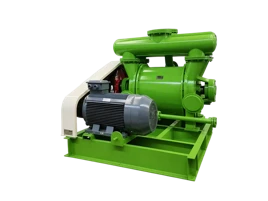
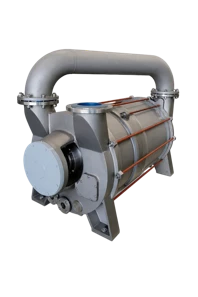
As a supplier of vacuum systems, I've witnessed firsthand the diverse and crucial roles these systems play in various research fields. Vacuum systems are not just pieces of equipment; they are enablers of scientific discovery and technological advancement. In this blog, I'll explore some of the key research applications of vacuum systems and how our products, such as the JZJ2B Roots - liquid Ring Vacuum System, JZJD Roots - screw Vacuum System, and Customized Vacuum System, contribute to these applications.
Semiconductor Research
Semiconductor research is one of the most significant areas where vacuum systems are indispensable. In the fabrication of semiconductor devices, a clean and controlled environment is essential. Vacuum systems are used to create low - pressure environments that prevent contamination from dust, moisture, and other particles.
For example, in chemical vapor deposition (CVD) processes, a vacuum is created to allow the precise deposition of thin films on semiconductor wafers. The low - pressure environment ensures that the chemical reactions occur uniformly, resulting in high - quality films with consistent properties. Our JZJD Roots - screw Vacuum System is well - suited for such applications. Its high pumping speed and stable performance can quickly achieve and maintain the required vacuum levels, which is crucial for the efficiency and quality of semiconductor manufacturing.
In addition, ion implantation, another key process in semiconductor research, requires a vacuum to accelerate and direct ions onto the semiconductor surface. A stable vacuum environment is necessary to control the energy and trajectory of the ions accurately. Our vacuum systems can provide the reliable vacuum conditions needed for these complex processes, helping researchers to develop more advanced semiconductor technologies.
Material Science Research
Material science research often involves studying the properties of materials under extreme conditions. Vacuum systems play a vital role in creating these conditions.
In electron microscopy, such as scanning electron microscopy (SEM) and transmission electron microscopy (TEM), a high - vacuum environment is required. Electrons have a very short mean free path in air, and a vacuum is needed to prevent the scattering of electrons by air molecules. This allows for high - resolution imaging of materials at the nanoscale. Our JZJ2B Roots - liquid Ring Vacuum System can provide the necessary vacuum levels for electron microscopes. It has a relatively simple structure and is easy to maintain, which is beneficial for long - term use in research laboratories.
Furthermore, in the study of material surface properties, techniques like X - ray photoelectron spectroscopy (XPS) are used. XPS requires a ultra - high vacuum (UHV) environment to detect the photoelectrons emitted from the material surface accurately. Our customized vacuum systems can be designed to meet the specific requirements of UHV applications. They can be equipped with advanced pumping mechanisms and vacuum gauges to achieve and monitor the extremely low pressures needed for XPS analysis.
Space Simulation Research
Space simulation research aims to replicate the conditions of outer space on Earth. Vacuum systems are the core components of space simulation chambers.
In space, the pressure is extremely low, and there is a high - energy radiation environment. Space simulation chambers use vacuum systems to create a near - vacuum environment similar to space. This allows researchers to test the performance of spacecraft components, materials, and instruments under space - like conditions.
For example, thermal vacuum testing is used to evaluate the thermal performance of spacecraft components. A vacuum is created to eliminate the heat transfer by convection, and the components are exposed to different temperature cycles. Our vacuum systems can provide the large - scale and high - performance vacuum solutions needed for these tests. They can quickly pump down large - volume chambers to the required vacuum levels and maintain them for extended periods, which is essential for accurate testing results.
Nuclear and Particle Physics Research
In nuclear and particle physics research, vacuum systems are used in particle accelerators and nuclear reactors.
Particle accelerators, such as cyclotrons and synchrotrons, require a high - vacuum environment to accelerate particles to high energies. A vacuum is necessary to prevent the particles from colliding with air molecules, which would cause energy loss and disrupt the acceleration process. Our vacuum systems can provide the high - vacuum conditions needed for particle accelerators. They can handle the large gas loads generated during the operation of these complex machines and maintain a stable vacuum environment.
In nuclear reactors, vacuum systems are used for various purposes, such as fuel handling and containment. For example, in the process of removing and storing nuclear fuel, a vacuum is used to ensure the safe transfer of radioactive materials. Our customized vacuum systems can be designed to meet the strict safety and performance requirements of nuclear applications.
Biomedical Research
Biomedical research also benefits from vacuum systems. In freeze - drying processes, which are widely used in the preservation of biological samples and the production of pharmaceuticals, a vacuum is created to remove water from the samples at low temperatures. This helps to preserve the biological activity of the samples.
Our JZJ2B Roots - liquid Ring Vacuum System can be used in freeze - drying applications. Its ability to maintain a stable vacuum level during the long - term freeze - drying process is crucial for the quality of the final products. In addition, in some biomedical imaging techniques, such as positron emission tomography (PET) scanners, a vacuum is used in the detector modules to improve the detection efficiency of gamma rays.
Conclusion
The research applications of vacuum systems are vast and diverse, spanning multiple scientific disciplines. From semiconductor research to space simulation, these systems are essential for enabling scientific discovery and technological innovation.
As a supplier of vacuum systems, we are committed to providing high - quality products and customized solutions to meet the specific needs of different research applications. Our JZJ2B Roots - liquid Ring Vacuum System, JZJD Roots - screw Vacuum System, and Customized Vacuum System have proven their reliability and performance in various research fields.


If you are involved in research and are in need of a vacuum system, we invite you to contact us for more information and to discuss your specific requirements. Our team of experts is ready to assist you in finding the most suitable vacuum solution for your research projects. Working together, we can contribute to the advancement of scientific knowledge and the development of new technologies.
References
- "Semiconductor Manufacturing Technology" by S. Wolf.
- "Principles of Electron Microscopy" by P. B. Hirsch.
- "Spacecraft Thermal Control Handbook" by D. G. Gilmore.
- "Nuclear Physics: Principles and Applications" by W. E. Burcham.
- "Biomedical Engineering: Bridging Medicine and Technology" by J. D. Bronzino.