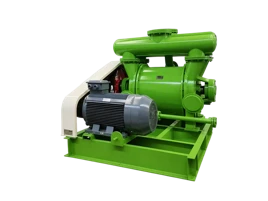
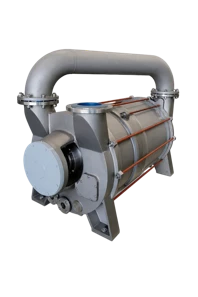
As a supplier of ATEX screw vacuum pumps, I often get asked about the potential applications of our products, especially in specialized fields like aerospace. The aerospace industry demands the highest standards of performance, reliability, and safety. In this blog post, I'll explore whether an ATEX screw vacuum pump can be used in aerospace applications.
Understanding ATEX Screw Vacuum Pumps
Before delving into aerospace applications, let's first understand what an ATEX screw vacuum pump is. ATEX stands for "Atmosphères Explosibles," which is a European directive that defines the requirements for equipment used in potentially explosive atmospheres. An ATEX screw vacuum pump is designed to operate safely in such environments, with features that prevent the ignition of flammable gases, vapors, or dust.
These pumps work on the principle of positive displacement, using two intermeshing screws to compress and transfer gas. They offer several advantages, including high pumping speed, low noise levels, and the ability to handle a wide range of gases. Additionally, they are relatively compact and require less maintenance compared to other types of vacuum pumps.
Requirements for Aerospace Applications
The aerospace industry has unique requirements when it comes to vacuum pumps. Some of the key factors that need to be considered include:
- High Vacuum Performance: Aerospace applications often require extremely high vacuum levels, sometimes in the range of 10^-6 to 10^-9 millibars. The vacuum pump must be able to achieve and maintain these levels consistently.
- Reliability: In aerospace, reliability is of utmost importance. A failure of a vacuum pump could have serious consequences for the mission, so the pump must be able to operate continuously for long periods without any issues.
- Lightweight and Compact Design: Spacecraft and aircraft have limited space and weight constraints. Therefore, the vacuum pump must be lightweight and compact to fit into the available space and not add excessive weight to the vehicle.
- Compatibility with Space Environment: The vacuum pump must be able to withstand the harsh conditions of space, including extreme temperatures, radiation, and micrometeoroid impacts.
- Low Vibration and Noise: Vibration and noise can affect the performance of other equipment on board the spacecraft or aircraft. The vacuum pump should operate with minimal vibration and noise to avoid any interference.
Can ATEX Screw Vacuum Pumps Meet the Requirements?
Now, let's evaluate whether ATEX screw vacuum pumps can meet the requirements of aerospace applications.
- High Vacuum Performance: While ATEX screw vacuum pumps can achieve relatively high vacuum levels, they may not be able to reach the extremely low levels required for some aerospace applications. However, they can be used in combination with other types of pumps, such as ZJQ Gas circulation - cooled Roots Pump or ZJP Roots Vacuum Pump, to achieve the desired vacuum levels. These roots pumps can be used as boosters to increase the pumping speed and vacuum performance of the ATEX screw vacuum pump.
- Reliability: ATEX screw vacuum pumps are known for their reliability and long service life. They have fewer moving parts compared to other types of pumps, which reduces the risk of mechanical failure. Additionally, they are designed to operate in harsh environments, which makes them suitable for aerospace applications where reliability is crucial.
- Lightweight and Compact Design: ATEX screw vacuum pumps are generally more compact and lightweight compared to other types of vacuum pumps. This makes them a good choice for aerospace applications where space and weight are limited. However, further optimization may be required to meet the specific weight and size requirements of the aerospace industry.
- Compatibility with Space Environment: While ATEX screw vacuum pumps are designed to operate in potentially explosive atmospheres, they may need to be modified to withstand the harsh conditions of space. This could involve using special materials and coatings to protect the pump from radiation and micrometeoroid impacts, as well as designing the pump to operate at extreme temperatures.
- Low Vibration and Noise: ATEX screw vacuum pumps operate with relatively low vibration and noise levels. This is an important advantage in aerospace applications, where vibration and noise can affect the performance of other equipment on board the spacecraft or aircraft.
Potential Aerospace Applications
There are several potential aerospace applications where ATEX screw vacuum pumps could be used:
- Satellite Testing: Vacuum chambers are used to simulate the space environment for satellite testing. ATEX screw vacuum pumps can be used to create and maintain the required vacuum levels in these chambers.
- Spacecraft Propulsion Systems: Some spacecraft propulsion systems, such as ion thrusters, require a high - vacuum environment to operate efficiently. ATEX screw vacuum pumps can be used to evacuate the propulsion chamber and maintain the necessary vacuum levels.
- Aircraft Environmental Control Systems: Vacuum pumps are used in aircraft environmental control systems to remove moisture and maintain the cabin pressure. ATEX screw vacuum pumps could be used in these systems to provide a reliable and efficient vacuum source.
Conclusion
In conclusion, while ATEX screw vacuum pumps may not be suitable for all aerospace applications on their own, they can be a valuable component in a vacuum pumping system. Their reliability, compact design, and low vibration and noise levels make them a good choice for many aerospace applications. By combining them with other types of pumps, such as ZJQ Gas circulation - cooled Roots Pump, ZJP Roots Vacuum Pump, or NZJP Multistage Roots Vacuum Pump, it is possible to achieve the high - vacuum performance required for aerospace applications.
If you are interested in exploring the use of ATEX screw vacuum pumps in your aerospace application, I encourage you to contact us for a detailed discussion. Our team of experts can help you determine the best vacuum pumping solution for your specific needs and provide you with the necessary technical support.


References
- "Vacuum Technology in Aerospace" - Journal of Aerospace Engineering
- "ATEX Directive and Its Application in Industrial Equipment" - European Union Publications Office
- "Principles of Screw Vacuum Pumps" - Vacuum Pump Manufacturers Association