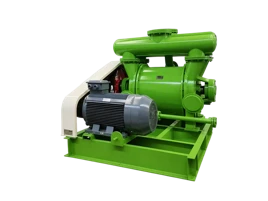
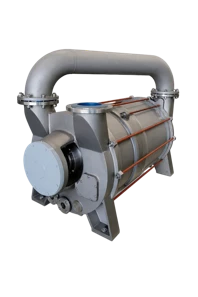
As a supplier of liquid ring compressors, I've witnessed firsthand the critical role these machines play in various industries. Liquid ring compressors are widely used in applications where gentle compression of gases is required, such as in chemical processing, power generation, and wastewater treatment. To ensure the safe, efficient, and reliable operation of these compressors, a comprehensive set of standards and regulations has been established. In this blog post, I'll delve into the key standards and regulations that govern liquid ring compressors, providing insights into why they matter and how they impact our business as a supplier.
International Standards for Liquid Ring Compressors
One of the most influential international standards for liquid ring compressors is set by the International Organization for Standardization (ISO). ISO standards provide a framework for the design, manufacture, and testing of compressors to ensure they meet minimum quality and performance requirements. For liquid ring compressors, ISO 10440-1 and ISO 10440-2 are particularly relevant.
ISO 10440-1 focuses on the mechanical vibration of rotating shaft compressors and their driven machines. This standard specifies the evaluation criteria for vibration severity and provides guidelines for measuring and assessing vibration levels. By adhering to ISO 10440-1, manufacturers can ensure that their liquid ring compressors operate within acceptable vibration limits, reducing the risk of premature wear, mechanical failure, and noise pollution.
ISO 10440-2 deals with the coupling alignment of rotating shaft compressors and their driven machines. Proper coupling alignment is crucial for the efficient and reliable operation of liquid ring compressors, as misalignment can lead to increased stress on the shafts, bearings, and couplings, resulting in reduced service life and increased maintenance costs. ISO 10440-2 provides guidelines for measuring and adjusting coupling alignment to ensure that it meets the specified tolerances.
In addition to ISO standards, the American Society of Mechanical Engineers (ASME) also plays a significant role in setting standards for liquid ring compressors. ASME Boiler and Pressure Vessel Code (BPVC) is a widely recognized set of standards that governs the design, fabrication, inspection, and testing of pressure vessels, including those used in liquid ring compressors. Compliance with ASME BPVC ensures that the pressure vessels in liquid ring compressors are safe and reliable, minimizing the risk of catastrophic failure and protecting the health and safety of operators and the public.
European Standards and Regulations
In Europe, liquid ring compressors are subject to a variety of standards and regulations, including those set by the European Committee for Standardization (CEN) and the European Union (EU). CEN standards, such as EN 13445 for unfired pressure vessels and EN ISO 12100 for machinery safety, provide guidelines for the design, manufacture, and testing of liquid ring compressors to ensure they meet European safety and quality requirements.
The EU Machinery Directive (2006/42/EC) is another important regulation that applies to liquid ring compressors. This directive sets out the essential health and safety requirements for machinery placed on the EU market, including requirements for risk assessment, safety guards, and emergency stop devices. Manufacturers of liquid ring compressors must ensure that their products comply with the Machinery Directive and carry the CE mark, indicating conformity with EU safety standards.
In addition to the Machinery Directive, the EU also has regulations governing the environmental performance of machinery, such as the Energy-related Products Directive (ErP) and the Restriction of Hazardous Substances Directive (RoHS). The ErP directive aims to improve the energy efficiency of energy-related products, including liquid ring compressors, by setting minimum energy performance requirements and promoting the use of energy-efficient technologies. The RoHS directive restricts the use of certain hazardous substances, such as lead, mercury, and cadmium, in electrical and electronic equipment, including components used in liquid ring compressors.
Industry-Specific Standards and Regulations
In addition to international and regional standards, there are also industry-specific standards and regulations that apply to liquid ring compressors. For example, in the chemical industry, liquid ring compressors may be subject to standards and regulations set by organizations such as the American Institute of Chemical Engineers (AIChE) and the International Electrotechnical Commission (IEC). These standards and regulations address specific safety, environmental, and performance requirements for liquid ring compressors used in chemical processing applications, such as resistance to corrosion, compatibility with hazardous chemicals, and explosion protection.


In the power generation industry, liquid ring compressors may be subject to standards and regulations set by organizations such as the Institute of Electrical and Electronics Engineers (IEEE) and the Nuclear Regulatory Commission (NRC). These standards and regulations address specific safety, reliability, and performance requirements for liquid ring compressors used in power generation applications, such as high availability, low maintenance requirements, and compliance with nuclear safety regulations.
The Importance of Compliance
As a supplier of liquid ring compressors, compliance with standards and regulations is not only a legal requirement but also a business imperative. By ensuring that our products meet or exceed the relevant standards and regulations, we can provide our customers with high-quality, reliable, and safe liquid ring compressors that meet their specific application requirements.
Compliance with standards and regulations also helps us to differentiate ourselves from our competitors and build trust and credibility with our customers. When customers know that our liquid ring compressors are designed, manufactured, and tested in accordance with recognized standards and regulations, they can have confidence in the quality and performance of our products, which can lead to increased customer satisfaction, repeat business, and positive word-of-mouth referrals.
In addition, compliance with standards and regulations can help us to reduce our risk of liability and legal disputes. By following the established standards and regulations, we can minimize the risk of product defects, accidents, and environmental damage, which can result in costly lawsuits, fines, and reputational damage.
Our Commitment to Quality and Compliance
At our company, we are committed to providing our customers with the highest quality liquid ring compressors that meet or exceed the relevant standards and regulations. We have a comprehensive quality management system in place that ensures that our products are designed, manufactured, and tested to the highest standards of quality and reliability.
Our engineering team has extensive experience in the design and development of liquid ring compressors, and we use the latest computer-aided design (CAD) and finite element analysis (FEA) software to optimize the performance and reliability of our products. We also conduct rigorous testing and validation of our liquid ring compressors to ensure that they meet the specified performance criteria and comply with the relevant standards and regulations.
In addition to our commitment to quality, we also stay up-to-date with the latest standards and regulations governing liquid ring compressors and make any necessary changes to our products and processes to ensure continued compliance. We work closely with our customers to understand their specific application requirements and provide them with customized solutions that meet their needs while also complying with the relevant standards and regulations.
Our Product Range
We offer a wide range of liquid ring compressors to meet the diverse needs of our customers. Our Y Liquid Ring Compressor is a popular choice for applications where high efficiency, reliability, and low maintenance are required. This compressor features a compact design, advanced sealing technology, and a wide range of customization options to meet the specific requirements of different industries and applications.
Our YE Liquid Ring Compressor is another innovative product that offers improved energy efficiency, reduced noise levels, and enhanced environmental performance. This compressor is designed to meet the latest energy efficiency standards and regulations, making it an ideal choice for customers who are looking to reduce their energy consumption and carbon footprint.
Contact Us for Procurement and Consultation
If you are in the market for a high-quality liquid ring compressor that meets your specific application requirements and complies with the relevant standards and regulations, we would be happy to help. Our team of experts can provide you with detailed information about our products, answer your questions, and assist you in selecting the right liquid ring compressor for your needs.
Whether you are a small business or a large corporation, we are committed to providing you with the best possible service and support. We offer competitive pricing, fast delivery times, and comprehensive after-sales service to ensure that you are completely satisfied with your purchase.
To learn more about our liquid ring compressors or to discuss your specific requirements, please contact us today. We look forward to hearing from you and working with you to find the perfect solution for your business.
References
- International Organization for Standardization (ISO). ISO 10440-1:2007. Rotating shaft compressors and their driven machines - Mechanical vibration - Part 1: Evaluation of vibration severity.
- International Organization for Standardization (ISO). ISO 10440-2:2007. Rotating shaft compressors and their driven machines - Coupling alignment - Part 2: Alignment practices.
- American Society of Mechanical Engineers (ASME). Boiler and Pressure Vessel Code (BPVC).
- European Committee for Standardization (CEN). EN 13445:2014. Unfired pressure vessels.
- European Committee for Standardization (CEN). EN ISO 12100:2010. Safety of machinery - General principles for design - Risk assessment and risk reduction.
- European Union. Machinery Directive 2006/42/EC.
- European Union. Energy-related Products Directive (ErP).
- European Union. Restriction of Hazardous Substances Directive (RoHS).
- American Institute of Chemical Engineers (AIChE).
- International Electrotechnical Commission (IEC).
- Institute of Electrical and Electronics Engineers (IEEE).
- Nuclear Regulatory Commission (NRC).