Hey there! As a supplier of rough vacuum pumps, I often get asked about the difference between rough vacuum pumps and high-vacuum pumps. It's a pretty common question, and I'm more than happy to break it down for you.
Let's start with the basics. A vacuum pump is a device that removes gas molecules from a sealed volume to create a partial vacuum. The main difference between rough vacuum pumps and high-vacuum pumps lies in the level of vacuum they can achieve and the applications they're best suited for.
Rough Vacuum Pumps
Rough vacuum pumps, like the ones I supply, are designed to create a relatively low level of vacuum. They're typically used to remove large volumes of gas quickly to reach a moderate vacuum level, usually in the range of 1 to 100 millibar (mbar). This level of vacuum is sufficient for many industrial applications, such as packaging, degassing, and filtration.
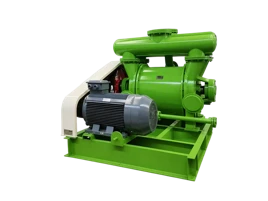
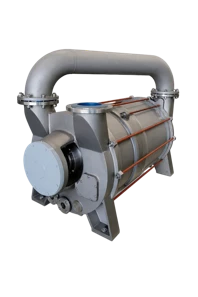
One of the key advantages of rough vacuum pumps is their simplicity and reliability. They're relatively easy to operate and maintain, making them a popular choice for many businesses. For example, our 2BE1 Liquid Ring Vacuum Pump is a workhorse in the industry. It uses a liquid ring to create a seal and compress the gas, and it's known for its robust construction and long service life.
Another great option is our 2BE3 Large Liquid Ring Vacuum Pump. This pump is designed for high-capacity applications where large volumes of gas need to be removed quickly. It's often used in chemical processing, power generation, and other industries where efficiency is key.
And if you're looking for a more compact and cost-effective solution, our 2BV Liquid Ring Vacuum Pump is a great choice. It's ideal for small to medium-sized applications and offers excellent performance at a competitive price.
High-Vacuum Pumps
On the other hand, high-vacuum pumps are designed to achieve much lower pressures, typically in the range of 10^-3 to 10^-12 mbar. They're used in applications where a very high level of vacuum is required, such as in semiconductor manufacturing, electron microscopy, and space simulation.
High-vacuum pumps are generally more complex and expensive than rough vacuum pumps. They often require a combination of different pumping mechanisms to achieve the desired level of vacuum. For example, a typical high-vacuum system might include a roughing pump to remove the bulk of the gas, followed by a high-vacuum pump such as a turbomolecular pump or a diffusion pump to achieve the final low-pressure level.


One of the challenges with high-vacuum pumps is that they're more sensitive to contamination and require a clean operating environment. They also tend to have a longer pumping time compared to rough vacuum pumps, as they need to remove the remaining gas molecules one by one.
Comparison of Key Features
Let's take a closer look at some of the key differences between rough vacuum pumps and high-vacuum pumps:
- Vacuum Level: As mentioned earlier, rough vacuum pumps can achieve a moderate vacuum level, while high-vacuum pumps can reach much lower pressures.
- Pumping Speed: Rough vacuum pumps are designed to remove large volumes of gas quickly, making them suitable for applications where a high pumping speed is required. High-vacuum pumps, on the other hand, have a lower pumping speed but can achieve a much higher level of vacuum.
- Complexity and Cost: Rough vacuum pumps are generally simpler and less expensive than high-vacuum pumps. They're also easier to operate and maintain, which can save you time and money in the long run.
- Applications: Rough vacuum pumps are used in a wide range of industrial applications, while high-vacuum pumps are typically used in specialized applications where a very high level of vacuum is required.
Choosing the Right Pump for Your Application
So, how do you choose between a rough vacuum pump and a high-vacuum pump? The answer depends on your specific application requirements. Here are some factors to consider:
- Vacuum Level: Determine the minimum vacuum level required for your application. If you only need a moderate vacuum level, a rough vacuum pump will likely be sufficient. If you need a very high level of vacuum, you'll need to consider a high-vacuum pump.
- Pumping Speed: Consider the volume of gas that needs to be removed and the time available for pumping. If you need to remove a large volume of gas quickly, a rough vacuum pump with a high pumping speed may be the best choice.
- Budget: Rough vacuum pumps are generally more affordable than high-vacuum pumps. Consider your budget and the long-term operating costs when making your decision.
- Application Requirements: Think about the specific requirements of your application, such as the type of gas being pumped, the temperature, and the presence of contaminants. Some applications may require a pump that is resistant to corrosion or can handle high temperatures.
Conclusion
In conclusion, the main difference between a rough vacuum pump and a high-vacuum pump lies in the level of vacuum they can achieve and the applications they're best suited for. Rough vacuum pumps are ideal for applications that require a moderate vacuum level and a high pumping speed, while high-vacuum pumps are used in specialized applications where a very high level of vacuum is required.
If you're in the market for a rough vacuum pump, I encourage you to check out our range of products, including the 2BE1 Liquid Ring Vacuum Pump, 2BE3 Large Liquid Ring Vacuum Pump, and 2BV Liquid Ring Vacuum Pump. We're committed to providing high-quality products and excellent customer service, and we'd be happy to help you find the right pump for your application.
If you have any questions or would like to discuss your specific requirements, please don't hesitate to get in touch. We're here to assist you with your procurement and answer any technical queries you may have. Looking forward to hearing from you and working together on your vacuum pump needs.
References
- "Vacuum Technology: A Practical Guide", by John F. O'Hanlon
- "Handbook of Vacuum Physics", edited by L. Holland