What is the maximum vacuum level a dry vacuum pump can achieve?
As a seasoned supplier of dry vacuum pumps, I've had numerous inquiries about the maximum vacuum levels these pumps can reach. Understanding this is crucial for various industrial and scientific applications where precise vacuum conditions are required. In this blog, I'll delve into the factors influencing the maximum vacuum level of dry vacuum pumps and provide insights based on our experience in the field.


Dry vacuum pumps are widely used in industries such as semiconductor manufacturing, chemical processing, and research laboratories. Unlike traditional oil - sealed vacuum pumps, dry vacuum pumps do not use oil as a sealing or lubricating medium, which makes them more environmentally friendly and suitable for applications where oil contamination is a concern.
The maximum vacuum level a dry vacuum pump can achieve is determined by several key factors. One of the most important factors is the pump's design and construction. Different types of dry vacuum pumps have different mechanisms for creating a vacuum, and these mechanisms have inherent limitations.
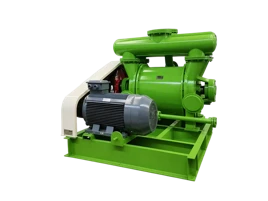
For instance, the ZJP Roots Vacuum Pump is a popular type of dry vacuum pump. It operates based on the principle of positive displacement. Two or more rotors rotate within a housing, trapping and transporting gas from the inlet to the outlet. The maximum vacuum level of a ZJP Roots Vacuum Pump is typically in the range of 10⁻¹ to 10⁻³ mbar. This is because as the pressure inside the pump decreases, the leakage of gas through the clearances between the rotors and the housing becomes more significant. The design of the rotors and the precision of the manufacturing process play a crucial role in minimizing this leakage and achieving a lower pressure.
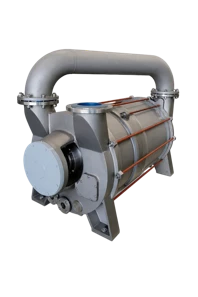
Another type of dry vacuum pump is the NZJP Multistage Roots Vacuum Pump. As the name suggests, it consists of multiple stages of Roots pumping elements. The multistage design allows for a more efficient compression of gas, enabling it to reach lower vacuum levels compared to single - stage Roots pumps. A well - designed NZJP Multistage Roots Vacuum Pump can achieve a maximum vacuum level of around 10⁻³ to 10⁻⁴ mbar. The additional stages help to reduce the pressure step - by - step, and each stage can be optimized for a specific pressure range, improving the overall performance of the pump.
The NZJQ Multistage Gas circulation - cooled Roots Pump is another option for applications requiring a high vacuum. This pump uses a gas circulation cooling system, which helps to maintain a stable operating temperature. Temperature control is essential in vacuum pumping because as the gas is compressed, it heats up. High temperatures can cause thermal expansion of the pump components, increasing the leakage and reducing the pump's efficiency. By keeping the temperature in check, the NZJQ Multistage Gas circulation - cooled Roots Pump can achieve a maximum vacuum level similar to the NZJP Multistage Roots Vacuum Pump, typically in the range of 10⁻³ to 10⁻⁴ mbar.
In addition to the pump design, the nature of the gas being pumped also affects the maximum vacuum level. Different gases have different molecular weights and properties. For example, lighter gases such as hydrogen are more difficult to pump to a high vacuum compared to heavier gases like nitrogen. This is because lighter gases have higher molecular velocities at the same temperature, which means they are more likely to leak through small clearances in the pump.
The operating conditions of the pump also matter. Factors such as the inlet pressure, the pumping speed, and the temperature of the environment can all impact the pump's ability to reach a high vacuum. For example, if the inlet pressure is too high, the pump may not be able to effectively compress the gas to a low pressure. Similarly, if the pumping speed is too low, it will take a long time to reach the desired vacuum level, and there may be a risk of gas back - streaming.
It's important to note that achieving the maximum vacuum level is often a balance between different factors. In some cases, a lower pumping speed may be acceptable if a very high vacuum is required. On the other hand, in applications where a large volume of gas needs to be pumped quickly, a slightly higher pressure may be tolerated.
As a dry vacuum pump supplier, we have extensive experience in helping our customers select the right pump for their specific applications. We understand that each customer's needs are unique, and we work closely with them to analyze their requirements, including the desired vacuum level, the type of gas being pumped, and the operating conditions.
If you are in the market for a dry vacuum pump and need to achieve a specific vacuum level, we are here to assist you. Our team of experts can provide detailed technical advice and recommend the most suitable pump for your application. Whether you need a ZJP Roots Vacuum Pump, an NZJP Multistage Roots Vacuum Pump, or an NZJQ Multistage Gas circulation - cooled Roots Pump, we have the products and the knowledge to meet your needs.
Contact us today to start a discussion about your vacuum pumping requirements. We look forward to working with you to find the best solution for your business.
References
- "Vacuum Technology Handbook", Second Edition, Edited by Peter McIlroy.
- "Industrial Vacuum Technology", by John F. O'Hanlon.
- Technical documentation of ZJP Roots Vacuum Pump, NZJP Multistage Roots Vacuum Pump, and NZJQ Multistage Gas circulation - cooled Roots Pump.