Can a liquid ring compressor be used for high - pressure applications?
In the industrial machinery landscape, the question of whether a liquid ring compressor can be employed for high - pressure applications is a topic of significant interest. As a supplier of liquid ring compressors, I've encountered numerous inquiries from clients eager to understand the capabilities and limitations of these machines in high - pressure scenarios.
Liquid ring compressors operate on a relatively simple yet effective principle. They consist of an eccentrically mounted impeller rotating within a cylindrical housing filled with a liquid, typically water. As the impeller spins, the liquid is thrown to the outer periphery of the housing, forming a rotating liquid ring. The vanes of the impeller then create chambers that vary in volume as the impeller rotates. Gas is drawn into these chambers through an inlet port, compressed as the chamber volume decreases, and then discharged through an outlet port.
Historically, liquid ring compressors have been associated with low - to medium - pressure applications. Their design inherently limits the achievable pressure due to factors such as the compressibility of the liquid ring and the mechanical stresses on the impeller and housing. However, advancements in technology and engineering have led to improvements that have pushed the boundaries of what these compressors can achieve.
One of the main challenges in using a liquid ring compressor for high - pressure applications is the compression ratio. The compression ratio is defined as the ratio of the discharge pressure to the suction pressure. In high - pressure applications, a large compression ratio is required. Liquid ring compressors typically have lower compression ratios compared to other types of compressors, such as reciprocating or screw compressors. This is because the liquid ring acts as a buffer, absorbing some of the energy during compression and limiting the amount of pressure that can be built up.
Another factor to consider is the heat generated during compression. Compression of gas is an exothermic process, meaning it releases heat. In high - pressure applications, the heat generated can be substantial. Liquid ring compressors rely on the liquid ring to absorb and dissipate this heat. However, at high pressures, the heat transfer capabilities of the liquid ring may become limited, leading to increased temperatures within the compressor. High temperatures can not only reduce the efficiency of the compressor but also cause damage to the components, such as the impeller and seals.


Despite these challenges, there are scenarios where liquid ring compressors can be used for high - pressure applications. For instance, in some specialized processes where the gas being compressed is sensitive to oil contamination, liquid ring compressors offer a distinct advantage. Since they use a liquid ring instead of oil for lubrication and sealing, they can provide oil - free compression, which is crucial in industries such as food and beverage, pharmaceuticals, and electronics.
In addition, modern liquid ring compressors have been designed with features to improve their performance in high - pressure situations. Some models are equipped with multiple stages of compression. By dividing the compression process into multiple stages, the overall compression ratio can be increased while keeping the compression ratio per stage within acceptable limits. This helps to reduce the stress on the components and improve the efficiency of the compressor.
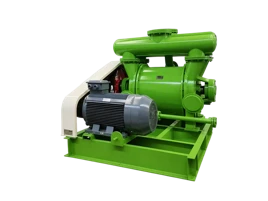
Let's take a look at two of our popular liquid ring compressor models: the YE Liquid Ring Compressor and the Y Liquid Ring Compressor. The YE Liquid Ring Compressor is designed with advanced materials and a robust impeller design, which allows it to handle higher pressures compared to traditional models. It also features an efficient cooling system that helps to dissipate the heat generated during compression, ensuring reliable operation at high pressures.
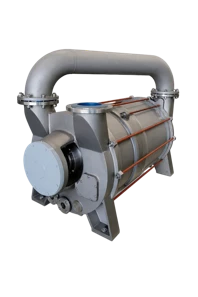
The Y Liquid Ring Compressor, on the other hand, is known for its compact design and high - efficiency performance. It is suitable for a wide range of applications, including those that require moderate to high pressures. The compressor's innovative liquid management system ensures optimal performance of the liquid ring, even under high - pressure conditions.
When considering using a liquid ring compressor for high - pressure applications, it is essential to conduct a thorough analysis of the specific requirements of the process. Factors such as the type of gas being compressed, the required flow rate, the desired pressure, and the operating conditions need to be carefully evaluated. A detailed feasibility study can help determine whether a liquid ring compressor is the right choice for the application.
In some cases, a combination of different types of compressors may be the most effective solution. For example, a liquid ring compressor can be used as a pre - compressor to bring the gas to an intermediate pressure, followed by a high - pressure compressor, such as a reciprocating compressor, to achieve the final desired pressure. This approach can take advantage of the unique features of each type of compressor, resulting in a more efficient and reliable compression system.
As a supplier of liquid ring compressors, we have a team of experienced engineers who can provide expert advice and support. We understand the challenges associated with high - pressure applications and can work with you to design a customized compression solution that meets your specific needs. Whether you are looking to upgrade an existing system or install a new one, we can offer the right products and services to ensure optimal performance.
If you are interested in exploring the possibility of using a liquid ring compressor for your high - pressure application, we encourage you to contact us. Our sales team is ready to answer your questions, provide detailed product information, and discuss your requirements in depth. We believe that by working together, we can find the best solution for your business.
In conclusion, while liquid ring compressors have traditionally been used for low - to medium - pressure applications, advancements in technology have made it possible to use them in high - pressure scenarios. However, careful consideration of the process requirements and the capabilities of the compressor is necessary. With the right design and engineering, liquid ring compressors can offer a reliable and efficient solution for high - pressure applications, especially in industries where oil - free compression is required.
References
- Compressor Handbook: Principles, Technology, and Applications. McGraw - Hill.
- Industrial Compressor Technology: Theory and Practice. Wiley.