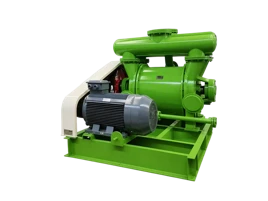
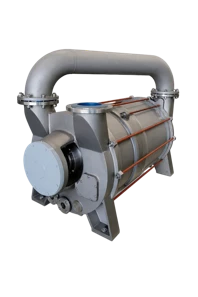
Hey there! As a supplier of premier screw vacuum pumps, I've been getting a lot of questions lately about how altitude affects the performance of these pumps. So, I thought I'd take some time to break it down for you all.


First off, let's talk about what a premier screw vacuum pump is. It's a type of pump that uses two inter - meshing screws to create a vacuum. These pumps are known for their high efficiency, reliability, and low maintenance requirements. They're used in a wide range of industries, from semiconductor manufacturing to food processing.
Now, let's dive into the effects of altitude on these pumps. The main factor related to altitude is the atmospheric pressure. As you go higher in altitude, the atmospheric pressure decreases. This decrease in pressure can have several impacts on the performance of a premier screw vacuum pump.
Impact on Pumping Speed
One of the most significant effects of altitude on a premier screw vacuum pump is on its pumping speed. Pumping speed is the volume of gas that a pump can remove from a chamber per unit of time. At lower altitudes, where the atmospheric pressure is higher, the pump has to work against a greater pressure differential. When you move to higher altitudes, the atmospheric pressure is lower. This means that the pressure differential between the inlet of the pump and the surrounding atmosphere is reduced.
As a result, the pump doesn't have to work as hard to create a vacuum. In some cases, the pumping speed of the pump may increase slightly at higher altitudes. However, this isn't always the case. Other factors such as the design of the pump and the type of gas being pumped also play a role. For example, if the pump is designed to work optimally at sea - level pressure, a significant change in altitude may cause the pump to operate less efficiently, even though the pressure differential is lower.
Effect on Power Consumption
Altitude also affects the power consumption of a premier screw vacuum pump. At lower altitudes, with higher atmospheric pressure, the pump needs to use more power to overcome the pressure differential and create a vacuum. As the altitude increases and the atmospheric pressure drops, the power required by the pump to achieve the same level of vacuum may decrease.
However, it's important to note that the relationship between altitude and power consumption isn't linear. There are other factors at play, such as the temperature and humidity at the location. For instance, at higher altitudes, the air is generally thinner and may have lower humidity. This can affect the heat dissipation of the pump. If the pump can't dissipate heat effectively, it may have to work harder and consume more power to maintain its performance.
Impact on Sealing and Lubrication
The sealing and lubrication systems of a premier screw vacuum pump are also affected by altitude. The seals in the pump are designed to work under specific pressure conditions. At higher altitudes, the lower atmospheric pressure can cause the seals to expand or contract, which may lead to leaks.
Similarly, the lubrication system of the pump is designed to function within a certain pressure range. The change in altitude can affect the viscosity of the lubricant. If the viscosity changes too much, it may not provide adequate lubrication to the moving parts of the pump, leading to increased wear and tear and potentially reducing the pump's lifespan.
Impact on Condensation
Altitude can also have an impact on condensation inside the pump. At higher altitudes, the temperature is generally lower, and the air is drier. This can cause moisture in the gas being pumped to condense more easily inside the pump. Condensation can damage the internal components of the pump, such as the screws and the seals.
To prevent this, some premier screw vacuum pumps are equipped with heaters or desiccant systems. These systems help to control the temperature and humidity inside the pump, reducing the risk of condensation.
Real - World Considerations
In real - world applications, the effects of altitude on a premier screw vacuum pump need to be carefully considered. If you're planning to use a pump at a high - altitude location, you should consult with the pump manufacturer. They can provide you with information on how the pump will perform at that specific altitude and may even recommend modifications to the pump to ensure optimal performance.
For example, if you're in the semiconductor industry and you're setting up a manufacturing facility at a high - altitude location, you need to make sure that your premier screw vacuum pump can maintain the required level of vacuum. A slight change in pumping speed or power consumption can have a significant impact on the quality of the semiconductor products being produced.
Complementary Products
If you're looking for complementary products to your premier screw vacuum pump, we also offer some great options. Check out our ZJQ Gas circulation - cooled Roots Pump, ZJP Roots Vacuum Pump, and VDP Dry Screw Vacuum Pump. These pumps can work in tandem with your premier screw vacuum pump to provide a more efficient and reliable vacuum system.
Contact for Purchase and Consultation
If you're interested in purchasing a premier screw vacuum pump or have any questions about how altitude may affect its performance, don't hesitate to get in touch. We're here to help you make the right choice for your specific needs. Whether you're in a low - altitude industrial area or setting up a facility at a high - altitude location, we can provide you with the best solutions.
References
- "Vacuum Technology: A Practical Guide" by John F. O'Hanlon
- "Handbook of Vacuum Physics" edited by D. M. Walton and P. C. West
- Manufacturer's manuals for premier screw vacuum pumps.